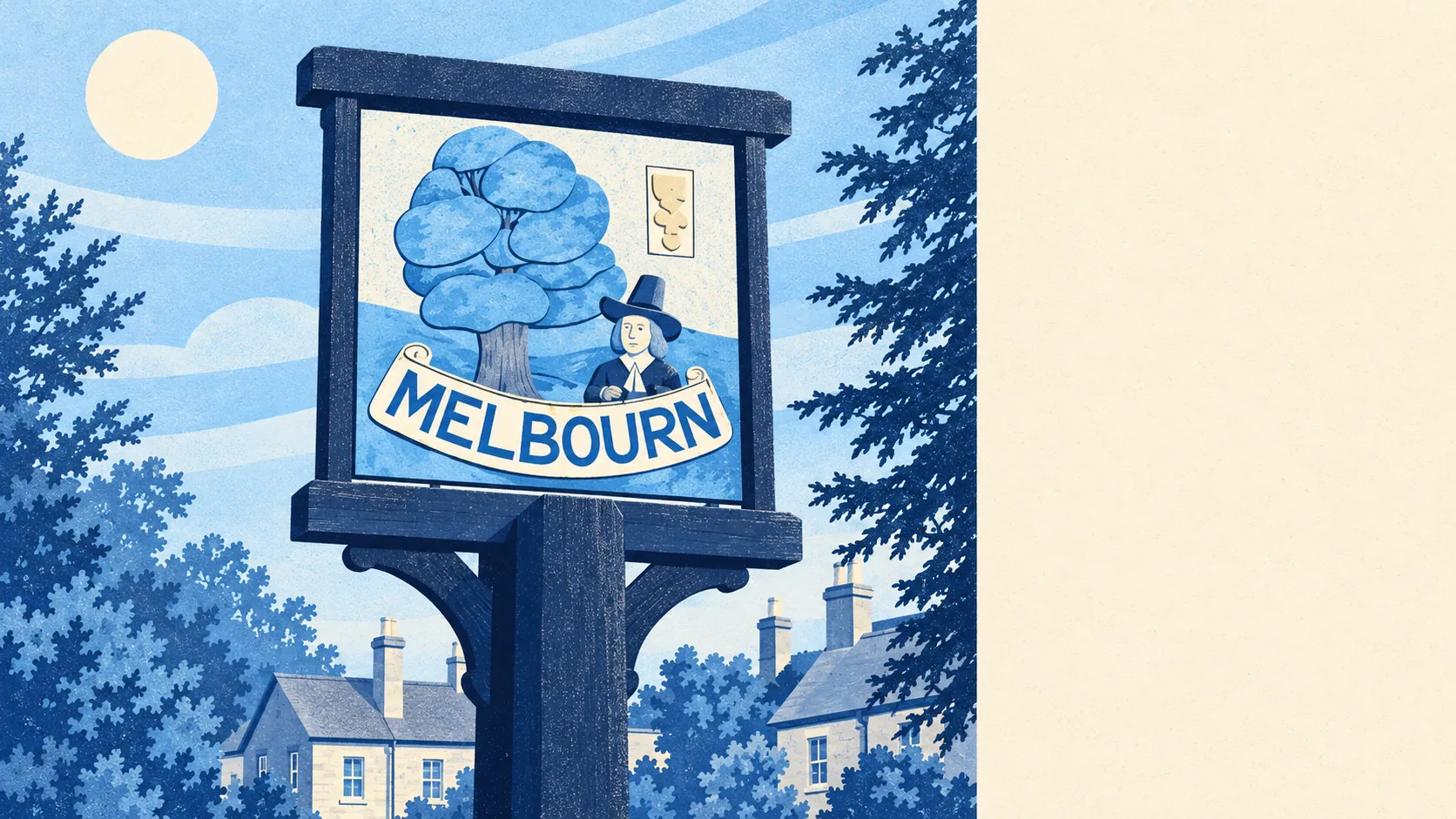
The area around Melbourn is open farmland with green space close to almost every door. Parks and fields are a short walk from most homes. Ponds and streams are close by as well. The gardens are big. Nothing here is grand enough to have been officially designated, and most people don't need it to be.
On average, a home in the Melbourn area is about 240 metres from the nearest public green space, and has around 11 to choose from within a kilometre. Meldreth, Shepreth and Fowlmere, which this page also covers, get much the same. Almost nobody here has to drive to find a patch of grass.
Water is close too. The nearest pond, stream or other open water is about 390 metres away on average, with around 24 bodies of water within a kilometre. The parish was settled around springs at Melbourn Bury, and the water hasn't gone anywhere since.
Cycling routes are further off. The nearest stretch of the National Cycle Network is about 4.2 kilometres from the average home, and no postcode in the area is close to it. The Icknield Way runs south of the parish, so people have been passing through this country on foot for a very long time, even if the signposted bike routes haven't caught up.
The SG8 postcode district, which covers Royston as well as Melbourn, has 176 shops, 33 pubs, 15 restaurants and 248 offices on the rated-premises list. Those are district-wide counts, so most of the restaurants are a drive away, and the pubs outnumber the restaurants by more than two to one.
The government's 2024 fine-particle estimate for South Cambridgeshire is about 7 micrograms per cubic metre, and that covers the whole council area.
For days out, the history is close by. The Bran Ditch, an Anglo-Saxon bank and ditch, runs between Fowlmere and Heydon, and the round barrow cemetery on Therfield Heath and the Mile Ditches lie a short drive south. Wimpole Hall and Royston Cave are both within reach, and Kneesworth, Whaddon and Flint Cross are the hamlets you pass on the way. Bronze Age burials, a Roman settlement and Domesday entries all turn up in the parish's own records, so Melbourn has been occupied for a long time and has never had to make much fuss about it.
Private gardens are generous. Across the Melbourn area there are about 265,000 square metres of garden for every 1,000 residents, measured as the land behind people's own houses and leaving out the surrounding farmland. That is a lot of lawn per person, and it explains why the public green spaces are rarely crowded.
The valuation list holds 327 rateable premises in the area. Offices are the most common, at 64, followed by warehouses, workshops and shops, the business mix of a working village. These are premises listed for business rates, so a shop on the list may not still be trading.
The Food Standards Agency has rated 49 food premises in the area, and about 94% hold the top hygiene score of five. None scored at the low end.
No area of outstanding natural beauty, site of special scientific interest or ancient woodland overlaps the Melbourn area. The countryside here is chalk farmland and village greens that nobody has seen the need to protect, and it is used for walking dogs.
The surroundings are among the best things about Melbourn: green space, water and big gardens all close to home, with ancient sites a short drive away. A buyer who wants space outdoors gets plenty of it here.