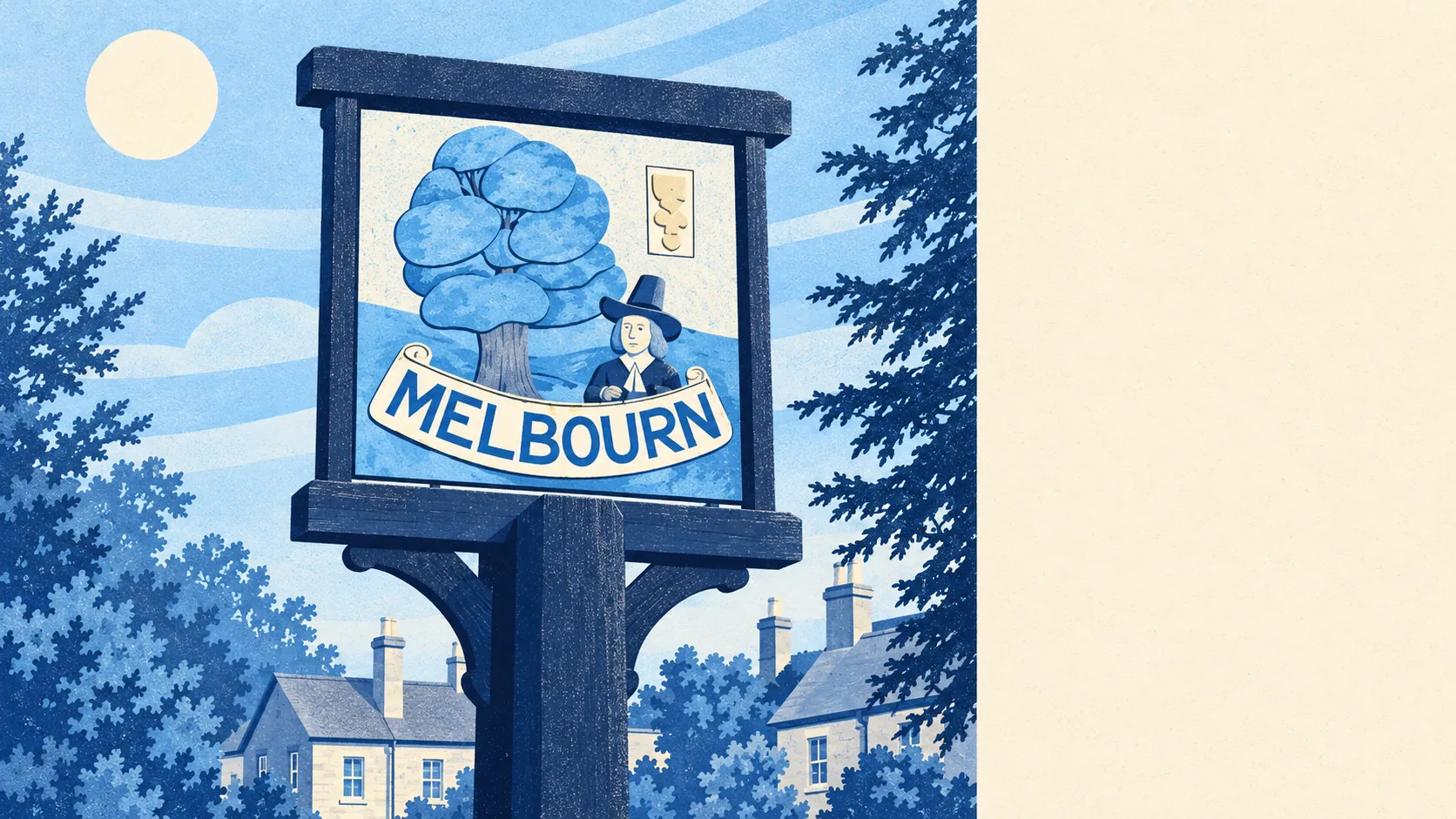
Melbourn gives its residents fields on every side and a green within a few minutes' walk, then gets strict the moment they want to change the house. Life here runs on a car on the drive, a garden out the back and a village primary within reach. About seven in ten households own their home. The trouble starts with the plans for a bigger kitchen.
It is the right place for a household that wants room, outdoor space and a settled street, and is happy to drive for most other things. The Melbourn area takes in Meldreth, Shepreth and Fowlmere as well, and between them they hold 234 listed buildings, two at Grade I and seven at Grade II*. Six conservation areas fall in and around the patch, Melbourn's own among them alongside Meldreth and Shepreth, and 12 scheduled monuments are scattered across the surrounding fields. For a buyer that means listed building consent for alterations to a listed house, and tighter rules on what can change on any street-facing wall inside a conservation area. Owning a listed cottage here means sharing decisions about its windows with people who will never look out of them.
Homes across the Melbourn area sold for a typical £402,000 in the Land Registry's twelve months to April 2026, across 84 sales. Terraces and semis came in close together at about £350,000 and £366,000, and detached houses jumped to £650,000. Only five flats changed hands, at a median of £255,000, which says as much about how few flats there are as about their price. Band C is the most common council tax band, and only about 11% of homes are in Bands A or B, so the cheap end of the bill is hard to find.
South Cambridgeshire's typical private rent is about £1,400 a month as of April 2026, a district-wide figure that takes in Cambridge's commuter villages as well as this one. Only around one household in ten in the Melbourn area rents privately, so the choice of homes to let is thin whatever the price.
The council tax list counts every home, and here it shows a village of houses with gardens. About 31% are detached, 29% semi-detached, 15% terraced and just 5% flats, with bungalows at 17%. Only around 14% were built before 1930. Among homes with an energy certificate, about 59% are rated A to C, 31% D and 11% E or worse. Mains gas heats about 69% of homes, and around 7% rely on electric heating alone. A bungalow share like that belongs to a place people move to with no plans to move on.
The neighbourhood matches the housing. Around 68% of households own their home, the typical resident is 44, and the Office for National Statistics models gross household income for the Melbourn area at about £68,000 for the financial year to March 2023. That income figure is an estimate averaged across two neighbourhood areas, so no individual street gets measured.
Flood risk is limited, though it depends on which measure you read. About 9% of the area's postcodes carry a high rating on at least one flood indicator, surface water included, and about 11% a medium one. The Environment Agency's river-and-sea mapping puts about 3% of postcodes in its highest flood zone. The two figures count different water, and a house only has to be caught by one of them.
The surroundings are where Melbourn earns its keep. The nearest green space is around 240 metres from the average front door, with about 11 within a kilometre, and water of some kind lies around 390 metres away. For a family with a dog and young children, those two distances make most of the case for living here.
Getting about is where the car comes back in. Melbourn has no station of its own; Meldreth and Shepreth are the nearest, with Foxton and Royston beyond. At the 2021 Census about 47% of working residents drove to work, 2% took the train and around 40% worked from home. The 45 bus stops in and around the village average 15 weekday departures each and less than one an hour at peak. About 75% of premises can get gigabit broadband and 94% superfast. Broadband has clearly been given more attention than the buses, and the people working from home are the ones who noticed.
Cambridgeshire Constabulary's published figures put the Melbourn area at about 54 crimes per 1,000 residents in the year to May 2026, roughly 13% below the South Cambridgeshire average. Burglary makes up about 6% of recorded crime against about 4% nationally, a small share that still makes the case for a decent lock on the shed.
For schools, Melbourn Primary School and Meldreth Primary School serve the villages, and Melbourn Village College is the local secondary. The nine primaries across the postcode districts averaged a Key Stage 2 maths score of about 103, and the three secondaries averaged an Attainment 8 score of about 44. Ofsted grades 110 of 126 graded settings across Cambridgeshire as good or outstanding, a county-wide count that covers far more classrooms than these villages have.
Melbourn is a better-than-average choice for buyers who want green space at the end of the road, a primary in the village and neighbours who are staying put, and who don't mind driving to most other things. Anyone hoping to buy an old house and rebuild it to their own taste should look somewhere with fewer listed roofs. Here the fields come free, but every new roof light has to be argued for.