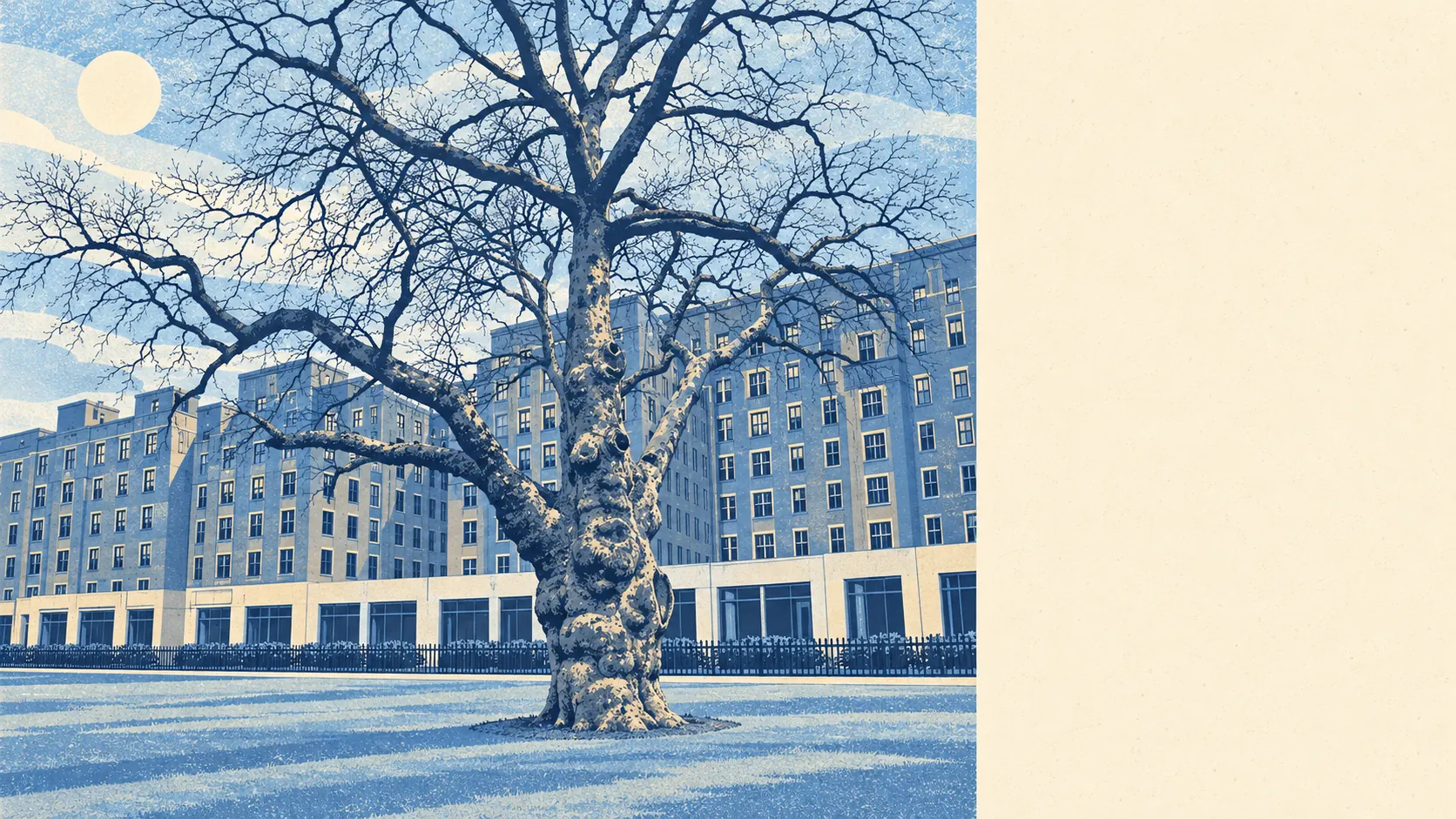
The area around Mayfair is some of the best-placed ground in London for getting outdoors. A park is a few minutes from almost every door. Water is a short walk away. Restaurants and shops outnumber the residents' needs several times over. The only thing missing is a garden of your own.
Green space starts close. The average Mayfair home is about 150 metres from the nearest public green space, with around 19 green spaces inside a kilometre. Hyde Park runs along the western edge, Green Park along the south, and Grosvenor Square and Berkeley Square sit in the middle of the district. Mayfair was mostly open fields until building began in the 1680s, and two of the largest open spaces in central London still press against its edges as if waiting for the leases to run out.
Water is close too. The nearest blue space is about 900 metres from the average front door, and about seven bodies of water lie within a kilometre.
Cycling out of town takes a little more effort. The nearest stretch of the National Cycle Network is about 2.1 kilometres away on average, and no postcode in Mayfair counts as close to it. There is no ancient woodland in the area.
The high street is dense. The rated-premises records count 833 shops, 33 pubs and 199 restaurants across the area. For a district with fewer than eight thousand residents, the shops are plainly there for the visitors, and the residents get the benefit of shopping in somebody else's destination.
Air quality across Westminster, the council area this figure covers, averaged about 9.7 micrograms of fine particles per cubic metre in 2024.
In character, Mayfair is a set of grand estates fitted around a village that refused to go away. Shepherd Market grew up around the old May Fair from the 1680s and still has the tight lanes to show for it. Savile Row, the Royal Academy at Burlington House and the Grosvenor Chapel all sit within a short walk, and the 2,989 listed buildings in and around the district mean the streets look much as their builders intended.
Private outdoor space is the scarce item. Gardens across the area add up to about 8,300 square metres for every 1,000 residents, a small amount for a district of this wealth, because the homes are mostly flats in terraces built hard up to the pavement. The garden squares do the work a back garden does elsewhere, though the people in them are mostly strangers eating lunch.
The valuation list shows how commercial the ground is. Of the 6,375 rateable premises in the area, 4,519 are offices, 765 are shops, 302 are car parks and 188 are restaurants. These count premises on the rating list, which includes empty units, and the offices outnumber everything else put together.
Eating out is reliable. Of 550 food outlets with a hygiene rating, about 79% hold the top score of five, and about 3% sit at the bottom of the scale.
No protected landscape designation touches Mayfair: no area of outstanding natural beauty, no site of special scientific interest and no ancient woodland. Protection here is aimed at the buildings, and the parks are royal rather than wild.
The surroundings are Mayfair's finest asset, with central London's biggest parks within a few minutes on foot and the best of the West End on the doorstep.