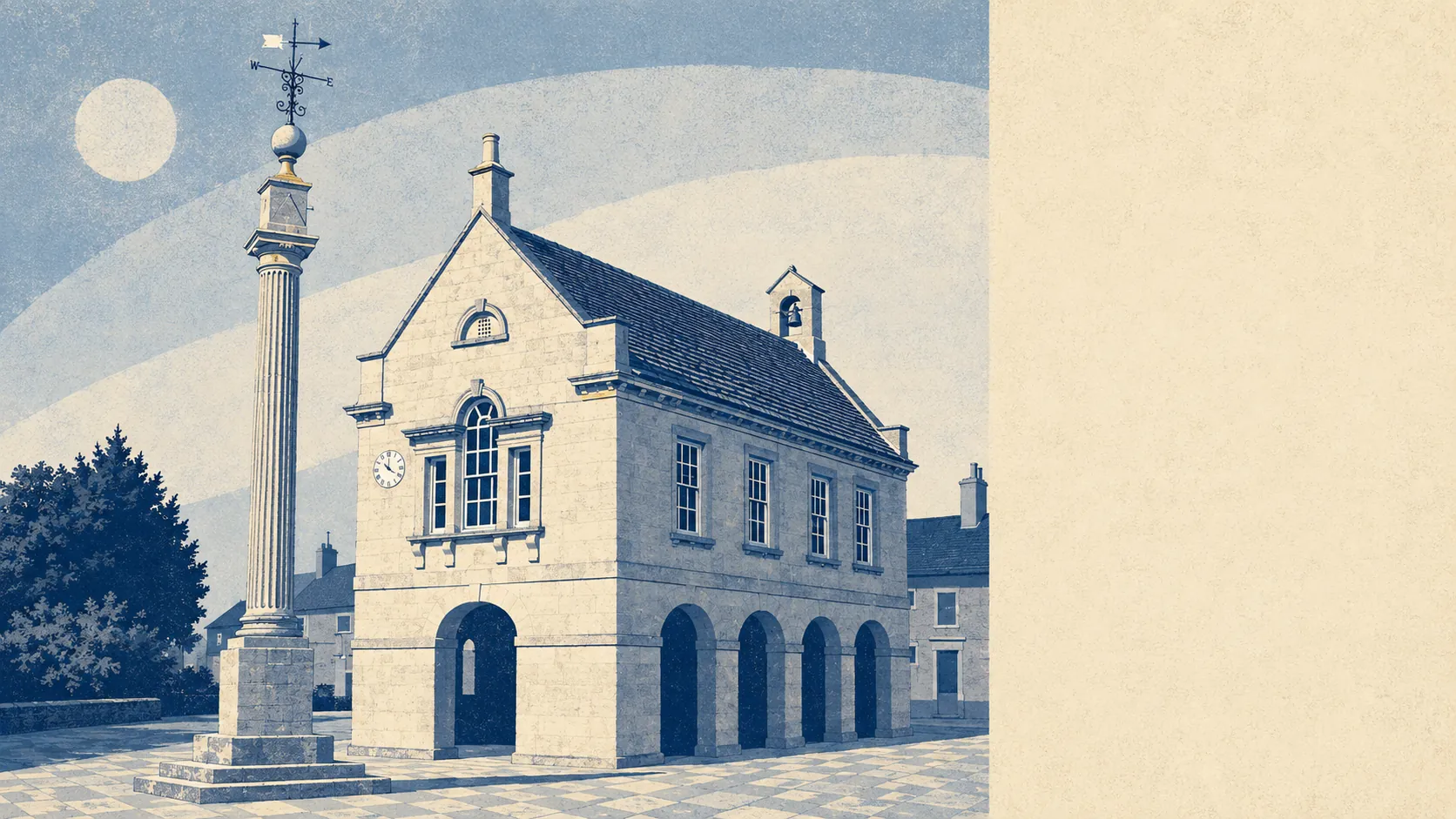
Yes, and the paperwork gets a vote before you do. Martock carries far more protected building than a village its size has any right to. Six conservation areas cover it and the parishes around it. An ordinary post-war house on an ordinary street extends the way it would anywhere. Anything with old stone in the walls comes with a conversation attached, and the conversation is not with your builder.
There are 321 listed buildings in the area: three at grade one, 14 at grade two star and 304 at grade two. Grade two is the workhorse category, and 304 of them means listing here is not an exotic problem confined to the church and the manor. Listed building consent covers the whole building rather than the bit visible from the pavement, so interior alterations, window replacements, roof work and anything attached to the structure fall inside it. Doing the work first and asking afterwards is not a shortcut available on a listed property.
Six conservation areas sit within the area, covering Martock and Bower Hinton along with Coat, East Stoke, West Stoke, Kingsbury Episcopi and East Lambrook. Designation brings its own layer of control on top of ordinary planning: demolition, trees and the appearance of what faces the street all attract closer attention, and some work that would be waved through elsewhere needs an application here. The precise scope depends on what the council has designated and what conditions sit on it, which is a question to ask about a specific address rather than about the village.
None of which stops people. Somerset's planning register carries 209 applications across the area between April 2024 and June 2026, with 78 of those in the last twelve months. Whatever the constraints look like on paper, homes here are being altered continuously, and by neighbours who worked out the process rather than assuming it was closed.
Three of the listed buildings in the area sit on Historic England's Heritage at Risk register. That is a statement about condition rather than danger: buildings on the register are deteriorating, may qualify for grant support towards repair, and will attract more scrutiny over any work proposed. For someone buying an ordinary house down the road it changes nothing. For anyone tempted by a project with a register entry against it, the repair schedule is somebody else's business as well as yours.
Practically, the split is straightforward. If the house is unlisted, outside a conservation area and not otherwise restricted, normal permitted development rights apply and the usual rear extension or loft conversion is a builder's question rather than a planner's. About 28% of dwellings here were built before 1930, so the odds of landing in the constrained category are meaningfully higher than in a village of newer stock. Check the listing status and the conservation area boundary before you exchange, not after the architect has drawn something you have fallen for.
Freedom to knock the place about is the weakest thing on this page: not impossible, plainly not stopping anyone, but Martock asks permission for things most villages simply get on with.