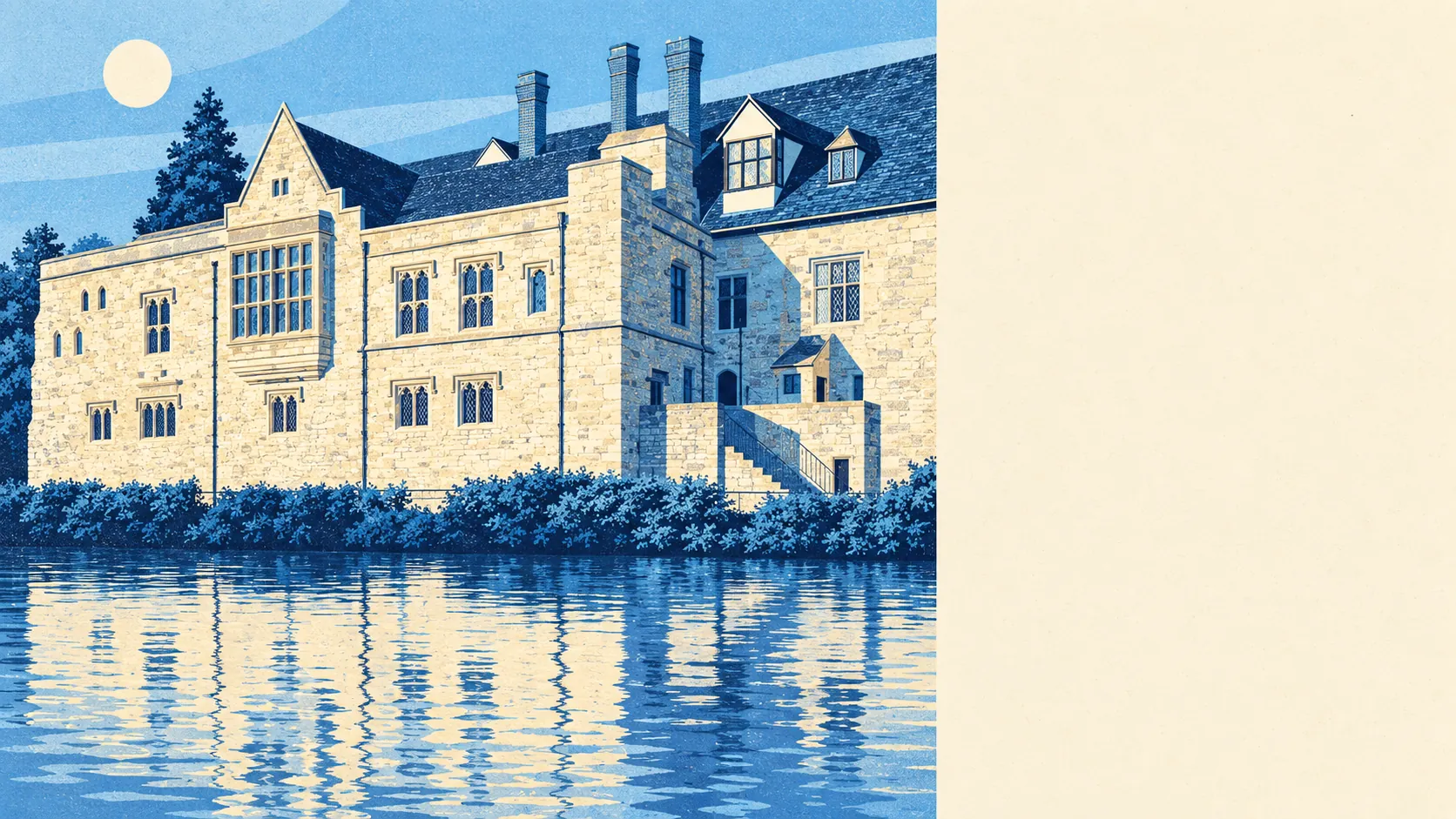
The area around Maidstone is the best reason to live in it. A park is a couple of minutes from the average front door. Water is closer than most people expect. The Kent Downs brush the edge of town. The town is the price of admission to the countryside around it.
The nearest public green space is about 145 metres from the average home, and there are about 24 green spaces within a kilometre. That's not one big park that everyone drives to. It's a network of them, woven through the housing, which means even people who swore they'd never own a dog end up doing laps of one.
Water is close too. The nearest blue space, a river, lake or pond, is about 490 metres from the average home, with about 27 within a kilometre. The Medway runs through the middle of town, the Len and the Loose Stream join it, and the old mill ponds on those streams are still part of the landscape. Maidstone Sailing Club sails on the lake in Mote Park, which is more nautical ambition than a county town 32 miles inland is usually allowed.
The National Cycle Network is about 1.2 kilometres from the average home, and about 23% of postcodes sit close to it. There's no ancient woodland inside the area itself, so the old trees are a short trip out, not the view from the kitchen.
Fine-particle air pollution across the Maidstone council area averaged about 7 micrograms per cubic metre in 2024. That's a council-wide figure, not a reading for any particular street.
The history is mostly on the edges, and there's plenty of it. Mote Park is on the register of historic parks and gardens, and so is Boughton Monchelsea Place to the south. Within reach are the remains of the Cistercian abbey at Boxley, Leeds Priory, the Neolithic tomb at Kit's Coty House and the White Horse Stone near Aylesford. In town, the Archbishop's Palace and the College of All Saints sit by the river. Penenden Heath, once a place of trials and executions, is now a comfortable suburb, which counts as a promotion. Beyond the town edge are villages like Loose, Linton, Boughton Monchelsea and Sutton Valence, sitting on the greensand ridge above the Weald.
Private gardens add to all this. Across the area's 67 neighbourhoods there are about 95,000 square metres of private garden for every 1,000 residents. For a built-up county town, that's a lot of lawn to mow, and most of it belongs to the semis and the post-war estates rather than the flats in the middle.
The valuation list shows 3,167 rateable business premises in the area, including 792 shops, 91 pubs, 73 restaurants and 1,105 offices, plus 63 holiday lets. Those are premises on the rating list, not a count of businesses trading today, but they describe a proper working town with a high street, not a commuter village with a single shop.
Across 675 rated food premises, about 77% hold the top food hygiene score and about 2% sit at the bottom end. The odds of a decent meal in town are good, and so are the odds of a clean kitchen.
On protected landscape, the Kent Downs Area of Outstanding Natural Beauty only touches the area, overlapping less than 1% of it. There's no site of special scientific interest and no ancient woodland inside the boundary. The designated landscape starts at the town's edge, and the town itself is left to get on with being a town.
The surroundings are one of Maidstone's real strengths: parks and water close to almost every home, history in every direction, and the Downs a short trip away. People move here for the town and end up staying for everything around it.