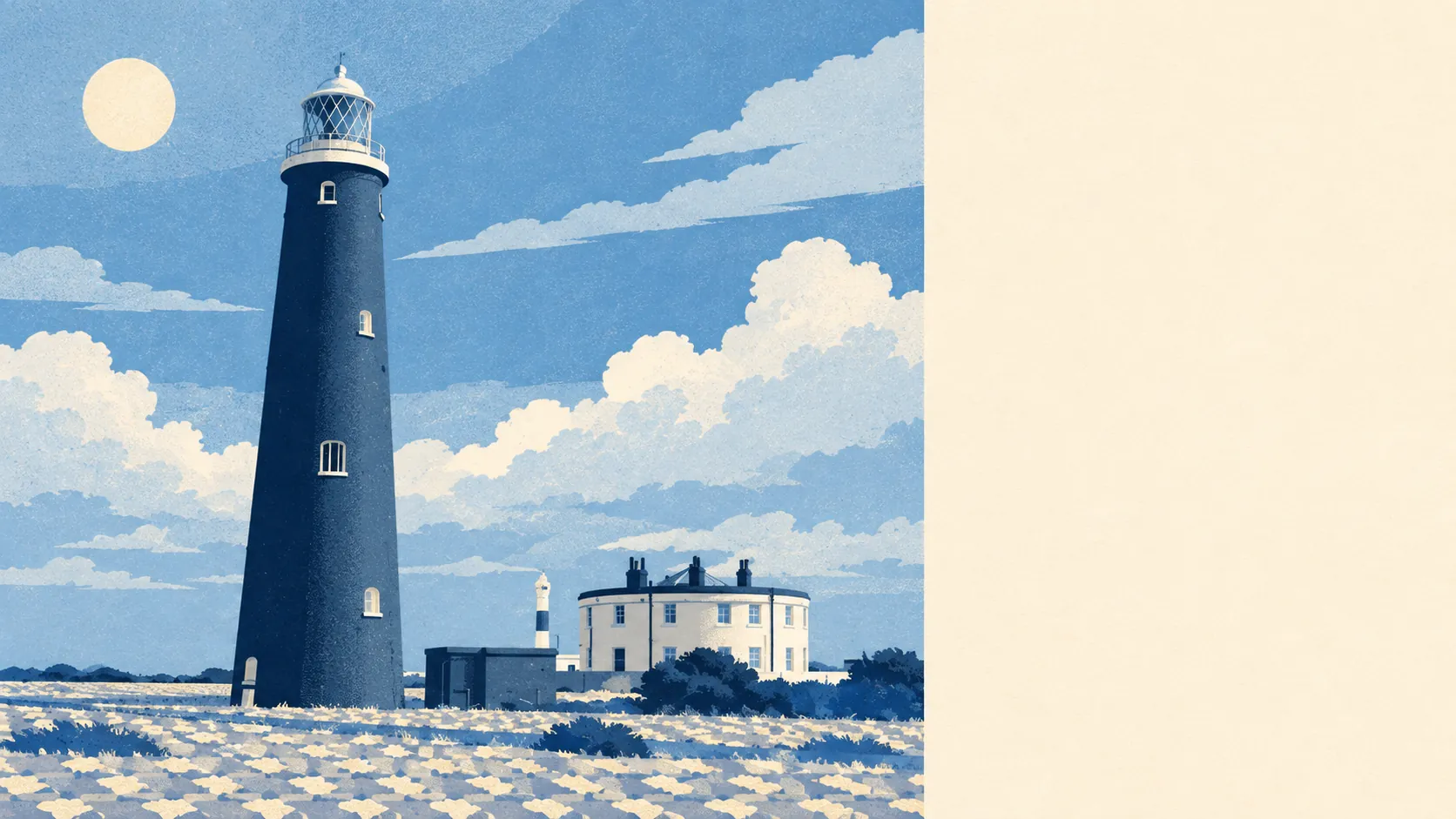
Flat, wet and wide open, and that is the appeal. Water is within a short walk of most front doors. There is more green space than shops. The shoreline is shingle, not promenade. Nobody moves here for the nightlife. They move for the sky.
Green space is close at hand. Homes in the Lydd area are on average about 500 metres from the nearest public green space, with around six within a kilometre. On the marsh, "green space" often means somewhere with a bench and a sign, next to land that is green anyway and has no benches.
Water is closer still. The average home is about 270 metres from the nearest blue space, and there are around 48 bodies of water within a kilometre. That count is the marsh in a nutshell: drainage channels, gravel pits and ditches everywhere. On a map the landscape looks more like plumbing than countryside, and on foot it feels like it too.
Getting out on a bike takes a bit more effort. The National Cycle Network is about 1.4 kilometres from the average home, and about 49% of postcodes sit close to it. There's no ancient woodland anywhere in the area, because trees need something taller than sea level to hide behind.
The property records for the wider marsh list 411 shops, 61 pubs and 24 restaurants. Pubs outnumber restaurants by a wide margin, which tells you how people here prefer to spend an evening. Across the area's 51 rated food outlets, about 82% hold the top hygiene score.
Air quality across the Folkestone and Hythe council area measured about 6.5 micrograms of fine particles per cubic metre in 2024. That is the district figure, not a reading from any particular street.
The character comes from the edges. Lade and Lydd-on-Sea grew up along the coast east of Lydd in the 20th century, mostly as holiday bungalows. Past them lies Dungeness, with its lighthouse and its own conservation area, and the power stations. Dungeness A has stopped generating and is being decommissioned. Greatstone-on-Sea and New Romney sit up the coast, and Camber is over the border to the west. Sections of the Royal Military Canal cut across the country inland. In town, Lydd Town football club has played since 1885, Lydd Golf Club sits on the Romney Road, and Lydd International Kart Circuit handles the noise.
Private gardens are generous. The Lydd area has about 235,000 square metres of private garden for every 1,000 residents. That reflects bungalow plots laid out when land here was cheap, and the gardens are still the size the plots allowed.
Within the area itself, the valuation list holds 327 rateable premises. Among them, 20 are classed as shops, 12 as offices and 19 as warehouses, with most of the rest industrial and storage premises. These are premises on the list, not a count of businesses open today. The high street is small, and much of the working economy sits in sheds.
Eating out carries little risk. About 82% of the area's 51 rated food premises hold the top hygiene score, and none sit at the bottom. The worst outcome is a mediocre meal, not a bout of food poisoning.
On designations, the area has no area of outstanding natural beauty and no ancient woodland. The Dungeness, Romney Marsh and Rye Bay site of special scientific interest does overlap it, covering about 3% of the area. The marsh doesn't need a designation to look like nowhere else in the south-east.
The surroundings are one of Lydd's real strengths. The marsh, the water and the shingle start where the gardens end, and none of it has been prettied up for visitors.