Yes, if you are content somewhere that peaked under the Plantagenets and has been coasting on the view ever since. Seven in ten own their homes. The typical resident is in their early fifties. Half the housing predates the 1930s. Nothing about the place is in a hurry, and the people who thrive here worked that out before they exchanged rather than after.
The stock is old and low-rise, and the council-tax valuation list, which covers every dwelling rather than only the ones certificated since 2008, puts 32% detached, 22% terraced, 17% bungalows, 16% semi-detached and 8% flats. Around 49% went up before 1930. Energy certificates place 40% of certificated homes in bands A to C, 32% in band D and 28% in band E or worse, which is what several centuries of granite and slate do to a heat-loss calculation. About 49% of households are on mains gas and 10% run on electricity alone. A pre-Victorian cottage heated by electric panels is a standing order with a roof on it, and the viewing is the moment to ask which one you are looking at.
The Land Registry logged 44 sales in the year to May 2026, at a median of £260,000. Detached houses ran to a median of £450,000, terraces to £239,000, semis to £235,000 and flats to £152,000, so the difference between a garden and a shared front door is roughly the cost of a second property. Council tax sits at the affordable end of the scale: band B is the most common band, and 42% of dwellings fall in band A or B. Renting, the typical private rent across the Cornwall area was about £1,000 a month as of April 2026, up 4.6% over the year. That is the county-wide figure and not the town's own, so treat it as the shape of the market rather than a quote for a specific cottage.
Safety is where the town quietly outperforms. Recorded crime ran at 52 per 1,000 residents over the twelve months to May 2026, roughly 30% below the Cornwall average. Whether anything happens afterwards is a different question: Devon and Cornwall Police charged in 8% of cases over the same period against 12% nationally, and the force ranks 42nd out of 42 in England and Wales on that measure. Low crime and low charge rates are not the same virtue, and only one of them is Lostwithiel's doing.
Getting about is a car-and-broadband proposition with a railway bonus. Half of working residents drive, 34% work from home and 1% commute by train, which is a curious figure in a town whose station sits on the main line between Plymouth and Penzance, with Bodmin Parkway and Par as the other options nearby. Buses are thinner than the 48 stops in the area suggest: of the 20 stops with published timetables, the average is 9 weekday departures, and only half carry any weekend service at all. Department for Transport modelling from 2019 puts the nearest town centre at 21 minutes by car and 48 by public transport, and those public transport times age faster than the driving ones. Broadband reaches 82% of premises at superfast speeds and 18% at gigabit, with 2% below the universal service minimum, and 95% of the area gets a signal from every mobile operator.
Water is the honest problem. On the postcode-level indicators, which include surface water as well as rivers, 27% of postcodes carry a high rating on at least one measure. On the Environment Agency's river-and-sea mapping, 12% of the area sits in flood zone 3, and 7% of postcodes have a recorded historic flood behind them. Nineteen flood events are on record, the most recent in December 2012. Set against that, the green is genuinely close: parks and open space average 650 metres away with 8 sites within a kilometre, and water is nearer still at about 330 metres, with Shirehall Moor and its salt marsh running south of the town. One more Cornish fact worth a cheap test kit: every postcode here sits in radon band 3 or above, and the highest band is present.
Then there is the paperwork. The area holds 250 listed buildings, 12 of them Grade I and 16 Grade II star, along with 22 scheduled monuments and three conservation areas covering Lostwithiel, Lerryn and Tywardreath, plus one entry on the Heritage at Risk register. Practically, that means windows, doors, roofs, solar panels and external insulation stop being shopping decisions and start being applications. Buyers who want a period house and modern glazing are asking for two different centuries at once.
The character follows from the ownership pattern. Around 72% own, the median age is 53, and household income averaged £41,590 in the financial year to March 2023 on the Office for National Statistics model. This page also covers Boconnoc, Lanlivery, Lerryn and St Veep, which are quieter again, and where the bus timetable stops being a service and starts being a rumour.
It suits people who want a working town with a mainline station, a walkable centre, and enough water and woodland to justify the commute they no longer make. Retirees, remote workers and anyone downsizing into a bungalow will find the stock already built for them.
It suits nobody who needs frequent evening buses, a same-week hospital run, or a house they can alter on a whim. If your plan involves knocking through, glazing up and cladding the back, check the listing status before the survey, not after.
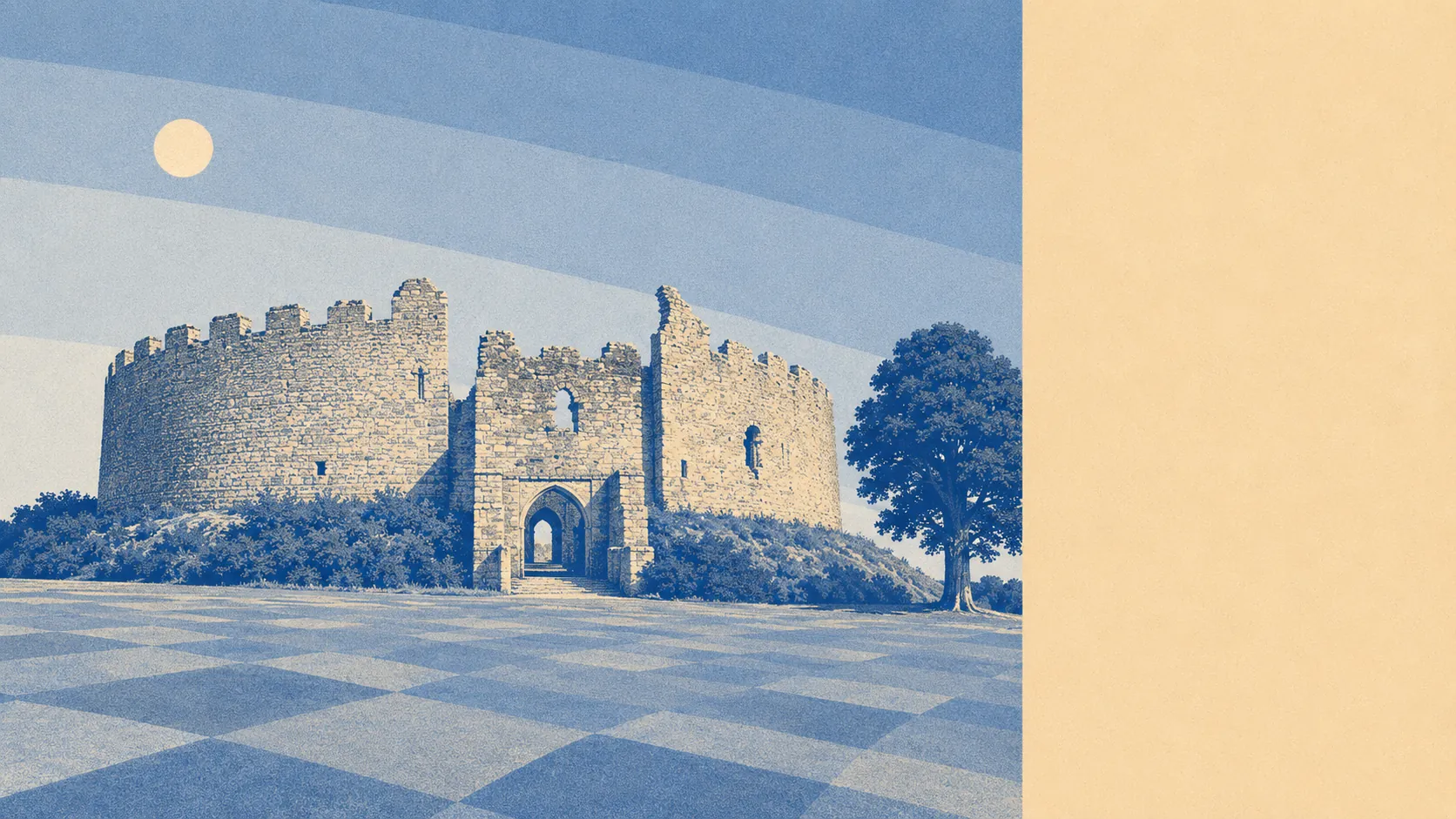
The town has form for attracting people who did their best work elsewhere and their living here. Andy Mackay of Roxy Music, the law scholar and social reformer John Westlake, the novelist Gertrude Parsons and the local historian Frances Margery Hext all belong to the place. So does Restormel Castle, the Stannary Palace built under Edmund, second Earl of Cornwall, and an iron mine renamed the Royal Restormel in 1846 after Victoria and Albert dropped by, which closed in 1883 and took the town's industrial ambitions with it.
Lostwithiel is a good place to live for the right buyer and a slow-motion irritation for the wrong one. Its real strength is safety, where the recorded rate sits well below the county norm and the streets behave accordingly. The weak spot is flood risk, and it is not a technicality: get the specific address checked and get an insurance quote before you fall in love with the stone.