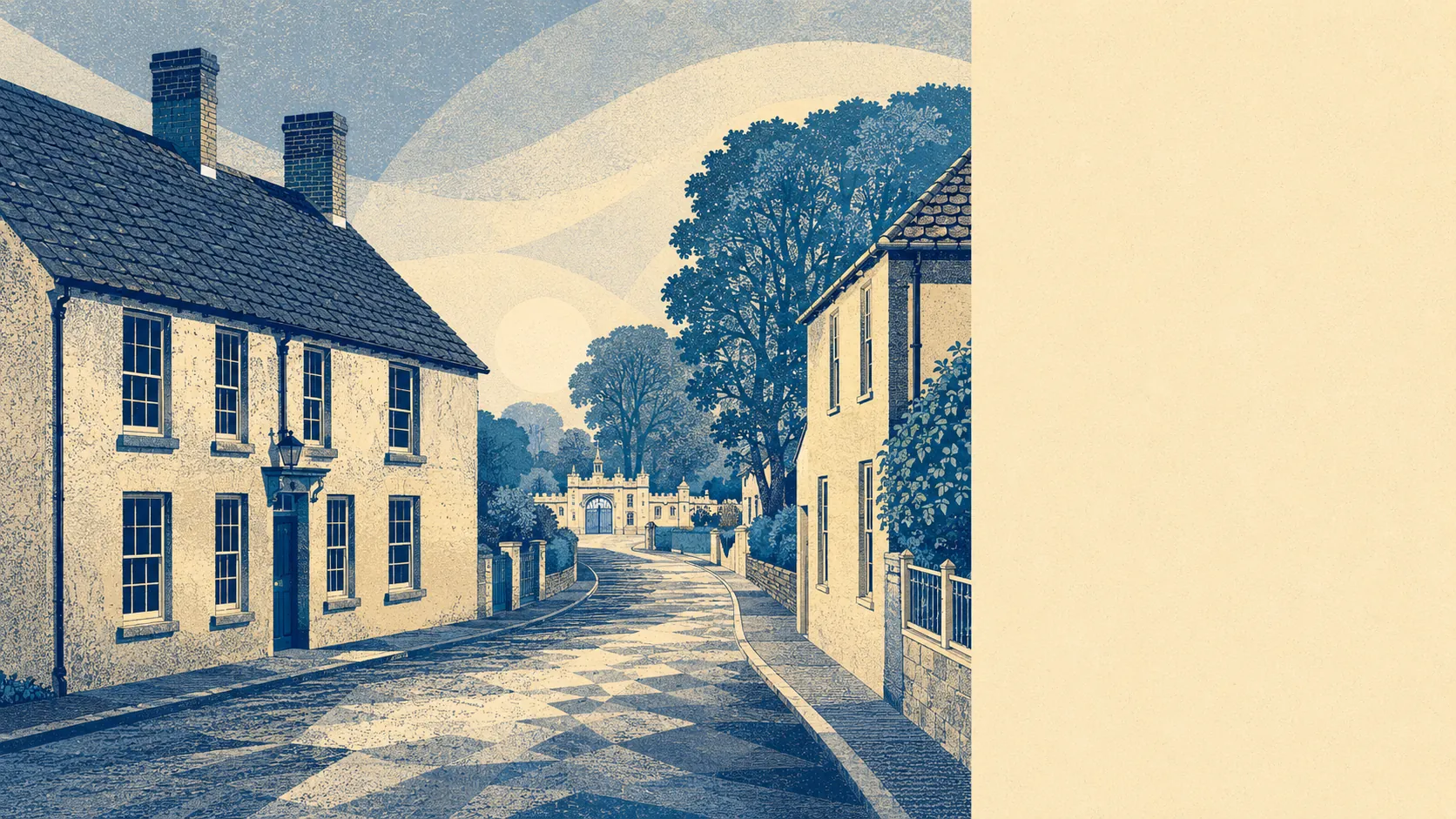
Long Ashton is Clifton with a driveway. Four in five households own the roof over their heads. The typical detached house changes hands for three-quarters of a million pounds. Half the working-age residents earn their living without leaving the house. This stopped being a Somerset farming village some time ago. It is now Bristol's professional class with a BS41 postcode and somewhere to park.
The building stock tells the same story. Seven in ten homes are houses, about one in five are flats, and roughly one in ten are bungalows, most of them put up between 1950 and the early 1980s rather than in any Victorian heyday. Only about fifteen in every hundred predate 1930. On energy efficiency the village sits mid-table: a shade under half the homes reach band C or better, a third land in band D, and one in five slip to band E or worse. These are warm-ish family houses where the loft insulation is the difference between a comfortable January and a nasty one, not draughty period terraces and not new-builds either.
Buying here is where the romance meets the bank statement. Across the last year around ninety homes sold, at a typical price near £585,000. A terrace runs to about £400,000, a semi to £480,000, a detached to £745,000, and even a flat clears £490,000. Council tax confirms the picture: the most common band is E, and barely one home in seven sits in the cheap A or B bands. Long Ashton does not do bargains, and the council tax bill reminds you monthly.
Renting is thinner on the ground, and the honest figure is a wider one. Typical private rent across the North Somerset area runs at about £1,200 a month. That is the area average rather than the village's own going rate, and in a place where four in five own and the houses skew large, the handful of rentals that come up tend to sit at the dearer end of it.
On safety the numbers are good in a way that needs no spinning. The published crime rate is around fifty-one recorded offences per thousand residents a year, roughly forty-three percent below the North Somerset average. This is a place where the parish newsletter treats a stolen wheelie bin as a crime wave. The quiet is real, and it is priced in.
Schools are solid rather than spectacular, which for buyers chasing a catchment is worth knowing before paying the premium. Primary results sit a shade above the national mark, with village maths scores comfortably par. Secondary results come in around the middle. Across the wider area twenty-six of the graded schools carry a good or better rating and two are rated outstanding. Northleaze Church of England Primary anchors the village end, and Backwell School takes many of the secondary-age children up the road. Dependable, and quietly capitalised into every asking price.
Getting about is a story about broadband, not railways. Half the working population works from home and about a third drive, while the train takes barely one resident in two hundred, the nearest usable station being Nailsea and Backwell along the line. What the village does have is the wiring: gigabit broadband reaches nearly four in five homes, superfast covers around six in seven, and fewer than one in fifty falls below the basic universal service level. For a village that commutes by kitchen table, that is the connection that counts.
The setting is the quiet luxury nobody bothers to price on the brochure. Most of the village stays dry: fewer than one postcode in a hundred sits in the highest river flood band, though close to nine in a hundred carry a high flood risk of some kind worth a survey. Green space is on the doorstep, an average of about three hundred metres to the nearest patch, and Ashton Court, a Site of Special Scientific Interest, sits right on the edge of the parish. You are buying the view as much as the bricks.
History comes with strings. The parish carries two hundred and twenty-odd listed buildings and eight conservation areas, one of them the village itself, with All Saints church standing since about 1380 and a manor house on the books since 1265. Handsome to look at, less so when you want to change a window: inside a conservation area or a listed building, the paint colour and the glazing become other people's business. Buy the character, inherit the paperwork.
The people fit the postcode. About four in five own their homes, the median age is forty-six, and the typical household income sits near £65,000. On the deprivation scale the area ranks in the top few percent of the least deprived in England, and around half the adults hold a degree. This is a settled, middle-aged, comfortable village where people arrive to stay rather than to pass through, which is either exactly what you want or precisely what you are trying to escape.
It suits the Bristol professional who wants space, safety, and a garden, can work from home most of the week, and does not blink at a detached-house price. Families after dependable schools and a low crime rate get exactly that, with the green edge of Ashton Court thrown in.
It does not suit anyone hunting a bargain, anyone who needs a train more than broadband, or anyone who finds a village of settled forty-somethings a slow death. If your budget stops well short of half a million, or you want nightlife you can walk home from, Long Ashton will read as expensive and quiet in equal measure.
The village has produced stranger names than its house prices. Richard Amerike bought into the manor estate in the late fifteenth century, and he is one of the men history occasionally credits with lending his name to America. Ferdinando Gorges, who once held legal ownership of the coast of Maine, is buried here having never made much of the place. Sir George Wills of the Imperial Tobacco dynasty kept a residence at Burwalls, and the wartime French resistance agent Andrée Peel, code name Agent Rose, spent her later years in the parish. For a commuter village, the graveyard punches above its weight.
So, is Long Ashton a good place to live? Above average, and comfortably so, at three and a half out of five. Its strongest suit by a distance is the community itself, safe, settled and prosperous, a clean five out of five on the measures that track how well a place holds together. Its weakest is the one your mortgage broker already flagged, house prices and value, scoring a two, because you pay a full Bristol-professional premium for the privilege of living just outside Bristol. Long Ashton is Clifton with a driveway, and the driveway costs exactly what you would expect. If that trade reads as fair, you already live here in spirit.