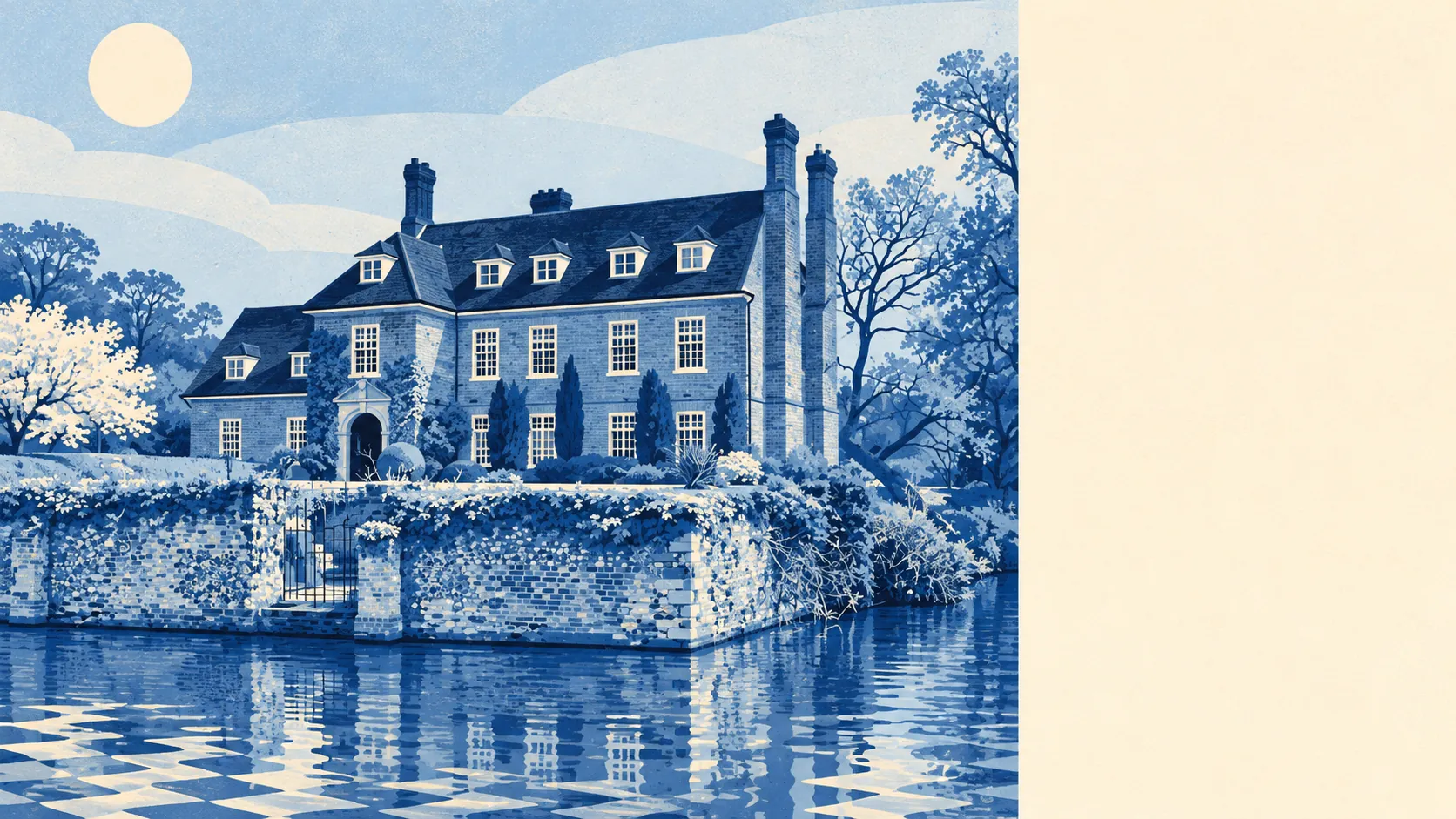
Yes, for most houses, and with more paperwork in two corners of the village. London Colney has a modest number of listed buildings. Two conservation areas cover the old core and Napsbury Park. The clay under every postcode moves with the weather. Most homeowners are limited by their foundations more than by the conservation officer.
Historic England lists 24 buildings in and around London Colney: one at Grade I, one at Grade II* and 22 at Grade II. Listing protects the whole building, inside and out, so even small changes to a listed house need listed building consent from the council on top of any planning permission. Twenty-four listed buildings in a village of thousands of homes means the chance of buying one by accident is slim.
There are two conservation areas, London Colney and Napsbury. Inside them, the council looks harder at anything visible from the street, including extensions, windows, roofs and demolition, and some work that would go ahead elsewhere without an application needs one. Napsbury Park is a residential development and the conservation area covers all of it, so the rules come with the address. The council's conservation area maps show whether a particular house falls inside either boundary. It takes five minutes and decides how the next five years of home improvement go.
There is one scheduled monument in the area, the strictest tier of heritage protection. It matters to anyone buying land next to it and to almost nobody else.
People here do plenty of building. St Albans council's planning register for the area holds 3,691 applications between April 2024 and June 2026, and 1,647 of them came in the last twelve months. In London Colney, a bigger kitchen is something the whole street gets round to sooner or later.
Underground, the British Geological Survey puts the whole area in class 3 for shrink-swell, its published hazard class for clay that swells when wet and shrinks when dry. That isn't a reason to avoid building. It means an extension's foundations may need to go deeper than a builder's default, especially near trees, and a structural engineer should look at the plans before anyone digs. The clay doesn't care which conservation area you're in.
Historic England's Heritage at Risk register includes one listed building in the area. That is a building in poor repair that may qualify for grant support and will get close attention from the council. It has no bearing on extending an ordinary semi down the road.
For the post-war houses that make up most of London Colney outside the two conservation areas, permitted development rights cover many single-storey rear extensions and loft conversions without a full planning application, within limits the council can explain. Inside the conservation areas, or on a listed building, expect to apply for permission for work that would be routine elsewhere.
London Colney gives homeowners a fair amount of room to build. It is easy outside the old core and Napsbury Park, slower inside them, and every extension needs foundations deep enough for the clay.