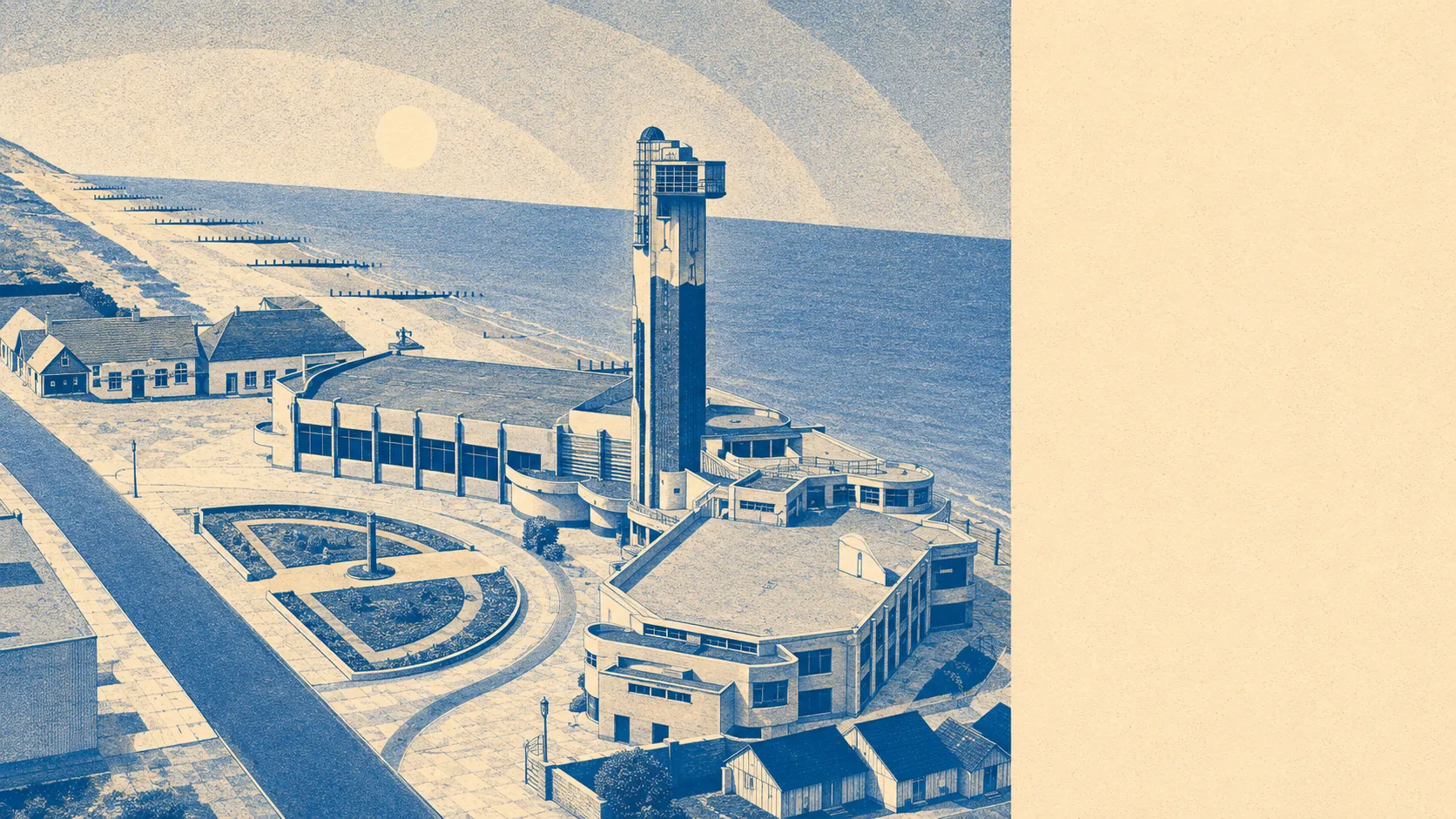
The pier went in 1958 and never came back. The Lee Tower with its art-deco viewing platform survived another thirteen years, then Gosport Borough Council demolished it in 1971 and put up a car park. The median resident is now 51. About four in five own their home. This is a seafront town that quietly stopped trying to be one and got on with being something else instead.
Roughly six in ten homes are houses. About one in five are flats. Another one in six are bungalows, which tells you almost everything about the demographic before any of the other numbers do. The post-war years did most of the building, between the runway opening and the supermarkets arriving. Only about four in a hundred properties go back before 1930. The energy ratings reflect the era: more than half the stock sits in band C or better, roughly a third in band D, and about one in ten in band E or worse. The Victorian seaside-resort hopes of the 1880s never materialised into the housing stock you might expect. What got built was mostly the post-1950 stuff with the bungalow density of a place where the council-estate idea didn't quite take.
A typical home sold for about £365,000 in the last twelve months, across 365 transactions. The split by type is honest. A flat lands at around £196,000. A terrace at around £290,000. A semi at around £350,000. A detached house at roughly £515,000. Council tax band C is the modal property, and only about one in five sit in bands A or B, which is your first hint that this is not where the rough end of the housing market washed up.
Rent across the Fareham area runs at about £1,210 a month for the typical private rent, up about four percent in a year. That figure is the borough's average and Lee sits at the upper end of the borough rather than the lower. If you want a proper Lee figure, take that average and assume a bit more.
The published crime rate is about 46 per thousand residents per year, roughly 23 percent below the Fareham borough average of about 60 per thousand. The borough number gets dragged up by Fareham town and the Gosport-adjacent estates. The Solent waterfront sits comfortably under both. People retire here partly because of the numbers and partly because they read them properly.
Half a percent of people commute by train, which tells you everything about whether there's a station you'd use. The railway service was discontinued in the 1930s and the runway at the former naval air station hasn't carried scheduled passenger traffic for decades, so getting out depends on a car or a bus. About one in three work from home, which is the highest functional commute mode here. A drive into the town centre takes about ten minutes. The bus takes about eighteen. The broadband makes up for some of it: gigabit fibre reaches about 98 in every 100 premises, which is the kind of number a place needs when its station has been gone since before most of the residents were born.
Roughly 4 percent of postcodes sit in a high flood-risk band, about 8 percent in medium, and nearly 30 percent in something low. The formal flood zone three covers less than 1 percent of the area. There is no recorded historic flooding. The coast is on average about 525 metres away and rising at about 2 millimetres a year, which is fine for a thirty-year mortgage and a conversation for whoever inherits the house. Green space is unusually close: the average household sits within about 170 metres of green space, with around 16 distinct patches within a kilometre.
There are 38 listed buildings in the area, one of them Grade II star and the other 37 Grade II. There are two conservation areas, named for Daedalus and for Lee-on-the-Solent itself. If you buy inside the conservation area you are buying the right to argue with a planning officer about windows, paint, and bins. If you buy outside it you have more freedom than most coastal villages can offer. The seafront's biggest historical building, the 1935 Lee Tower complex, is not coming back. It lives in old photographs and a car park.
About four in five homes are owner-occupied. The median age is 51. The typical household income is about £65,000. Roughly a third of working-age adults hold a degree-level qualification. About a fifth of households are pensioners living alone. The Index of Multiple Deprivation puts the area in the second-most-affluent decile nationally. This is not a place with a creative quarter pretending to be the next Margate. This is a place that knows it is comfortable and has no plans to apologise for it.
Lee suits a fifty-something couple who have sold a four-bed semi inland and want one storey, a sea view, and an energy band that does not bankrupt them through the winter. It suits a retired naval officer who already knows Stokes Bay and Daedalus by their first names. It suits remote workers who have done the maths on the commute and decided the commute can go to hell, the broadband is fine, and Stubbington is twenty minutes by car.
It is not for a young couple who need a train station to get to work, a school catchment they can argue about, and somewhere to drink that isn't a yacht club. It is not for anyone who confused this with Sandbanks, because the bungalows are smaller and the postcode doesn't carry the same dinner-party weight. If Hayling Island had a slightly tidier cousin, this would be it. If you want urban energy, Gosport is right there, doing what it says on the tin.
The rating is four out of five, above average across the board. The strongest dimension is the local community, scoring full marks: low deprivation, high ownership, a healthy older population, the social fabric of a place that has been comfortable for long enough to know how to stay that way. The weakest is transport, at two and a half: no station, sparse buses, and the car is the answer for anything beyond walking distance. Aspirational seafront on a Gosport budget, and that is the entire pitch.