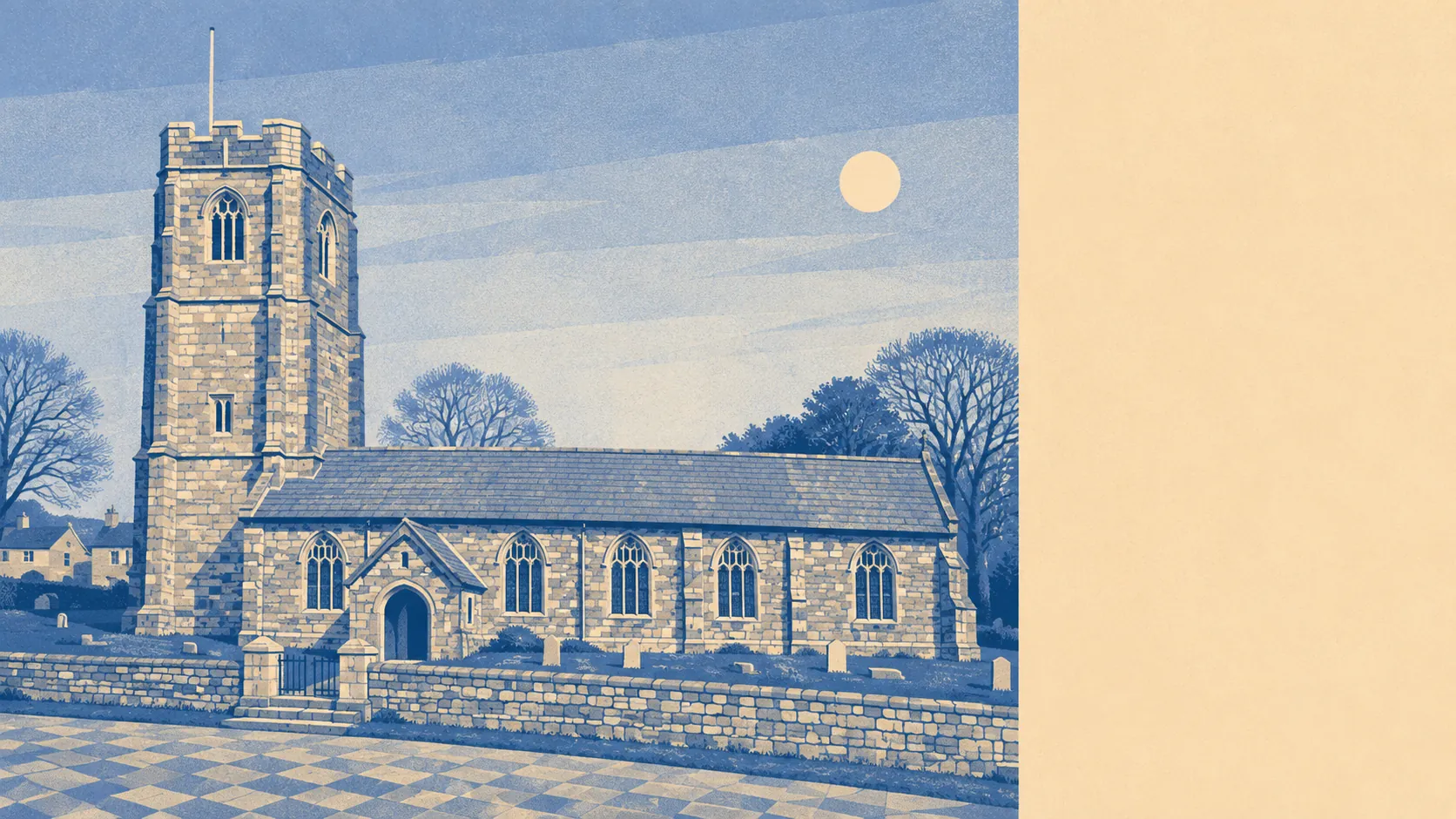
Fields, water and old stone crosses, with nothing official protecting any of it. Green space starts about a hundred metres from the average front door. Water is closer still. Not an acre of it carries a national landscape designation. This is the countryside people drive through on the way to the coast, and the reason it stays affordable is that they keep driving.
Green space access is close to the best a village can offer. The typical postcode has around 7 separate areas of green space within a kilometre, with the nearest averaging about 120 metres away. That is not a park you set out for. It is the field at the end of the lane, and it is the practical difference between a place where you walk the dog and a place where you drive the dog somewhere to walk it.
Water is nearer than the greenery. Blue space averages about 140 metres from the typical postcode, with roughly 21 separate stretches of it within a kilometre. In a valley like this that means streams, ponds and river frontage rather than anything you would swim in, and it explains a good deal about why the ground here behaves the way it does. Ruthernbridge, over to the west, is named for exactly the thing it is.
Formal cycling provision is thinner. The National Cycle Network sits about 2.3 kilometres away on average, and none of the village's postcodes count as close to it. There is no ancient woodland recorded in the area at all, so the tree cover here is hedgerow and farm copse rather than anything with a preservation history attached.
For amenities, the wider area's rating list carries 17 shop premises, 11 pub premises and a single restaurant. Eleven pubs against one restaurant is a fairly complete statement of how the surrounding parishes prefer to spend an evening.
Air quality is measured at council level rather than village level, and across the Cornwall area fine particle pollution ran at about 5.1 micrograms per cubic metre in 2024. That is a background figure for a large rural county rather than a reading from anyone's garden.
The character of the place comes from what is scattered across it. Helman Tor, with its prehistoric hillfort and hut circle settlement, sits within reach to the south. The Saints' Way long-distance footpath crosses near its own halfway point here, which makes Lanivet the spot where walkers realise how much of it is left. Around the village the settlements come thick and small: Nanstallon and Dunmere toward the Camel valley, Lockengate and Tregullon up on higher ground, Tremorebridge and Ruthernbridge down at the crossings. Bodmin, with its conservation area, is the nearest thing to a town and does the work of one.
Private outdoor space is the part the public green-space figures never capture. Across the two neighbourhood areas measured, gardens work out at roughly 449,000 square metres per thousand residents. Nobody here is negotiating over a shared courtyard.
As for what is actually in the village, the local rating list holds 16 rateable premises, and the largest single category on it runs to two. Those are premises on a valuation list rather than businesses currently trading, which is a distinction worth keeping in mind before assuming any of them is open. Across the wider area the same list carries 28 office premises and 284 holiday lets, and the second of those numbers tells you more about the Cornish economy than any amount of prose.
On food, six premises in the area hold a food hygiene rating, and every one of them sits at the top score. None fall into the lower bands. Six is a small enough sample that it says more about the standard of the places that exist than about the choice available.
One honest absence: no area of outstanding natural beauty, no site of special scientific interest and no ancient woodland overlaps this area. That is not a criticism of the countryside, which is perfectly good countryside. It means nobody has drawn a line around it, and the practical effect is that the landscape carries no extra planning weight.
The surroundings are the strongest thing Lanivet has, and they are strong in the ordinary daily way rather than the scenic-viewpoint way. Green space and water within a couple of minutes of the door, gardens with real space in them, and not one designation telling you what you may do with any of it.