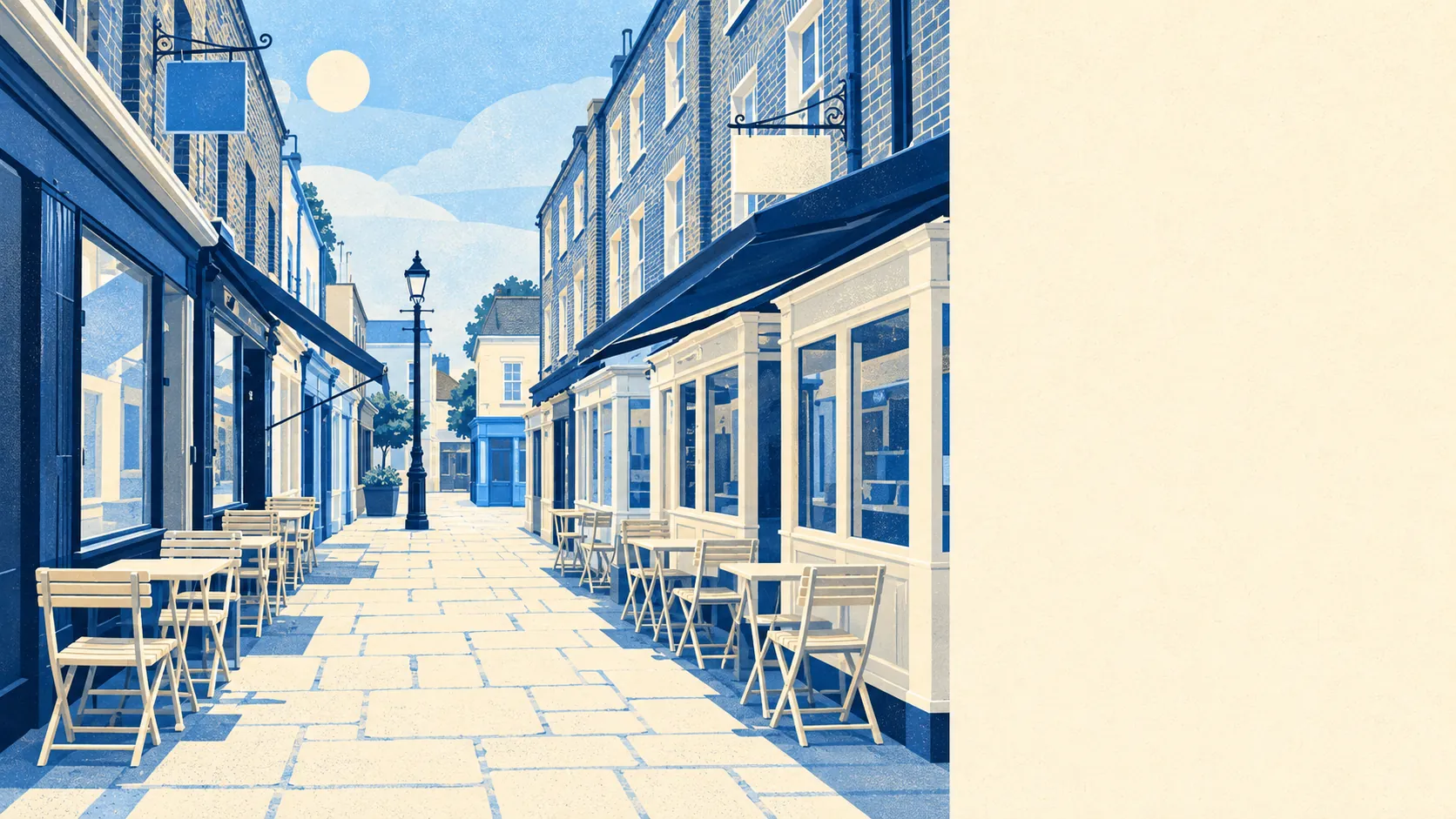
Islington lets people live inside a listed postcard, then tells them they can't redecorate it. About 1,100 listed buildings and 24 conservation areas crowd in and around it, so the Georgian terrace a buyer views is very nearly the terrace they will be allowed to keep. Anyone planning a loft, a glass box on the back or new sash windows is buying a negotiation along with the house. The parks are on the doorstep and the trains go everywhere. The price is the full Inner London price, and you pay it for a home you can't change much.
Most of those 1,100 listed buildings are Grade II, with 34 at Grade II* and 14 at Grade I, and Historic England's Heritage at Risk register lists 26 entries in the same patch. Listing covers the inside of a building as well as the front, so replacing a staircase or knocking through a wall can need consent. Conservation-area status adds rules on windows, doors, roofs and extensions that the rest of the country never thinks about. The 24 areas counted in and around Islington run from Barnsbury into De Beauvoir Town across the Hackney boundary, which means the rules change at a borough line most buyers can't see. Sir Hugh Myddelton opened the New River in 1613, and his statue still stands where Upper Street meets Essex Road. Most rear dormers here should expect less permanence.
The Land Registry recorded 654 sales in the year to May 2026, at a typical price of about £689,000. That figure is mostly flats. There were 527 flat sales at a typical £622,500, against 115 terraced houses at about £1,750,000. Only nine semi-detached houses sold, at around £2,450,000, and just three detached houses, at about £1,850,000. In Islington, owning a semi is less a housing choice than a rank. Band D is the most common council tax band, and only about 18% of homes are in bands A or B.
The typical private rent across the Islington council area was about £2,810 a month in April 2026, up roughly 4% on the year before. One-bedroom homes averaged about £2,130 and two-bedroom homes about £2,640.
The council tax valuation list shows what the place is actually made of. About 86% of homes are flats, 11% are terraced houses and about 1% are semi-detached, and 37% were built before 1930. The terraces get photographed, but most people live in the flats carved out of them or built in the gaps beside them. About 63% of homes are on mains gas and about 17% rely on electric heating alone, which is a running cost to ask about before a viewing in a converted Victorian flat. Among homes with an energy certificate, about 68% are rated C or better, because the newer blocks pull the average up.
Only about 24% of households own their home, and the rest rent, either from a private landlord or from the council and housing associations. The typical resident is 33. The Office for National Statistics models the median gross household income at about £72,700 for the year to March 2023, averaged across neighbourhoods that differ a great deal. The dinner-party Islington of the weekend supplements is the owning quarter. Most of the borough lives in the other three-quarters.
The Metropolitan Police published a crime rate of about 200 offences per 1,000 residents for the twelve months from June 2025 to May 2026, roughly 6% above the Islington average. The mix matters more than the total. Theft from the person makes up about 11% of recorded crime, against about 2% nationally, while violence and sexual offences are about 20%, against 35% nationally. Here a phone is more at risk than a face.
Getting around is easy. There are 353 bus stops, and the ones with timetable data average about 597 weekday departures and about 32 buses an hour at peak, with weekend services at every one of them. Highbury & Islington, Essex Road, Canonbury and Caledonian Road & Barnsbury stations serve the area directly, and London Kings Cross and St Pancras International are at the King's Cross and Pentonville end. About seven in ten households have no car, which makes sense on red routes and residents'-only streets. Gigabit broadband reaches about 95% of premises, and at the 2021 census about 58% of workers were working from home.
None of Islington falls in the Environment Agency's river-and-sea flood zones. On the wider postcode indicators, which include surface water, about 19% of postcodes carry a high rating on at least one measure. When it floods here, the water comes from overloaded drains after heavy rain.
Ofsted has graded 25 schools across the borough of Islington. Twenty-four are good or outstanding, seven of them outstanding, and one is inadequate. Locally, the two primary schools with published results average about 104 in maths at the end of primary school. William Tyndale, Canonbury, Thornhill and St Andrew's (Barnsbury) CofE are among the nearby primaries, and Elizabeth Garrett Anderson School and City of London Academy Islington are among the secondaries. A good grade still depends on getting a place, and Islington allocates those by its own rules.
This is where Islington is at its best. On average, a park or green space is about 86 metres from the front door and water is about 367 metres away. That means Highbury Fields, the New River's old course turned into a walk, and the Regent's Canal towpath edging Islington's southern side. In most inner cities, a park this close usually belongs to someone else.
Islington is right for people who want a flat, a short walk to everything and no car, and who are happy with the home they buy roughly as it is. It is the wrong place for anyone whose plan is to buy small and build bigger, or who wants a private garden and a driveway in the same purchase.
With that many listed buildings and conservation areas, most extensions here start with a consent application and some end there. The building you buy is close to the building you will sell. Islington comes out about average overall. The parks, the canal and the transport are excellent, the cost is steep, and a buyer who wants to change the house has picked the hardest part of Islington to live in.