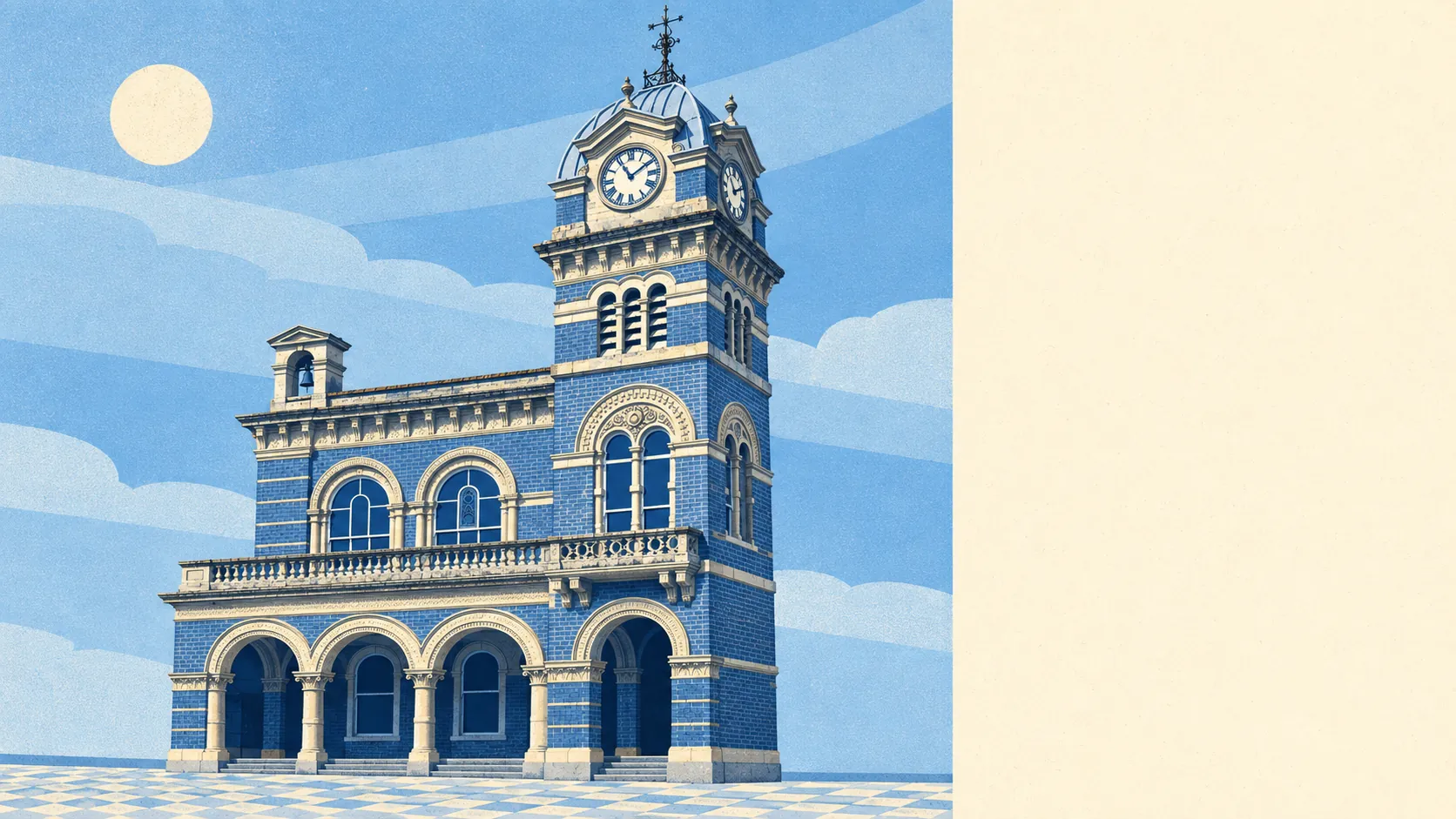
Yes, if you came for the view and can take the quiet. Six in ten households own their home. The typical resident is closer to fifty than forty. About four in ten work from home and almost nobody takes the train to the office, despite the station. Hungerford isn't a commuter town that happens to be pretty. It's a pretty town whose commuters mostly stopped going in.
Hungerford is a place of houses, not flats. On the council-tax valuation list for the Hungerford area, about 32% of homes are detached, 26% semi-detached, 18% terraced, 11% bungalows and only 10% flats. About 31% were built before 1930, so a fair share of the period charm comes with period draughts. Only about 41% of homes are on mains gas, and about 15% heat with electricity alone. Ask what heats the place before you fall for the fireplace. Energy certificates put about 40% of rated homes in band C or better and about 23% in band E or worse, so the handsome frontage and the heating bill are often two separate conversations.
The Land Registry's twelve months to May 2026 logged 171 sales at a median of about £392,500. Detached homes went for a median of about £634,000, semis about £375,000 and terraces about £300,000. Flats came in at about £342,500, above the terraces, but that rests on only 16 sales, so don't read it as a rule. Band C is the most common council-tax band, and only about 11% of homes sit in bands A or B. Nobody is getting a bargain band here by accident.
For renters, the typical private rent across the West Berkshire area was about £1,280 a month as of April 2026. That figure covers the whole council area, not Hungerford's own streets. A cottage near the canal won't be priced off a council-wide average, and the letting agent knows it.
Crime is not the reason to hesitate. Police figures for the Hungerford area put the rate at about 48 crimes per 1,000 residents in the year to May 2026. That's about 28% below the West Berkshire average of around 67 per 1,000. The surrounding downs aren't a hotbed of anything except walkers who didn't check the forecast.
Transport is where the postcard starts to fray. Hungerford Rail Station sits on the town's doorstep, with Kintbury and Bedwyn stations nearby. Yet the 2021 Census found only about 1% of working residents commuting by train, about 46% driving and about 39% working from home. The bus network looks generous on paper, with 226 stops, but the average stop sees about 9 weekday departures. Only about one household in ten has no car, and about 51% run two or more, which tells you how optional the buses turned out to be. Broadband does better: about 94% of premises can get superfast and about 79% gigabit. That's the connection the home-working four in ten actually depend on.
The flood story depends on the measure. About 11% of postcodes in the Hungerford area carry a high rating on at least one flood indicator, and that count includes surface water. In the Environment Agency's river-and-sea mapping, about 2% of the area falls in the highest flood zone and about 1% in the medium one. The last recorded river flood in the brief's records dates to December 1992. Check the specific address rather than the town. The surroundings are the real prize. The whole area sits inside the North Wessex Downs Area of Outstanding Natural Beauty, the average home is about 490 metres from public green space and about 450 metres from water, and Walbury Hill, the highest point in South East England, is on the horizon. Few towns get to call that a view.
That beauty comes with paperwork. The wider area holds 606 listed buildings: 11 at Grade I, 38 at Grade II* and 557 at Grade II. There are also 8 conservation areas, among them Great Bedwyn, Chilton Foliat and Shalbourne, plus 40 scheduled monuments. If you want to replace windows, extend at the back or put in anything a planning officer can see from the lane, you'll need consent, and patience. Buyers who like old buildings tend to forget that old buildings come with their own rules.
The Hungerford area is settled and comfortable. About 62% of households own their home, the median age is 48, and the Office for National Statistics models gross household income at about £65,000 for the financial year to March 2023. This isn't a place that goes out much midweek. It's a place with a good kitchen and no reason to leave it.
The patch stretches well past the high street. Eddington sits across the Kennet and Avon Canal, which makes it the closest thing Hungerford has to a suburb. Kintbury has its own station, Inkpen climbs towards the downs, Chilton Foliat sits over the Wiltshire border on the Kennet, and Leckhampstead is a village of thatch and quiet lanes. Lambourn is racehorse country, where the traffic you get stuck behind has four legs and a trainer.
Hungerford suits people who work from home, drive when they need to and want the downs outside the door. Couples trading a city postcode for space and a garden fit well, and so do buyers who love a listed house and accept the forms that come with it.
It suits you less if you want a lively evening, a quick station commute you'll use daily, or the freedom to knock through a wall without writing to the council first. First-time buyers hoping for a cheap terrace will find the median terrace has already priced them towards Newbury, which trades some of the scenery for more of everything else.
The town has form. John of Gaunt handed its people fishing rights on the River Kennet, and those rights are still the most local perk on offer. The Earl of Essex camped his army here for a night in the Civil War. Samuel Chandler, the Nonconformist theologian, came from Hungerford, and so did Edward Duke, the antiquary. So did Charlie Austin the footballer and Adam Brown, actor and pantomime performer, which makes it one of the few towns that can claim both a preacher and a panto dame.
Hungerford is a good place to live, and better than average once you're over the quiet. Its real strength is the country around it: downland, water and green space on every side, with crime well below the West Berkshire average. The weak spot is the freedom to change your own home, because in a town this listed the planning office has a say in the renovation. Buy the house you want as it stands, because it will mostly stay that way.