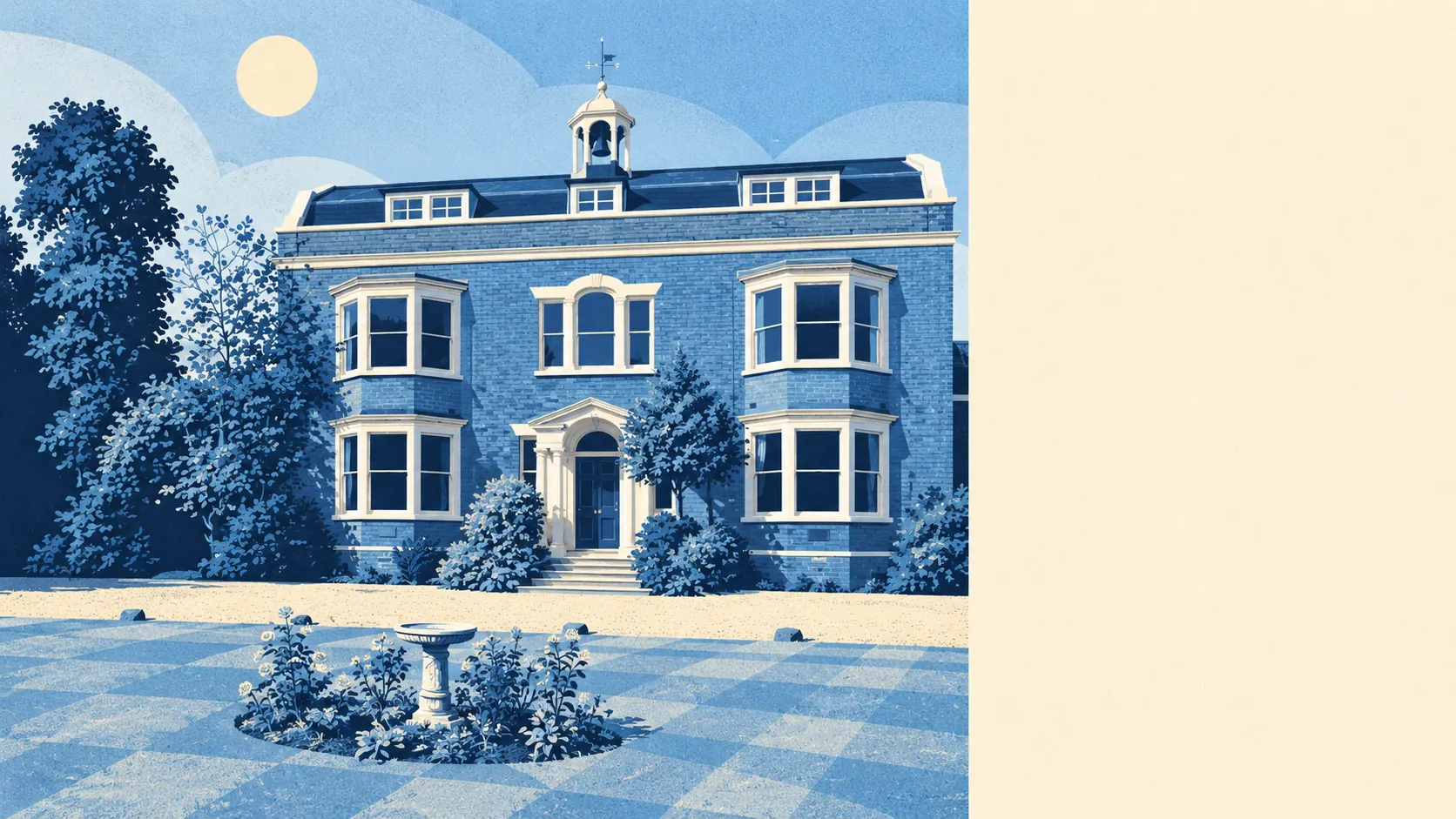
Higham is a good place to live, provided you own a car and have stopped pretending otherwise. Crime runs about a third below the Gravesham average. Eight in ten households own their home. A quarter of the houses are bungalows. The station is lovely and almost nobody commutes on it.
Two property types run this village: the semi and the bungalow. On the council-tax valuation list, which covers every home, about 30% are semi-detached, 28% detached, 25% bungalows, 14% terraced and 3% flats. Only 21% were built before 1930, and the energy certificates put the bulk of the certificated stock in the post-war decades. That gives Higham the look of a place finished some time around the Silver Jubilee and happy about it. On energy efficiency, 43% of certificated homes sit in band D, 38% reach A to C and about 19% are E or worse. About 78% of homes heat with mains gas and 4% rely on electric heating alone. The bungalows get snapped up by exactly the people you'd expect, and the estate agent will call them "ideal for downsizers" as if the stairs had been the problem all along.
The Land Registry's twelve months to mid-May 2026 recorded 25 sales at a median of about £386,000. Semis made up most of that, at 18 sales and a median of about £383,000. Four detached homes sold at a median of about £511,000 and three terraces at about £350,000. With a sample that small, one big detached sale moves the headline. Council tax is mostly band D, and only 10% of homes are in bands A or B, so the cheap end of the market is thin. If you're hunting for a bargain starter home here, you'll spend most of your time waiting on property alerts that never arrive.
Renting is the harder route. The typical private rent across the Gravesham area was about £1,320 a month in April 2026. That figure covers the whole borough, including Gravesend's flats. Higham's rental stock is mostly houses and there isn't much of it, so assume a village semi costs more than the borough average and plan your budget on that basis.
Safety is where Higham earns its keep. Police records for June 2025 to May 2026 put the rate at 67 crimes per 1,000 residents, about a third below the Gravesham average. The numbers are small enough that a few incidents shift the pattern, so the rate matters more than the mix. The most dramatic thing to happen here, as far as the history books go, was a group of nuns relocating from Brittany in 1148. They picked it for the peace too.
On schools, Higham Primary School is the one in the village, and the two primaries in the surrounding postcode districts average about 103 in the end-of-primary maths tests. Across Kent, Ofsted has graded 221 of the 245 settings it rates as good or better, with 38 outstanding. A primary school is about a 13-minute walk on average. Secondary is a different story: about 42 minutes on foot or 26 by public transport. Gravesend Grammar School and Thamesview School both appear on the nearby list, and Kent's grammar system means the eleven-plus shapes family life here long before any school run does.
Transport is the weak link. Higham Rail Station is in the village, yet only 4% of working residents take the train and about 52% drive. Another 36% work from home. There are 12 bus stops, and the ten with timetable data each average about 20 weekday departures, with around one or two buses in the peak hour, although all ten do run at weekends. Government modelling from 2019 puts the nearest town centre about 25 minutes away by public transport and 14 by car. Doctors are a sore point: no surgery sits inside the village, the nearest is about 11 minutes by car or 43 on foot, and there is one pharmacy. Hospital is about 22 minutes by car and nearly an hour by bus. More than half of households run two or more cars, and that's the reason. Broadband is better than the buses: about 95% of premises can get superfast, 58% gigabit, and none fall below the legal minimum. Mobile signal from all operators covers about 99%.
Flood risk here is modest, but not nothing. None of the village sits in the Environment Agency's river and sea flood zones. Counting postcodes flagged on at least one flood indicator, surface water included, 9% are high risk, 6% medium and 21% low. So puddles and drains are the concern, not the Thames. The ground carries a class 3 shrink-swell rating across the whole area, which matters for clay and foundations. About 58% of postcodes fall in elevated radon bands. Every postcode sits near road noise of 65 decibels or more. Green space is close, with the nearest park or open space about 385 metres away on average and five within a kilometre. The garden is where the real outdoor space is.
Heritage rules barely get in the way. The village has five listed buildings, one Grade I and four Grade II, and no conservation area inside the boundary used here. Church Street and Lower Higham have conservation areas of their own nearby. For most owners, that means the planning department will judge your loft conversion on how it looks, not on how Dickens would have felt about it.
The people are settled, comfortable and in no hurry. About 83% of households own their home, the typical resident is 50, and modelled household income before tax averaged about £67,000 in the financial year to March 2023. Nobody here is trying to make the village cool, which is exactly why the people who moved here like it.
It suits couples and families who drive, want a garden and a low crime rate, and can handle the eleven-plus. It suits downsizers looking for a bungalow near Strood and Gravesend without living in either. Anyone commuting to London on the train should time the door-to-platform walk before making an offer.
It doesn't suit anyone who wants to live without a car, walk to a doctor or have a bus every ten minutes. First-time buyers looking for a cheap flat will find almost none. Renters will be paying house prices for house-shaped rentals.
Higham is above average, and it gets there honestly. Its real strength is safety, with crime well below the borough average and an owner-occupied, settled population to match. The weak spot is transport and connectivity: a station most people ignore, buses you learn to plan around, and a doctor's surgery outside the village. Buy the car first, then the house.