Yes, for most homes, as long as yours is not one of the old ones. Fifty buildings are listed. Five conservation areas cover parts of the ground. The neighbours file planning applications by the hundred. Herne extends freely until it reaches the bits with history, and then it asks permission.
There are 50 listed buildings in the area: two at grade I, one at grade II* and 47 at grade II. Listing covers the whole building, inside and out, so changes that affect its character need listed building consent on top of any planning permission, and that includes the sort of work owners assume is routine, such as new windows or an internal wall knocked through. The owner of a grade II cottage learns fast that the building's past has more say in the kitchen than the owner's future does.
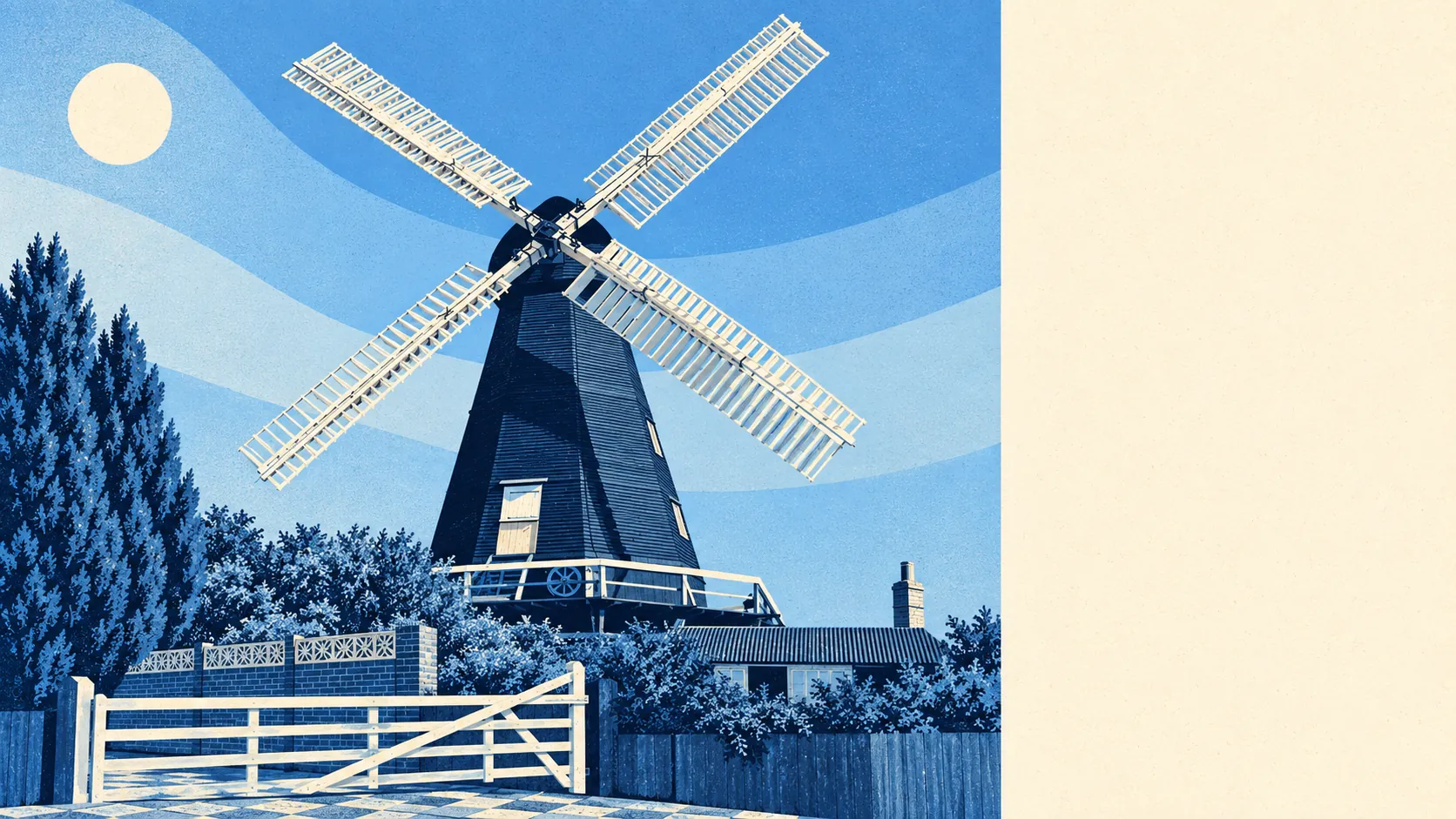
Five conservation areas touch the area: Herne, Herne Windmill, Broomfield, Eddington and Hawe Farm at Hunters Forstal. Inside a conservation area, changes visible from the street get closer attention, some work that would be automatic elsewhere needs an application, and demolition needs consent. A conservation area for a windmill sounds like overkill until someone proposes a loft conversion that blocks the view of it.
The appetite for building here is plain. There were 807 planning applications between April 2024 and June 2026, and 350 in the last twelve months of that window. That is live evidence that people in Herne alter their homes as a matter of course, and that the planning office sees a steady queue of rear extensions and dormer schemes. With a quarter of the stock in bungalows, the pressure to go up into the roof is the most predictable thing in the village.
The ground needs as much thought as the paperwork. The British Geological Survey rates shrink-swell risk in Herne at class 3 at its highest, and about 56% of the area reaches that class. Shrink-swell ground expands when wet and shrinks when dry, which can move foundations over time. For an extension, it means deeper foundations may be needed and a structural engineer should look at the ground before the architect draws anything ambitious. It is a design question with a known answer, not a reason to panic, and the builders who skip it are the ones who come back to look at the cracks.
One listed building in the area sits on Historic England's Heritage at Risk register. That marks a building in poor condition whose repair may attract grant support and will certainly attract scrutiny. It is a matter for that building's owner and the planners, not a hazard for the buyer of an ordinary semi down the road.
In practice, a house outside the conservation areas and not listed will usually allow a modest rear extension or loft work under permitted development, with larger or more visible schemes needing a full application. A listed home or one inside a conservation area should be treated as needing consent until the council says otherwise. The cheapest step is a conversation with the planning department before offering on a house whose appeal depends on building onto it.
Freedom to extend in Herne sits in the middle: easy on the ordinary post-war streets, harder in the historic pockets, and every extension needs the ground checked first.