Heathfield is a market town with the countryside at the end of almost every road. Green space is a short stroll from the typical front door. Water is only a little further. A former railway line now carries walkers and cyclists out of town. Buyers who come for the scenery tend to stay for it, which is more than can be said for most scenery.
On average, a home in Heathfield is about 225 metres from public green space, with about eight green spaces within a kilometre. That is enough choice for a dog walker to take a different route every day of the week and still have one left for Sunday.
Water is close too. The nearest pond, stream or lake averages about 310 metres from a home, and about 16 bodies of water fall within a kilometre. Not all of them are the sort you would swim in, but none of them are far off.
The Cuckoo Trail, built on the old Cuckoo Line railway bed, is part of the National Cycle Network. The network runs about 286 metres from the average home, and about 86% of postcodes sit close to it. Walking out into the countryside here needs no car and no map, just a front door.
The property records count 138 shops, 12 pubs and 6 restaurants in the area. That is a working high street with a thin dining-out scene: the town is better stocked for a pint than for a booking. Across the 44 food premises with a hygiene rating, about 73% hold the top score.
For air quality, the council-area figure for Wealden put fine-particle pollution at about 6.4 micrograms per cubic metre in 2024. That covers the whole district, not a reading from any particular street.
About 6% of the area falls within the High Weald Area of Outstanding Natural Beauty. Heathfield sits on the edge of the protected landscape rather than inside it, so residents get the view and ordinary homeowners mostly avoid the extra planning rules.
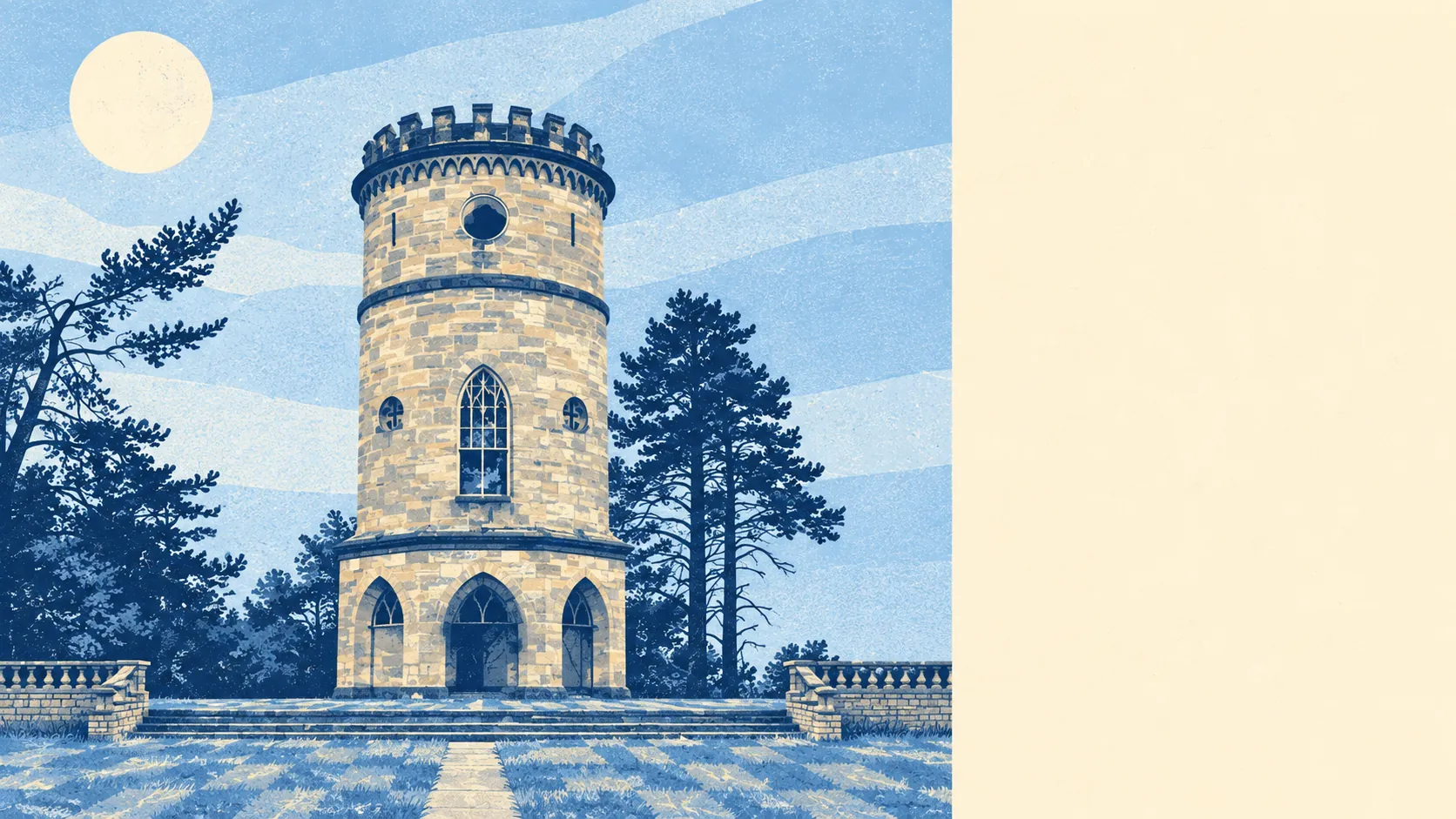
The town's character comes from what surrounds it. Heathfield Park, with its seventeenth-century mansion and the Gibraltar Tower standing in a corner of the estate, sits alongside the town. The cricket club has played there since 1878, on one of the most scenic grounds in Sussex. Old Heathfield, the original village, keeps its parish church of All Saints. The Cross in Hand windmill stands to the west, and the transmitting station mast about a mile out serves as a landmark for anyone who gets lost on a footpath. The iron industry and the railway both came and went. The countryside was here before either of them.
Heathfield's homes come with real gardens. There are about 307,000 square metres of private garden for every 1,000 residents, which fits a town of detached houses and bungalows on decent plots. The green space starts at the back door, before you have even reached the public kind.
The business-rates valuation list carries 285 rateable premises in the area. The largest groups are 100 classed as shops and 54 as offices, with a smaller mix of workshops, storage and other premises making up the rest. These are premises on the list, not a count of businesses open today, and the list uses different categories from the property records above. Either way, Heathfield looks like a town with its own economy, not a dormitory with a Co-op.
Hygiene standards are high. About 73% of the 44 rated food premises hold the top score, and none sit in the low bands. It is a small list, but there is nothing to avoid.
Beyond the edge of the High Weald, the area carries no other landscape designation: there is no site of special scientific interest and no ancient woodland within its boundaries. That is not a gap in the scenery. It means the green space around the town is ordinary countryside, open for ordinary use, not a protected landscape to tiptoe round.
The countryside is Heathfield's real strength. Green space, water and an off-road trail are all within a short walk of most homes, and the countryside begins right where the town ends.