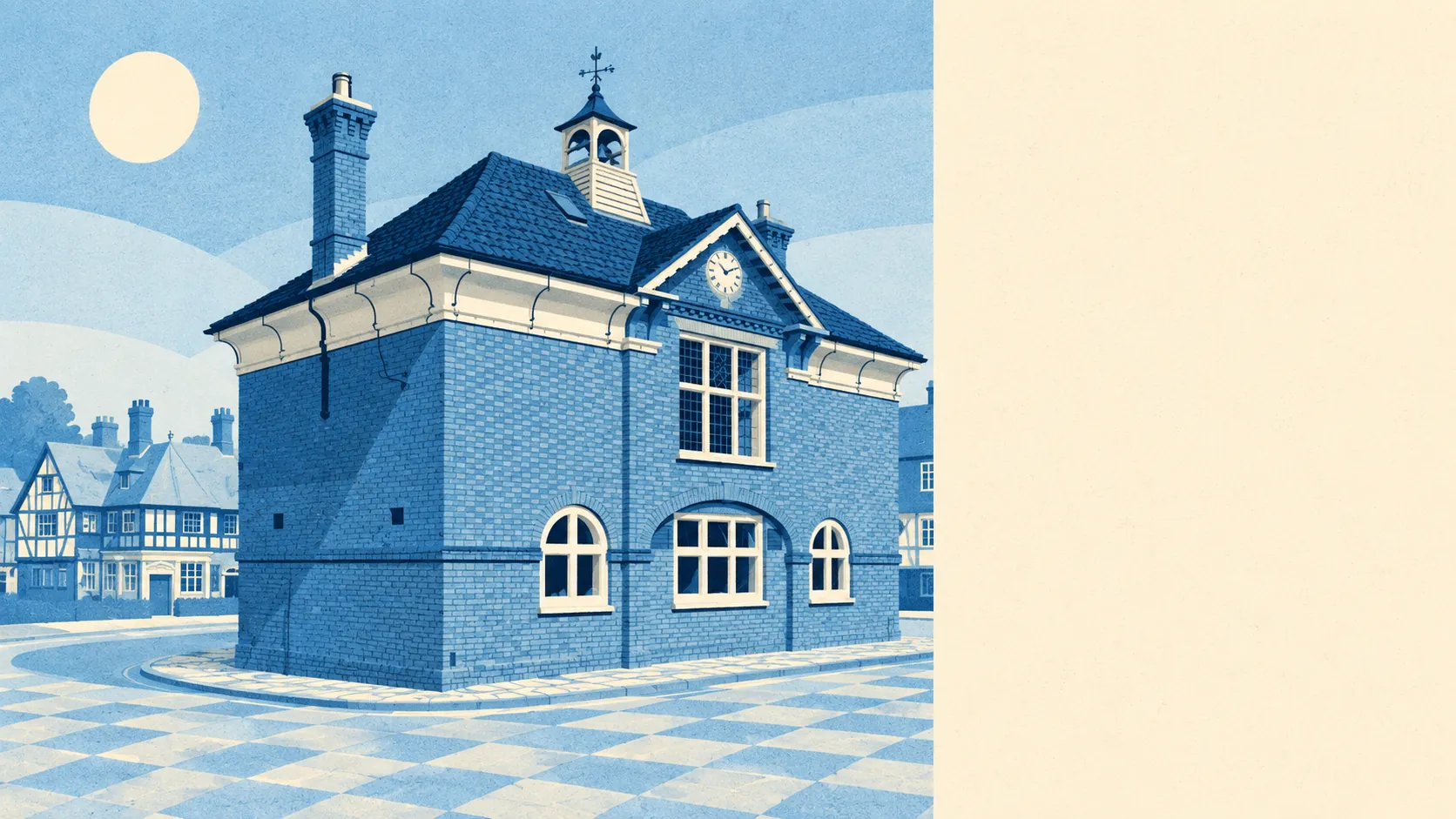
You can extend a house in Haslemere, once you've made your case to the town's past. Well over a hundred and seventy listed buildings. Eight conservation areas. Clay-affected ground under nearly all of it. The neighbours apply anyway, by the hundred. Possible, then. Quick, no.
Haslemere has 174 listed buildings. None is Grade I, 10 are Grade II* and 164 are Grade II. Listing covers the whole building, inside and out, so on a listed home even modest changes can need listed building consent on top of any planning permission: windows, internal walls, a new doorway. Grade II* is the tier where the scrutiny tightens further. If the house you're viewing is on the list, the extension conversation starts with the conservation officer, not the architect's sketchbook.
There are 8 conservation areas in and around the town: Haslemere itself, River Wey, Springhead, Wey Valley, Grayshott, Camelsdale and Hammer, Kingsley Green and Lynchmere. Inside a conservation area, the council takes a closer interest in anything visible from the street, from the materials on an extension to the trees in the front garden. Part of the wider area also falls inside the Surrey Hills National Landscape, which adds its own layer of care about how new building sits in the view. None of this bans change. It makes the application longer, the drawings more careful and the materials more expensive.
What the neighbours are doing tells the other half of the story. Between April 2024 and June 2026 the area logged 1,040 planning applications, 442 of them in the last twelve months. That's a town full of people who bought a house for its character and then applied to change it. Plenty of them clearly think it's worth the paperwork. The volume says nothing about how many got through, only that people keep trying.
The ground adds a structural question to the planning one. The British Geological Survey puts the area's shrink-swell hazard at class 3 at its highest, and about 98% of the area reaches that class. Shrink-swell ground expands when wet and shrinks when dry, which can move foundations over time. For an extension, that means deeper foundations than some places need and a structural engineer's view before anything's priced, particularly near large trees that pull moisture out of the soil. A solvable problem, and a costed one, not a reason to walk away.
In practice, homes outside the listed and conservation layers can still use permitted development rights for some smaller extensions, within national limits. Inside a conservation area those rights are narrower, and on a listed building almost nothing counts as minor. Before you buy with a plan in mind, check whether the specific address is listed, whether it sits inside one of the conservation areas and what the council has approved nearby. Ask the seller what's already been done and whether it was consented. Buying a house with an unauthorised conservatory that's now your problem is a common way to learn the rules.
Freedom to extend or alter a home is one of Haslemere's weaker points: the listing, the conservation areas and the ground all add cost and time, and the buyers who do well here are the ones who price in the process before they fall for the plans.