Grove makes a solid, better-than-middling home for anyone who drives, works from home some of the week and wants a three-bed with a garden. It is the biggest village in the Vale of White Horse and lives like a small town without a railway, with post-war semis, newer estates and a field or a stretch of water at the end of most roads. Seven in ten own their home. Half drive to work, and a third make no commute at all. Grove pays back people who like it as it is and wears out anyone hoping it will turn into a market town.
The Land Registry's figures for the year to May 2026 show a typical sale price of about £327,000, across 111 sales. Terraces went for around £285,000 across 39 sales, semis for about £325,000 across 29, and detached houses for about £426,500 across 40. Only three flats changed hands, at around £200,000. Band C is the most common council-tax band, and only about 11% of homes fall in bands A or B, so cheap bills are hard to find. If you have a family budget and a car, this is where your money gets the most house. If you are a first-time buyer hoping for a cheap flat, there are very few of them to buy.
The Vale of White Horse council area as a whole has a typical private rent of about £1,330 a month. Rents on Grove's own streets could land either side of that, depending on the house.
The housing stock looks like what it is: a village that grew fast after the war. On the council-tax valuation list, about 35% of homes are detached, 28% terraced, 21% semi-detached, 10% flats and 5% bungalows. Only about 2% were built before 1930. Part of the newer housing stands on the old RAF Grove airfield, which the United Kingdom Atomic Energy Authority used until the 1960s before the land was sold for homes. Around 71% of homes with an energy certificate are rated A to C, and about 86% heat with mains gas. Grove has very few draughty rectory conversions, which suits a buyer who would rather spend the weekend in the garden than up a ladder with a tin of putty.
Thames Valley Police recorded about 61 crimes per 1,000 residents in Grove in the year to May 2026, roughly 5% above the average for the Vale of White Horse. That puts the village at about the district's level. A gap that small is little use to a buyer choosing between Grove and the next village on safety grounds.
The typical resident is about 40, and around 74% of households own their home. Household income across the area averaged about £68,500 a year before tax. That figure is modelled by the Office for National Statistics for the financial year to March 2023, so it describes the wider area and is a few years old. Put together, it is a village of mortgages and school runs, people in the middle of life and too busy to notice the village has the same middle-of-life look.
Flood is where Grove's case is weakest. About 17% of postcodes are at high risk on at least one flood indicator, surface water included, and another 18% are at medium risk. The Environment Agency's river-and-sea flood zones cover less: about 5% of postcodes are in zone 3 and 2% in zone 2. Four flood events are on record, most recently in July 2007, when a main river overflowed its channel at a point with no raised defences. The village was built along Letcombe Brook, and the brochures for the newer closes show the brook in sunshine.
Day to day, Grove runs on the car. About 53% of working residents drive to work and around 2% take the bus. Train commuters make up less than 1%, which makes sense for a place with no station of its own. Grove has 38 bus stops, and the stops with timetable data average 68 weekday departures each, with about four buses an hour at peak and a weekend service at all 34. The Department for Transport modelled the trip to the nearest town centre in 2019 at about 19 minutes by public transport and 10 by car. Gigabit broadband reaches about 93% of premises, which matters more here than anywhere with a station, given that about 33% work from home. Grove once had a canal, a steam tramway and its own railway station. Today it commutes along the A338.
Heritage rules affect only a small part of the village. Grove has 23 listed buildings, all Grade II, and a single conservation area, named after the village. A buyer who wants to extend a 1970s semi is dealing with ordinary planning. A buyer who wants to change one of those 23 buildings, or a house inside the conservation area, needs extra consent and should expect a slower answer.
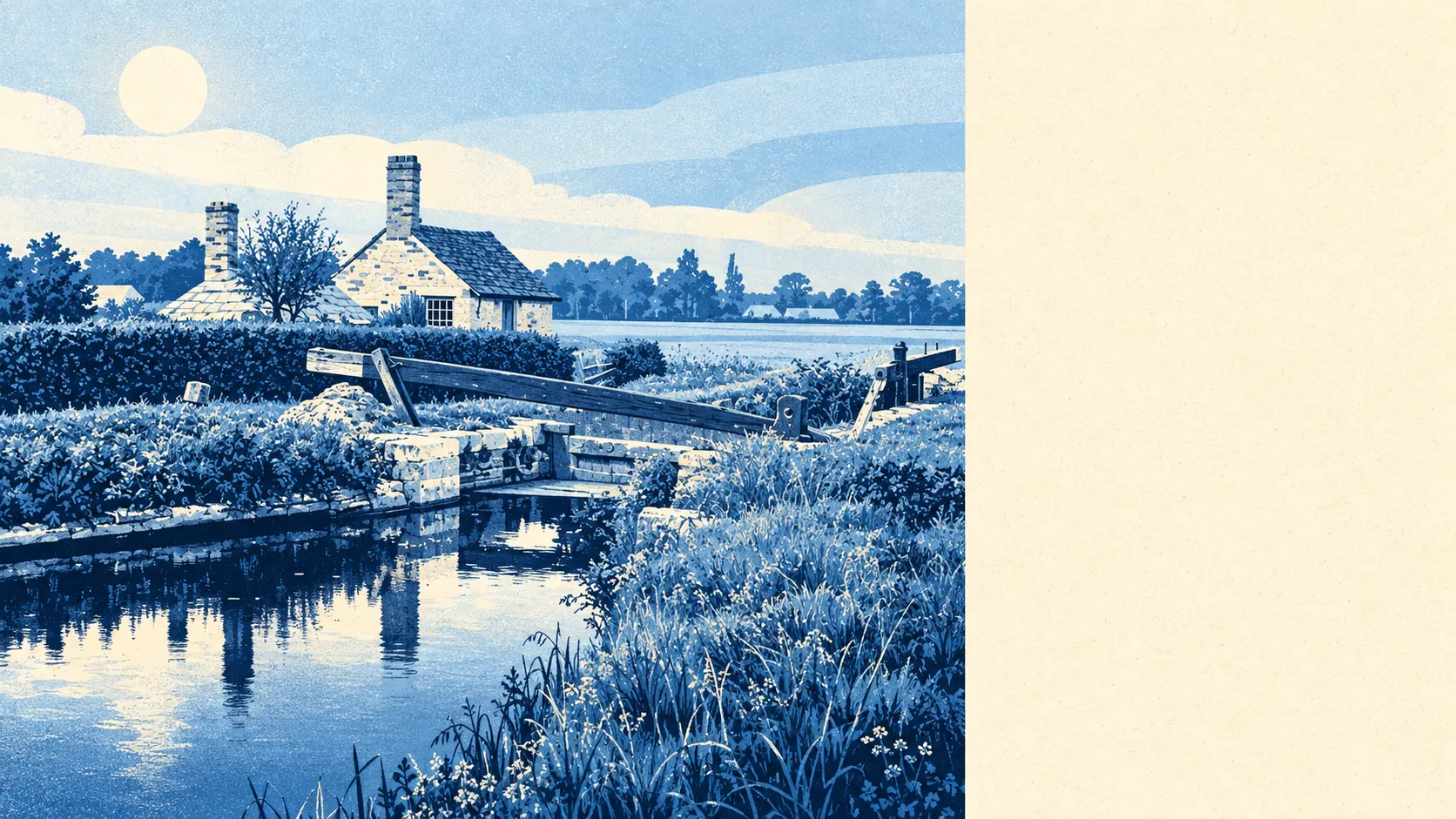
The surroundings are where Grove does best. The average home is about 160 metres from the nearest green space, with around 14 green spaces within a kilometre, and the nearest water is about 220 metres away on average. Parts of the old Wilts & Berks Canal have been restored and make good local walks, so the dog gets a canal towpath most mornings.
Grove does better than average, and it does best for one type of household. A family with a car and a home office gets a modern house, a quick walk to open space and good broadband. In return it accepts a small chance of flooding that varies from street to street. The rail commuter who wants a platform within walking distance, and the buyer who wants a centuries-old cottage, will be happier somewhere older or somewhere with a station.