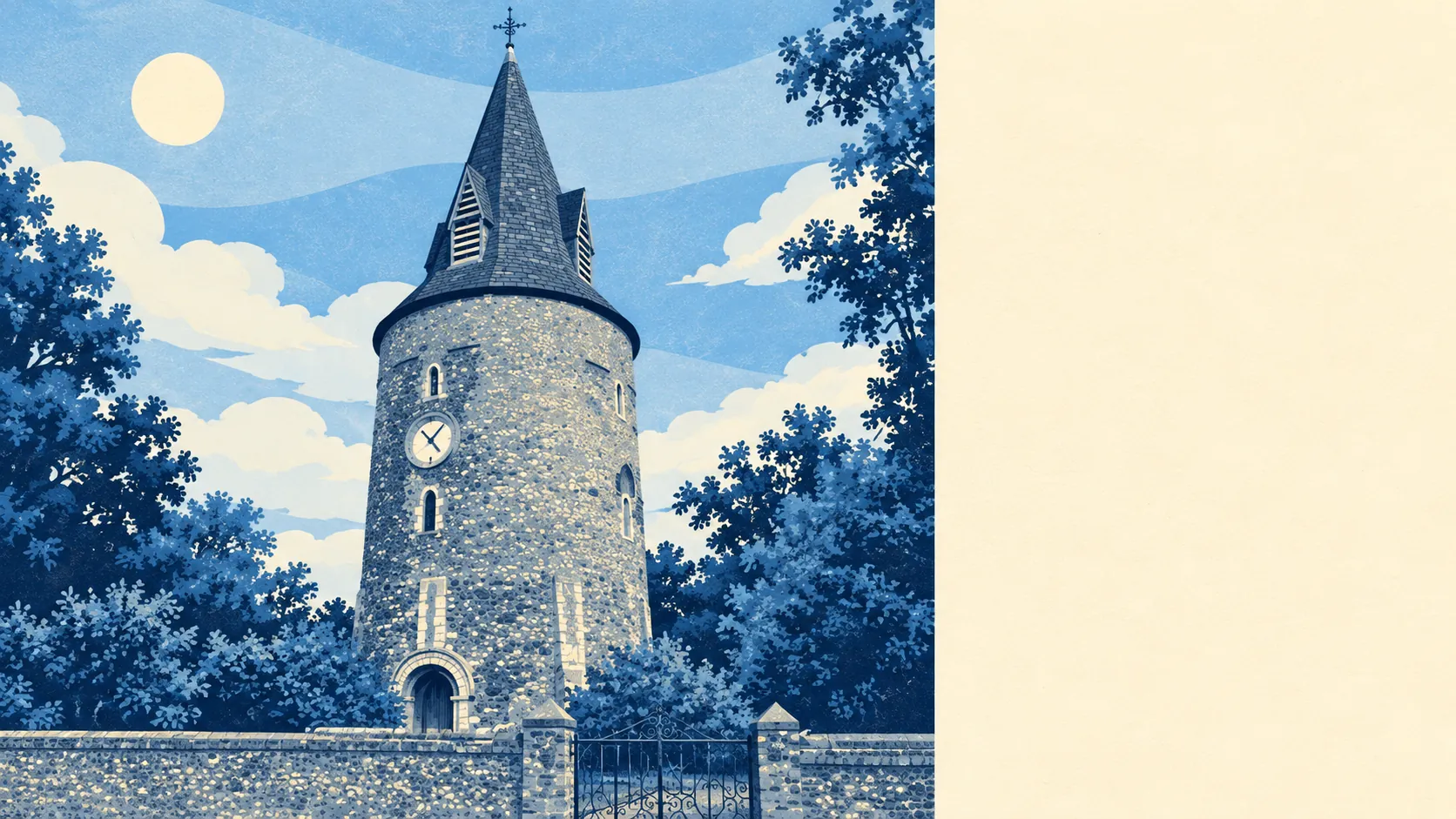
The area around Great Leighs is green, wet in the good sense and easy to get out into. A patch of green space is a short walk from most front doors. Ponds, streams and other water are closer than most people expect. A national cycle route runs just past most of the village. The countryside here is the ordinary working kind, with farmland and hamlets, and it is all within easy reach.
Green space is close and plentiful. On average the nearest green space is about 130 metres from a Great Leighs home, and there are around 10 within a kilometre. Most mornings a dog walker here can choose a different route.
Water is close too. The nearest blue space, meaning a pond, stream, lake or similar, is on average about 360 metres from home, with around 29 within a kilometre. That is a lot of water for a village whose name comes from a clearing in a wood.
Getting out into it is easy. The National Cycle Network passes on average about 270 metres from home, and about 76% of postcodes are close to a route. The cycling is easier than the cycle commute figures suggest.
Across the wider CM3 postcode district, the rated-premises records list 192 shops, 53 pubs and 19 restaurants. That count covers a large stretch of countryside and several villages, so most of it lies a drive away from Great Leighs. In the village itself, two pubs face each other along Main Road, the Castle Inn and the Dog and Partridge, and the Castle has been a resting place for travellers since long before anyone called it a pub.
The air is clean. Chelmsford's council area recorded fine-particle pollution of about 7 micrograms per cubic metre in 2024.
The surroundings are a scatter of hamlets, and an unusual number of them are greens. Bartholomew Green, Chatham Green, Gubbion's Green, Littley Green, Rank's Green and Willows Green all lie in the countryside around the village, alongside Fuller Street, Young's End and Little Leighs. The protected sites nearby are older and grander. The remains of Leez Priory, with its fishponds and Tudor mansion, are a scheduled monument, as is the moated site at Gubbion's Hall. Closer in, a spring by the road at Cole Hill once came out of a carved lion's head. At some point the lion went, and the water kept coming.
Private gardens are generous. Great Leighs' neighbourhood has about 198,000 square metres of private garden for every 1,000 residents. That figure measures what people own behind their own fences, and here it is a lot. The public green space is a bonus on top.
The village itself has very little commercial property. The rating list holds 27 business premises in Great Leighs, led by 9 offices and 7 warehouses, with the rest made up of one or two of everything else. These are premises on the valuation list, not a count of businesses trading, and the list shows a place where people live and work elsewhere.
Eating out is clean if not extensive. Of the 7 food premises rated for hygiene, about 86% hold the top score and none sits at the bottom. Seven is a small sample, but it is seven out of seven passing.
No protected-landscape designation reaches the area. Great Leighs has no area of outstanding natural beauty, no site of special scientific interest and no ancient woodland overlapping it. The countryside here is farmed and walked over, with no designation to protect it and none of the access rules that come with one.
The surroundings are one of Great Leighs' real strengths. Green space, water and quiet lanes are a short walk from almost every door, and a dog lives here very well.