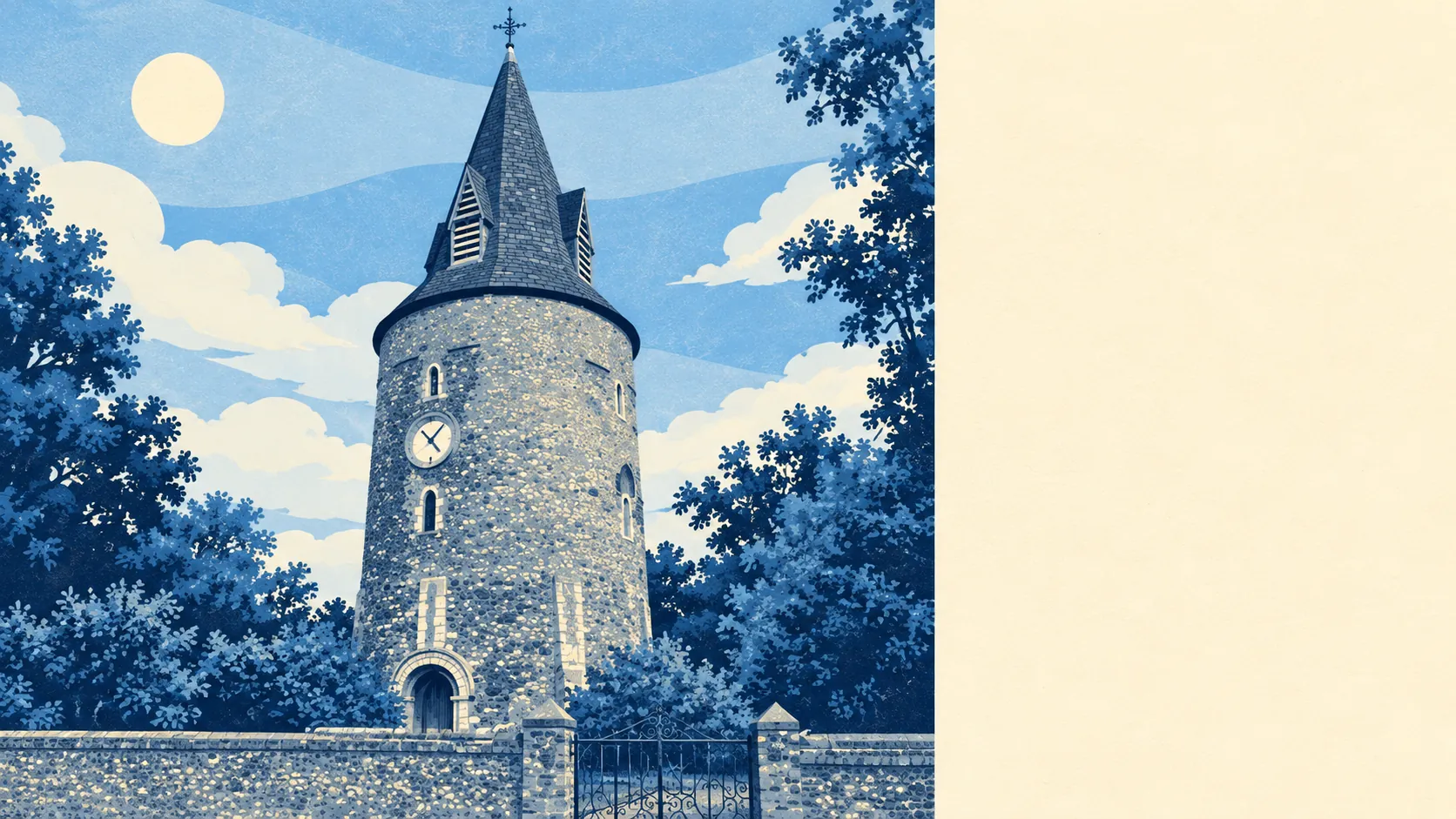
Great Leighs is one of the easier villages in Essex to put an extension on, and for a family that plans to grow into a house, that counts for a lot. It has seventeen listed buildings, all of them the lowest grade, and no conservation area at all. Most of the houses went up within living memory. What you buy here is a first draft.
The heritage list is short and gentle. All 17 listed buildings in Great Leighs are Grade II, and the village has no conservation area and no scheduled monument inside its boundary. For almost every owner, that means a rear extension, a loft conversion or new windows goes through ordinary planning, with no conservation officer reading the drawings for the colour of the frames. Gate Farmhouse on Moulsham Hall Lane is the sort of house the listing system exists for: a Grade II Georgian farmhouse built between 1820 and 1850, now home to the journalist Simon Heffer. Everyone on the newer streets can fit bifold doors without a letter to anyone about the Georgians.
Crime is low and stays low. Essex Police recorded about 64 crimes for every 1,000 residents in the year to May 2026, roughly 23% below the Chelmsford average of about 84. For a village strung along the old road between Chelmsford and Braintree, that is a fairly dull record, and dull is what a buyer wants from one.
Price is where Great Leighs asks the most. The Land Registry logged 23 sales in the year to December 2025, at a typical price of about £435,000. The 11 detached houses went for around £475,000, the five semis for about £450,000 and the five terraces for about £360,000. Five of each is a thin sample, though the gap between a semi and a detached house is small enough that the party wall barely counts as a discount. The council-tax list points the same way. Band E is the most common band and only about 14% of homes fall in the two cheapest, while a Band D home in the Chelmsford area pays about £2,300 a year. Nobody is moving here to economise.
Renting gives no escape route either. Typical private rent across the Chelmsford area runs at about £1,440 a month as of April 2026, up about 7% on a year earlier. That figure covers the whole council area, city-centre flats included, so it says less about a three-bedroom house on a village close than a renter would like.
The housing is mostly houses, and mostly recent ones. On the council-tax list, about 38% of homes are detached, 25% terraced, 15% semi-detached, 10% flats and 9% bungalows. Only about 16% were built before 1930, while roughly a third went up between 2000 and 2008, the years the village grew new estates. About 67% of the homes with an energy certificate are rated C or better. Heating is less tidy. Only about 52% of homes run on mains gas and about 14% heat with electricity alone. Electric-only heating in a well-insulated new build is one thing; in one of the older cottages it is a much bigger winter commitment.
Flooding comes from the sky here, and much less from the river. None of Great Leighs is in the Environment Agency's river-and-sea flood zones. On the wider set of indicators, which includes surface water, about 11% of postcodes carry a high flag on at least one measure, 13% a medium flag and 44% a low one. The river maps say nothing is wrong, while the drains on a wet afternoon are another matter.
Getting around means driving. About 54% of working residents drive to work and about 2% take the train, which tells you how much use Braintree, Braintree Freeport and Cressing stations get from here. About a third work from home, helped by superfast broadband across the whole village and gigabit-capable connections to about 83%. The nine bus stops average about 183 departures each on a weekday, roughly 15 in the peak hour, and all nine have a weekend service. The Department for Transport's 2019 modelling puts the nearest town centre 15 minutes away by car and 25 by public transport, and the bus figures have had seven years to change since. The roads, for anyone with a car, make the commute easy.
The village is younger and better off than its age suggests. About 72% of households own their home, and the median resident is 37. The Office for National Statistics models gross household income for the wider area at about £70,500 in the financial year to March 2023, before tax and averaged across a neighbourhood larger than the village. The new estates brought the families, and the families pulled the average age down.
Primary school is the easy part. Great Leighs Primary School is about a seven-minute walk on the Department for Transport's 2019 modelling, and the three primary schools in the local postcode district average about 104 in key stage 2 maths. Across Essex, Ofsted has graded 218 of 246 settings good or outstanding, which is a county-wide figure and covers schools nobody here would drive to. Secondary school is about 15 minutes by car and 77 on foot, so the school run becomes a car journey at eleven and stays one until sixth form ends.
Outside the front door there is a lot of green. On average the nearest green space is about 130 metres away, with around ten within a kilometre, water about 360 metres off and the national cycle network about 270 metres away. The dog gets a better deal than the commuter.
Great Leighs works best for a family with two cars, a long view and plans for a kitchen extension that a conservation officer would have killed in the next village. It works less well for a first-time buyer chasing a cheap starter home, a renter on a tight budget, or anyone who wants to reach London by train.
The freedom to alter a house here is real. With no conservation area and only Grade II listings, a buyer can fix a modern home's shortcomings for the cost of the builder and a planning fee. The catch is the entry price, and for a village of new estates, that is where Great Leighs is least generous. It is a better-than-average place to live for people who can afford the house they plan to build onto.