Gravesend is a better-than-average place to live, carried by its trains and held back by a town that has drifted slightly the wrong way while the trains got faster. The high-speed line reaches St Pancras, and gigabit broadband reaches most homes. The neighbourhood figures have moved the other way, with deprivation edging up and only about a quarter of adults holding a degree. The commute is fine. The town around it needs work.
Gravesend Rail Station is the main north Kent interchange for high-speed services, running from St Pancras and Stratford International on to the Medway towns and the Kent coast, with slower metro trains to Charing Cross, Waterloo East and London Bridge. It also has a Platform 0, one of the few in the country. Ebbsfleet International and Northfleet are close by. Even so, at the 2021 census about 49% of working residents drove to work and about 6% took the train, while about 25% worked from home. The town owns one of the best rail connections in Kent, and half its workforce still sets off in the car. Bus coverage is decent, with 220 stops and an average of 46 weekday departures per stop with service data, but only about two buses an hour per stop at peak. Ofcom's figures put gigabit broadband within reach of about 86% of premises and superfast at about 97%, and about 99% of the area gets 4G or 5G from all four operators. The passenger ferry to Tilbury stopped on 31 March 2024, so the Thames is something to look at now. Getting across it is another matter.
The neighbourhood figures are where the answer turns. About 59% of households own their home, the typical resident is 38, and the Office for National Statistics models median gross household income at about £56,000 for the financial year to March 2023. Gravesend's neighbourhoods average close to the middle of England's deprivation rankings, and they slid a little further down between the 2019 and 2025 editions of the index. At the 2021 census about 27% of adults held a degree and about 21% had no qualifications at all. Unemployment was about 4%. None of these numbers is alarming on its own. What they describe is a working town that the high-speed line has served for well over a decade without visibly lifting.
The Land Registry's last twelve months, to May 2026, put the typical sale price at £345,000 across 448 sales. Flats went for around £180,000, terraces about £320,000, semis about £400,000 and detached houses about £508,000. The House Price Index has Gravesend up about 1% in the year to May 2026, which is barely moving. Band C is the most common council tax band, and about 26% of homes are in bands A or B. Gravesham's typical private rent is about £1,320 a month, a borough-wide mean from the Office for National Statistics that also covers Northfleet and the villages.
The council tax list shows terraces as the biggest group at about 38% of dwellings, then flats at about 27%, semis at about 24%, detached houses at about 7% and bungalows at about 5%. About 28% of homes were built before 1930. Energy certificates put about 52% of rated homes in bands A to C and about 12% in E or below. About 79% of households heat with mains gas and about 9% rely on electricity alone. The terrace is the default purchase here, and moving up to a semi means moving up a price bracket too.
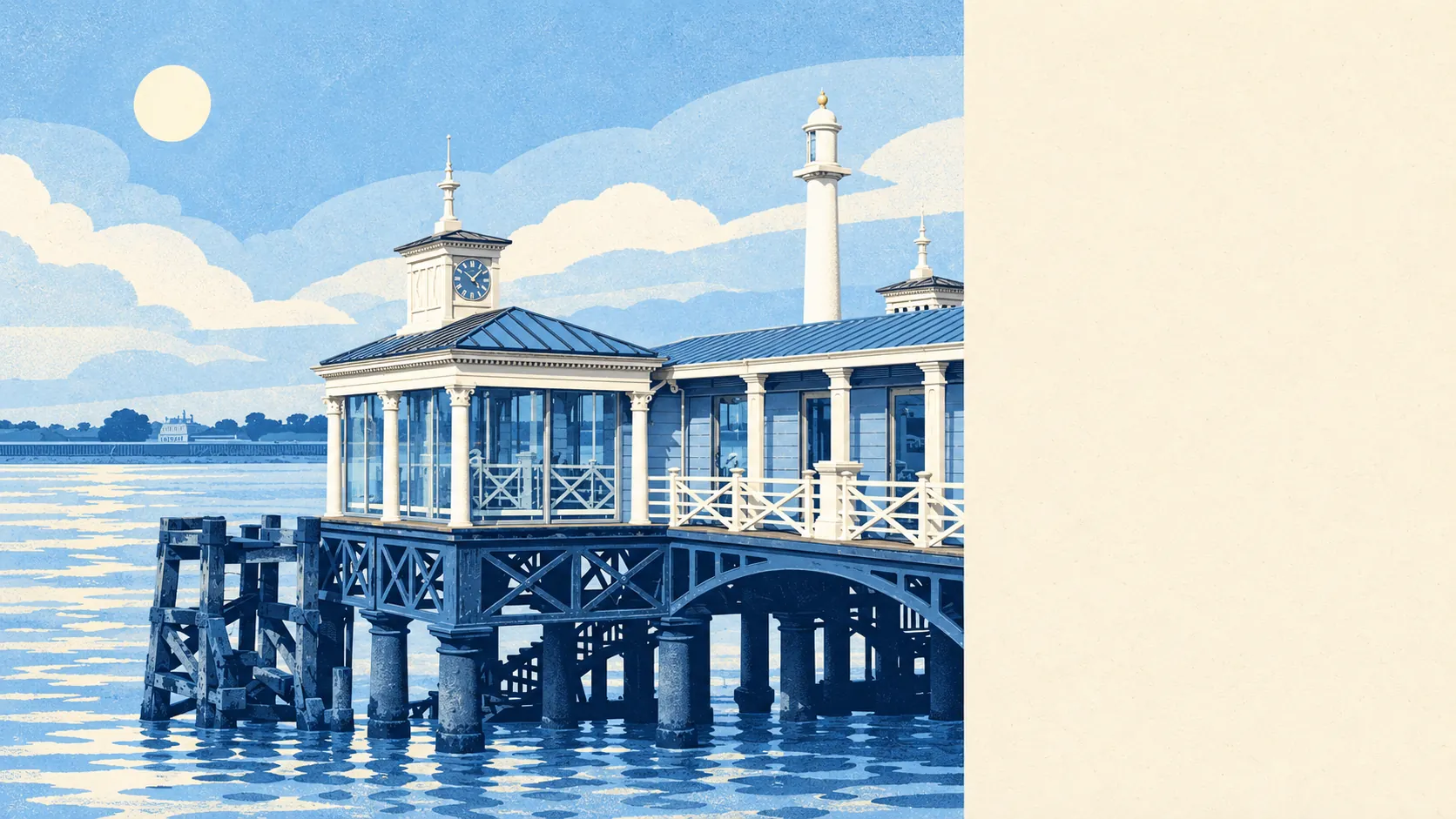
Historic England lists 130 buildings in and around the town, eight of them Grade II*, including Milton Chantry, Gravesend's oldest surviving building. The council has drawn 12 conservation areas across the area, among them Harmer Street, Darnley Road, Overcliffe, and Pelham Road and The Avenue. Royal Terrace Pier and the Town Pier are both Grade II listed, and the Town Pier is the oldest surviving cast iron pier in the world. In those streets, replacement windows and front extensions go through the planning office first, and the people who bought on Harmer Street for the Georgian frontage tend to learn the paperwork second.
Police.uk recorded crime at about 110 per 1,000 residents in the year to May 2026, roughly 12% above the Gravesham average. Violent and sexual offences make up about 35% of the total, close to the national share. Anti-social behaviour runs higher at about 22% against about 16% nationally, and shoplifting lower at about 4% against about 8%. Kent Police charged in about 16% of cases over the same period, against about 12% nationally, but that is a figure for the whole force, and a Gravesend charge sheet looks no different from one in Tunbridge Wells.
On flooding, about 14% of postcodes are at high risk on at least one flood indicator, surface water included. In the Environment Agency's river-and-sea flood zones, about 7% of the area falls in Zone 3. The last recorded flood was in September 1968, when the sea overtopped the defences, and the shoreline plan for this stretch is to hold the line on all three of its time horizons. About 11% of postcodes fall under the North Kent Marshes Internal Drainage Board, so check whether a property pays its drainage rate as well as council tax. The marshes to the east were here first, and the drainage board is the bill for living next to them.
The nearest green space is about 140 metres from the average home, and open water about 850 metres. Windmill Hill still has the long view across the Thames that drew Victorian day-trippers to its camera obscura. Cyclopark has 43 hectares of trails and a road circuit beside the A2, and the Saxon Shore Way and the Wealdway both start at the Town Pier. Shorne and Chalk run out towards the marshes on the eastern side, with Cobham and Southfleet further south, where the pace drops along with the housing density.
The history is better than the town gives itself credit for. Pocahontas was buried at St George's in 1617 after falling ill on a ship that had got no further than Gravesend, and a replica of her Jamestown statue has stood in the churchyard since 1958. General Charles Gordon rebuilt New Tavern Fort between 1865 and 1879. Peter Blake trained at Gravesend School of Art. In 1939 Alex Henshaw took off from the town's airfield on a record flight to Cape Town and back that still stands. The airfield is now the Riverview Park estate.
Gravesend works for a buyer who wants a three-bed terrace and a high-speed seat into London for the price of a flat closer in, and who will spend their evenings on Windmill Hill more than in the high street. Buyers looking for a town on the way up should look somewhere the neighbourhood figures are heading in the right direction.
Overall it is a good place to live, a bit better than average. The trains do most of the work, so it makes the most sense for buyers who spend most of their week on them.