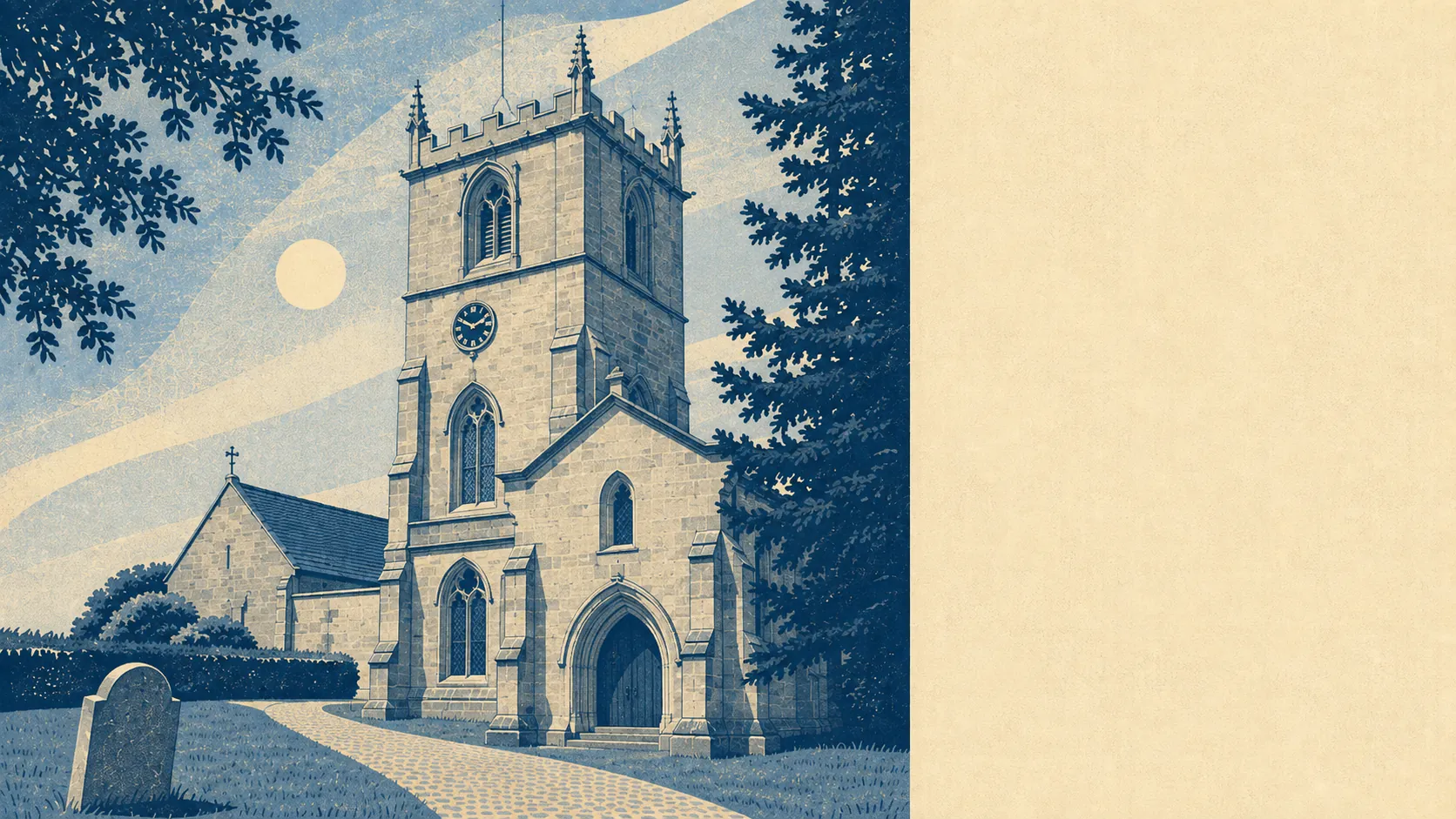
Yes, if you can live with a river that has opinions. Gillingham sits in the Blackmore Vale where the water is never far away, and the town has arranged itself around that fact for a thousand years without ever quite solving it. Crime runs well under the Dorset average. Green space starts more or less at the end of the drive. Most of the housing went up in living memory, which is the bit the estate agents skip past on the way to the Saxon cross shaft. It is a good place to live, provided you understand it is a working Dorset town first and a rural idyll second.
The housing stock is where that becomes obvious. On the council-tax valuation list, which covers every dwelling rather than only what has been sold recently, detached homes make up around 26% of the town, bungalows around 21%, and semis and terraces around 20% each. Flats account for about 11%. Only around 19% of the stock predates 1930, and about 18% went up between 2000 and 2008 alone, which tells you what kind of town this became after the railway arrived and again after the millennium. Energy certificates put around 58% of the certificated stock in bands A to C, with about 34% sitting in band D and around 7% in band E or worse. About 74% is on mains gas, and roughly 8% runs on electricity alone, which is a running-cost question worth asking before the viewing rather than after the first winter bill.
On price, the Land Registry's last twelve months to May 2026 puts the typical sale at £260,000 across 179 transactions, which for Dorset is close to a rounding error away from reasonable. The spread by type is wide. Detached homes ran to a typical £366,500, semis to £255,000, terraces to £215,000, and flats to £114,500. That bottom figure is the one that makes Gillingham unusual in this part of the county. On council tax, band C is the most common, and around 33% of dwellings sit in bands A or B, so the bills land nearer the modest end than the Dorset postcode might lead you to fear.
Renting is a different proposition. The typical private rent across the Dorset area is about £1,040 a month, and that is an authority-wide figure rather than a Gillingham one, so treat it as the shape of the market rather than the price of the specific flat. By size across that same area, one-beds sit around £720 a month, two-beds around £950, three-beds around £1,170, and anything with four bedrooms or more around £1,660.
Safety is the quiet win. The published rate is roughly 39 recorded crimes per thousand residents over the year to May 2026, against a Dorset local-authority rate of about 55 per thousand. Anti-social behaviour makes up a larger share of the mix here than it does nationally, at around 24% against roughly 16% across England and Wales, which is less alarming than it sounds and mostly means the recorded incidents that do happen tend to be the low-level sort rather than the serious sort. Dorset Police charge in about 14% of cases against a national rate of about 12%.
Schools are solid and the town has the full set. Gillingham School covers secondary, with Gillingham Primary School, St Mary the Virgin Church of England Primary School, Wyke Primary School, Milton-on-Stour Church of England Primary School, Stower Provost Community School and St George's Church of England School at Bourton spread across the town and the villages. Key stage two maths across the six primaries in the postcode district averages a score of about 104, which is above the expected standard. At key stage four the Attainment 8 score is around 43. Across Dorset as a whole, Ofsted has graded 68 of 86 settings good or better, with two rated outstanding.
Connectivity is the split personality. Gillingham (Dorset) Rail Station puts the town on the London to Exeter line, and about 22% of working residents work from home, which is the modern version of a good commute. What almost nobody does is actually catch the train: under 1% commute by rail, and about 59% drive. There are 71 bus stops in the area, around 90% of which see some weekend service, though the average stop gets about nine scheduled weekday departures, so the bus is a plan rather than a habit. Broadband makes up for it. Gigabit-capable service reaches about 82% of premises, superfast reaches about 99%, and nothing at all falls below the universal service obligation.
The surroundings are the reason people move here and the flooding is the reason some of them leave. Green space averages about 135 metres from the front door, with around 20 sites within a kilometre, and water is closer still at about 233 metres. On the Environment Agency's mapping, around 3% of the town sits in the river-and-sea flood zone 3 and about 2% in zone 2, rising to roughly 8% once climate allowance is applied. The broader postcode indicators, which include surface water, are less comfortable: about 23% of postcodes carry a high rating on at least one flood measure and about 20% carry a medium one. Ground conditions are otherwise benign, with a low radon band and no coalfield or mining legacy. If you are buying here, put the exact address into the Environment Agency's long-term flood-risk service before you get emotionally involved.
Heritage constraints exist but are contained. There are 46 listed buildings in the area, all but one at grade two, plus four conservation areas covering Gillingham itself along with Colesbrook, Milton on Stour and Wyke, and two scheduled monuments. Outside those pockets, and most of the newer housing is well outside them, you can replace your windows without a conversation about the correct sort of glazing bar.
The character follows from all of that. Around 70% own their homes, the typical resident is 49, and household income runs around £50,300 a year before tax. Households skew smaller and older than the family-town branding suggests. The page also covers the surrounding villages, so Bourton, Buckhorn Weston, East Stour, Kington Magna, Stour Provost and West Stour sit inside the same picture, which is where the Blackmore Vale stops being a backdrop and starts being the whole address.
It suits people who want space, quiet, a garden and a shorter drive to a supermarket than a rural postcode usually allows, and who either work from home or have made peace with the car. It suits downsizers particularly well, given how much of the stock is bungalows.
It does not suit anyone who bought the idea of a Dorset train town without checking how few people actually use the train, or anyone whose budget cannot absorb a flood report coming back with something on it.
Gillingham's real strength is the surroundings: green space and water within a few minutes' walk of most front doors, in a town where crime sits comfortably below the county average and the price of entry is genuinely moderate. The weak spot is flood risk, and it is not a footnote. Get the address checked, get an indicative insurance quote before instructing anyone, and if it comes back clean you have bought yourself a good deal of Dorset for not very much money.