Yes, if you can spend a Saturday looking at water and count that as a day well used. Four in five households own their home. The typical resident is well into their fifties. Nearly half keep two cars or more, and the second one is not for decoration. Fremington settled the question of what kind of place it wanted to be a long time ago, and it has no intention of reopening it.
Start with the housing, because the shape of it explains most of the rest. The council tax valuation list covers 3,290 dwellings, of which about 33% are detached and another 32% are bungalows, with 17% semi-detached, 13% terraced and 5% flats. A bungalow here is not a downgrade or a retirement gesture, it is the local vernacular, and the village builds them the way other places build terraces. Around 15% of the stock predates 1930 and about 4% went up between 2000 and 2008, which leaves the bulk of it as the post-war expansion that grew outward from the old parish centre near Fremington Primary School. Heating is conventional: 81% on mains gas, 2% on electricity alone, 1% with no central heating at all. Of the 1,615 homes holding an energy certificate, about 63% sit in bands A to C, 30% in band D and 8% in band E or worse.
The Land Registry recorded 53 sales in the twelve months to May 2026 at a median of £328,000. Type does more to the number than location does. Detached homes made up 33 of those sales at a median of £350,000, semi-detached went at £270,000 across nine sales, and terraced houses at £258,000 across ten. So the headline figure is really a detached figure wearing a village-wide label, and a buyer looking at terraces is shopping in a different market to the one the median describes. Council tax lands at band C for the largest share of dwellings, with about 22% in bands A or B, which is a softer bill than the sale prices would lead you to expect.
Renting is the minority position, and the figures available are area-wide rather than the village's own. Typical private rent across the North Devon area was about £850 a month as of April 2026, up about 3% over the year. By size across the same area, a two-bedroom runs to roughly £780 and a three-bedroom to roughly £970. In a place where four fifths of households own, what is actually listed at any given moment matters considerably more than what the area average says.
On safety, the published neighbourhood policing figures put recorded crime at about 29 offences per 1,000 residents in the year to May 2026, roughly 60% below the North Devon average of about 73. That is the sort of number that makes an estate agent's "quiet village" line accidentally true, which must be an unfamiliar sensation for everyone involved.
Connectivity is where the honesty is required. About 61% drive to work and 24% work from home, while 3% take the bus and 0.2% take a train, that last group presumably being the two people who have worked out the connection at Barnstaple Rail Station. The Department for Transport's modelled journey times, which date from 2019 and age faster on the public transport side than the car side, put the town centre about 16 minutes away by car and about 26 by public transport, 29 by bicycle and about 77 minutes on foot. There are 23 bus stops in the area, and the 22 with published service data average around 75 weekday departures each, about 5 in the peak hour, with every one of them running at weekends. Broadband is the compensation: superfast is available to every premises, gigabit to 81%, and nothing falls below the universal service obligation. Mobile coverage from all operators reaches 96% and from at least one reaches effectively every address. The internet arrived properly. The buses did what rural buses do.
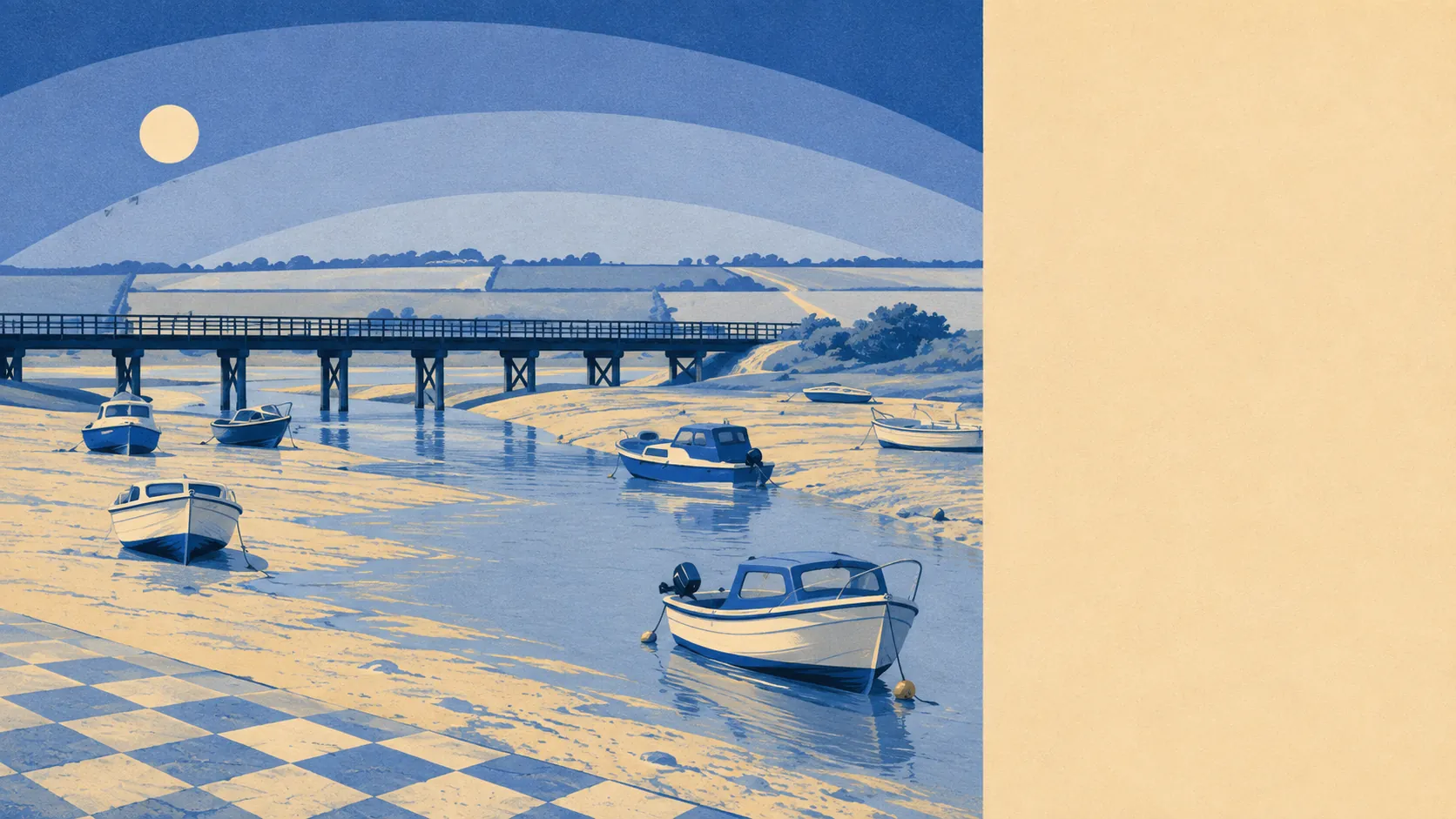
The surroundings are the reason people put up with the commute. Green space sits about 180 metres away on average with around ten separate spaces within a kilometre, and water is about 280 metres away, which is what happens when you build a village between the tidal Taw and a creek. The National Cycle Network runs about 630 metres away on average, with a quarter of postcodes close to it. Flooding needs two separate measures kept apart, because they count different things. On the postcode indicators, which include surface water, about 12% of postcodes carry a high rating on at least one, 10% medium and 35% low. In the Environment Agency's river-and-sea flood zones, about 2% of postcodes fall in zone 3 and 1% in zone 2, rising to about 6% once the climate allowance is applied. Estuary-side and low-lying addresses are where that risk concentrates, and no historic flooding is recorded across the postcodes.
Heritage constraint is light but not absent. The area holds 45 listed buildings, one at Grade I, three at Grade II star and 41 at Grade II, along with a scheduled monument and two conservation areas, at Fremington and at Fremington Quay. Buy inside those boundaries, or buy Fremington Manor House or something in the shadow of the Church of St Peter, and window replacements, extensions and even a satellite dish become a conversation with the planning department. Buy in the post-war streets, which is most of the village, and nobody cares what you do with your porch.
The character follows from all of it. Home ownership runs at 80%, the median age is 54, and median household income was about £52,000 gross before tax in the financial year to March 2023. Around a quarter of households are one person living alone, and about 18% are a pensioner doing so. This is a place with a very low turnover of opinion.
It suits a buyer with a car, a job that tolerates a commute or a laptop, and an honest preference for the estuary path over anything with a queue outside it. It suits families using the village primary, and it suits anyone downsizing who wants a bungalow without pretending it was a compromise.
It does not suit someone who needs a station, a bus that thinks in minutes rather than hours, or errands they can run on foot after seven in the evening. If that is the life, Barnstaple is fifteen minutes up the road and does it properly, and choosing it is not a failure of nerve.
The verdict comes out above average, and the ledger is unambiguous about why. Its real strength is what surrounds it, the green space and the water sitting closer to the front door than the shops do, backed by a crime rate well under the district's. The weak spot is transport, where the car does the work because nothing else convincingly can. Buy the estuary and the quiet, and pay for them in fuel.