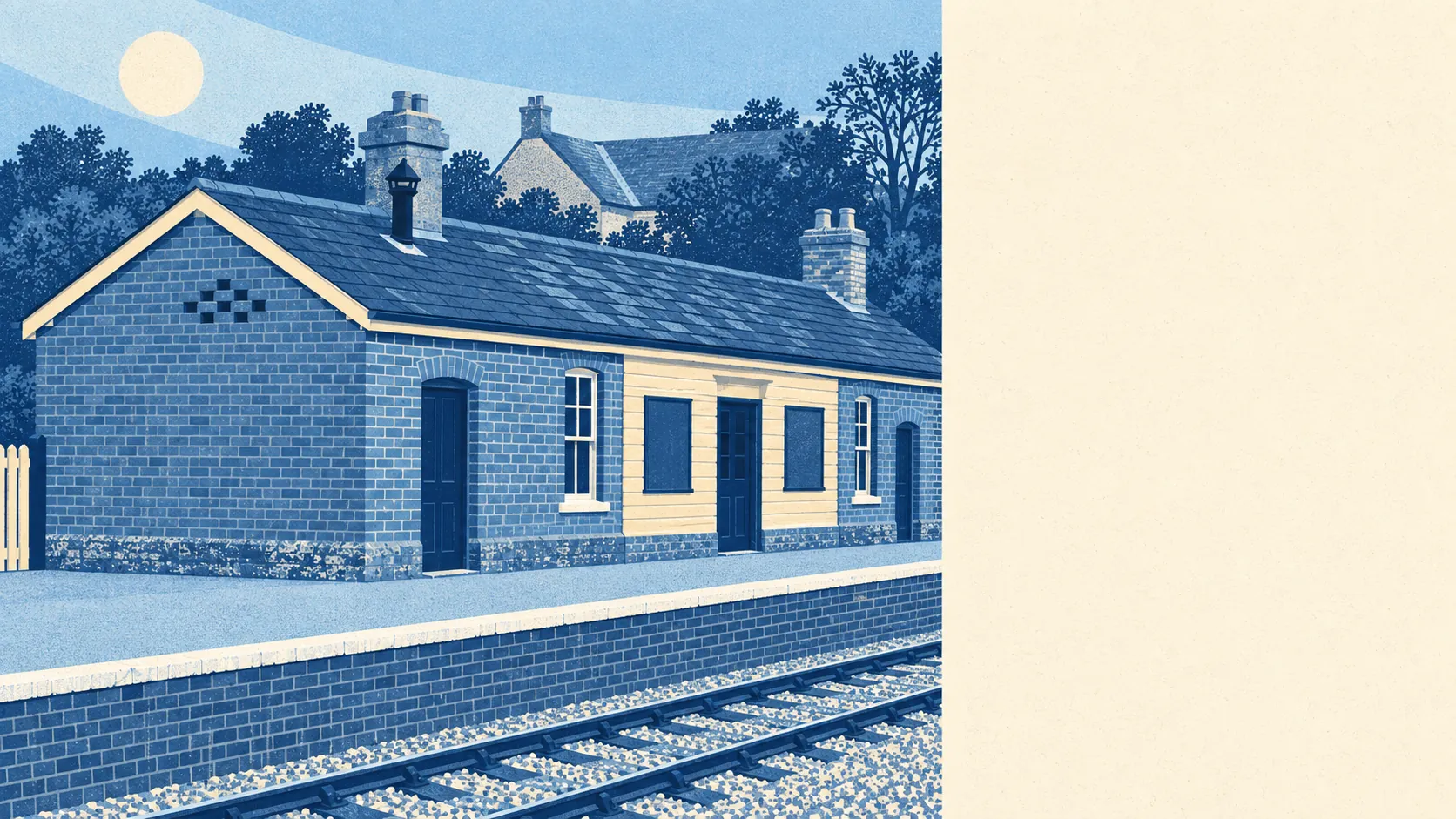
Four Marks is a cul-de-sac that grew into a village. Eight in ten households own their home. A quarter of the houses are bungalows. Crime runs well under the district rate. It's a good place to live, provided the car starts every morning.
The housing tells you most of what you need to know. Across every home on the council-tax list, about 42% are detached and 25% are bungalows. Semis make up 16%, terraces 9%, and flats a lonely 4%. Only 19% were built before 1930, which is a short memory for a parish with Bronze Age burial mounds south of Barn Lane. Energy certificates skew modern: of the homes that have one, 71% sit in bands A to C, 22% in D and 7% in E or worse. About 72% of homes are on mains gas and about 6% heat with electricity alone. If the bungalow you've fallen for is one of the electric ones, ask for the bills before the survey, not after. Anyone hunting for a flat here is chasing something about as well evidenced as the Roman road historians still argue over.
Then there's the price. In the Land Registry's twelve months to May 2026, 75 homes sold at a median of about £560,000. The detached houses set that figure: 51 of them sold at a median of around £660,000. Semis went for about £445,000 (14 sales) and terraces for about £326,000 (8 sales). Eight terraces in a year is the entire entry-level market, and first-time buyers fight over it the way parents fight over the last space at the school gate. Council tax follows the housing. The most common band is G, only about 7% of homes are in bands A or B, and Band D alone costs about £2,340 a year.
Renting is a minority pursuit. Private renters and social renters each make up about 9% of households. Across the East Hampshire area as a whole, a typical private rent is about £1,260 a month as of April 2026, and a detached house across the district averages around £1,740. Those are district figures, not Four Marks's own, and a village made of detached houses and bungalows doesn't produce a lot of cheap one-beds to drag the local number down.
Safety is where Four Marks gets smug, and fairly so. In the year to May 2026 the published rate was about 29 recorded crimes per 1,000 residents, roughly 41% below the East Hampshire average. The totals are small, so a handful of incidents in either direction moves the shares noticeably. The bigger day-to-day nuisance is the A31: road-noise mapping puts every postcode near a stretch running at 65 decibels or more. The threat here isn't burglars. It's lorries.
Getting about means driving. About 48% of working residents drive to work and about 42% work from home. Barely 1% take the train, and the nearest station in the brief is Alton Rail Station, which you'll be driving to anyway. Two-thirds of households run more than one car and only about 5% have none. In the Department for Transport's 2019 model, the nearest town centre was about 16 minutes by car and about 34 by public transport. There are 20 bus stops, with about 15 buses an hour past the busiest ones at peak time. Broadband is the strong suit: about 86% of premises can get gigabit and 97% superfast. That helps explain the home-working figure. The commute that works best here runs from the bedroom to the box room.
The ground is kind about water and demanding about what sits underneath. The Environment Agency's river-and-sea flood zones don't touch Four Marks at all. On the wider postcode measure, which counts any flood indicator including surface water, about 2% of postcodes are at high risk, 5% at medium and 13% at low. A home ridge-top dry for centuries was never going to be a flood story. Two geological flags do matter. Every postcode is in a band where radon is flagged, up to the High category. And the British Geological Survey puts about 98% of postcodes at class 3 or above for soluble rocks, which belongs in the instructions you give your surveyor. Green space is close, about 310 metres away on average with around 11 spaces within a kilometre, and the South Downs National Park starts at the parish edge.
Planners will leave you mostly alone. The village has four listed buildings, all Grade II, no conservation areas and no scheduled monuments. If you want to put a loft conversion on a 1970s bungalow, the paperwork won't stop you. The neighbours might.
The people are settled and comfortable. About 80% of households own their home and the median age is 47. In the financial year to March 2023, the Office for National Statistics modelled gross household income at about £76,600. Roughly a quarter of households are couples with children, 87% of residents report good or very good health, and 42% hold a degree. It's the kind of place where the parish newsletter gets read cover to cover and someone writes in about the verges.
This page also covers Medstead, the neighbour further along the ridge, where King's Hill climbs to one of the highest points in the county. The two feel less like separate villages and more like one long ridge of the same good manners.
Four Marks suits families who want space, a quiet road, a garden and a drive, and who are happy to drive everywhere. It suits downsizers who want a bungalow on a flat plot and a doctor's surgery nearby. And it suits home workers, who can have fast broadband and a view of fields together.
It doesn't suit anyone who needs a train in walking distance, a first-time buyer on one salary, or someone who wants a pub crawl and a late-night kebab. If you need something open after nine, Alton is where you'll end up. That's a fair trade: Alton gets the evenings, Four Marks gets the silence.
The place has had famous residents without making a fuss about any of them. The aviator Mildred Bruce is recorded as living on Alton Lane. C. V. Durell, the mathematician whose textbooks outlived several generations of schoolchildren's patience, lived here too, as did the author Jessie Louisa Rickard and the political journalist and historian Denis Rolleston Gwynn. The oldest resident on record has vanished altogether. Lymington, a farmstead by the lime trees first written down in 1307, was gone by the 15th century. It survives only in the name of Lymington Bottom Road, which is more of a legacy than most local councillors will get.
Four Marks is a good place to live. Its real strength is the community: settled, healthy, well-off and quiet, in a village where crime sits far below the district average. The weak spot is value. You pay detached-house prices for a village with a Band G habit and a starter-home market of eight terraces a year. Buy here if you want the calm and can pay for it. The ridge has spent a thousand years getting overlooked, and the people who live on it would like it to stay that way.