The area around Folkestone is the strongest thing it has going for it. There's a park within a short walk of most front doors. The sea is closer still for a lot of the town. The Kent Downs start where the houses stop. Whatever you think of the town centre, you won't run out of places to walk.
Green space is close for almost everyone. The average home is about 140 metres from a public green space and has around 23 of them within a kilometre. That covers everything from the clifftop lawns of the Leas to small parks between the terraces.
Water is close too. The average home is roughly 390 metres from open water and has about 27 bodies of water within a kilometre, with the sea, the harbour and the Pent Stream all counted. The town grew up where a stream met the Channel, and the sea is still what most people walk towards.
The National Cycle Network is about 710 metres from the average home, and about 43% of postcodes are close to it. There's no ancient woodland in the area. For woods you'll have to head up onto the downs.
The Kent Downs Area of Outstanding Natural Beauty covers about 2% of the area, along the northern edge where the escarpment starts. There are no sites of special scientific interest and no ancient woodland inside the boundary. The protected countryside is at the town's edge rather than inside it, but it's close enough to reach on foot.
Fine-particle air pollution across the Folkestone and Hythe council area measured about 6.5 micrograms per cubic metre in 2024. That's an average for the whole council area, not a reading from your street.
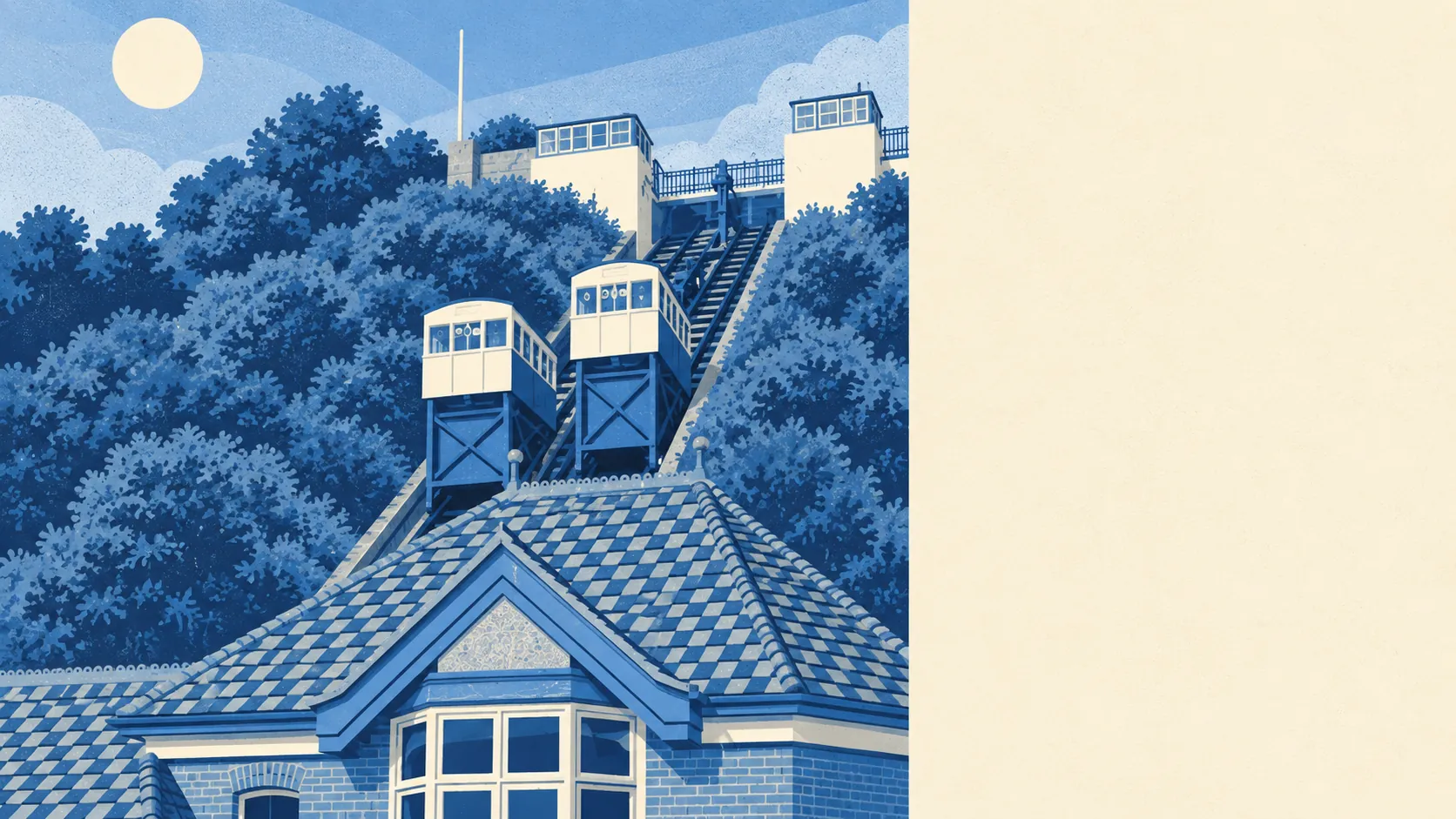
The town's character comes from how it's laid out, with the North Downs dropping to the Channel between two cliffs. The West Cliff and the Leas sit on one side of the old valley, and the East Cliff, with its Martello towers, on the other. Down at sea level, the Harbour Arm has been turned from a working pier into a promenade with bars and restaurants. The Victorian Leas Lift runs between the clifftop and the beach, and Sandgate has its castle and its own stretch of seafront. The growing arts scene has brought people back to a town that used to see them only on their way to France.
Private gardens add up to about 76,000 square metres for every 1,000 residents. That's a lot of lawn overall, but it's spread unevenly. The period houses and semis have proper gardens, while many of the converted flats have a window box and a view. Check whether a garden comes with the flat before assuming it does.
The valuation list records 2,174 rateable premises in the area. They include 726 shops, 556 offices, 92 restaurants, 53 pubs and 109 holiday lets. These are premises on the list, not a count of businesses open today, and a shop unit on the list may be standing empty. Even so, there are more shops than offices, and that looks like a town centre that's still used.
On food hygiene, 466 food premises have been rated. About 82% hold the top score and about 2% sit at the bottom.
The area around Folkestone is one of its real strengths. You can walk out of the door onto the clifftops, down to the harbour or up to the downs, and you'll run out of time before you run out of places to go.