Yes, if you choose the street before the view. Just over half the households own their home. Flats and terraces are most of what's for sale. Crime runs well above the rest of the district. The seafront sells Folkestone, but whether you like living there depends on which street you buy on.
The housing is mostly old, and a lot of it is divided up. On the council-tax valuation list, which covers every dwelling in town, about 40% of homes are flats and 30% are terraced. Semis make up 17%, detached houses 9% and bungalows 5%. Around 46% were built before 1930. That's the Victorian and Edwardian resort still standing, with a lot of it now split into flats. On energy certificates, about 52% of rated homes reach band C or better, 36% sit in band D and 12% are in band E or worse. About 76% of homes are on mains gas, and 11% rely on electric-only heating. In a tall, draughty conversion that last figure affects your bills more than the sea view does, so ask how the flat is heated before you book the viewing.
Buying costs less than the Leas suggests. Over the Land Registry's twelve months to late May 2026 there were 543 sales at a typical price of about £273,000. The type of home changes that a lot. Flats went for around £187,000 across 193 sales and terraces for about £270,000 across 196. Semis fetched about £355,000 from 110 sales, and the 44 detached houses sold for around £578,000. Band B is the most common council-tax band, and about 53% of homes sit in bands A or B. Your council tax will be modest. What the agent calls "sea glimpses" may turn out to be part of a chimney.
For renters, the typical private rent across the Folkestone and Hythe area was about £1,140 a month as of April 2026, up about 9% on a year earlier. That figure covers the whole district, so it mixes Folkestone flats with homes out on the marsh. A town-centre conversion and a village semi are in the same average, and they don't rent like each other.
Now the safety figure. Folkestone's published crime rate for June 2025 to May 2026 was about 118 per 1,000 residents, roughly 39% above the Folkestone and Hythe average of about 85. The main town in a mostly rural district usually carries the district's shops, pubs, station and night-time footfall, and the numbers show it. Shoplifting makes up about 11% of recorded crime against 8% nationally, and drugs offences 5% against 4%. Kent Police charged about 16% of cases over the same period against about 12% nationally, which puts the force sixth of 42. That's a force-wide figure, not one for Folkestone. So the crime is real and it clusters around the town centre. It is also dealt with more often than in most of the country.
Transport depends on who you are. Folkestone Central and Folkestone West connect to the high-speed line, and London commuters buy here for that reason. Yet only about 3% of working residents took the train to work at the last census. About 45% drove, 28% worked from home and 13% walked. The high-speed trains get used, just not by most of the people who live here. There are 235 bus stops, averaging about 81 weekday departures each, and about 76% of them have a weekend service. Around 28% of households don't have a car. Gigabit broadband reaches about 83% of premises and superfast about 98%, so working from home is the easy option, and a lot of people take it.
Flood risk is the part to read slowly. On the Environment Agency's river-and-sea flood zones, only about 3% of postcodes are in Zone 3 and 1% in Zone 2. That looks fine until you check the broader measure. About 15% of postcodes carry a high rating on at least one flood indicator, and surface water counts. In 1996 a storm put Black Bull Road in the Foord Valley under water, after the Pent Stream and local drains couldn't cope. The Pent Stream still runs underground in a culvert beneath the town. The outdoors is the best thing about the place. The average home is about 140 metres from a green space, with around 23 of them within a kilometre, and the sea is about 400 metres away on average. The Kent Downs Area of Outstanding Natural Beauty reaches into the northern edge. On paper it is also the sunniest mainland weather station in Britain.
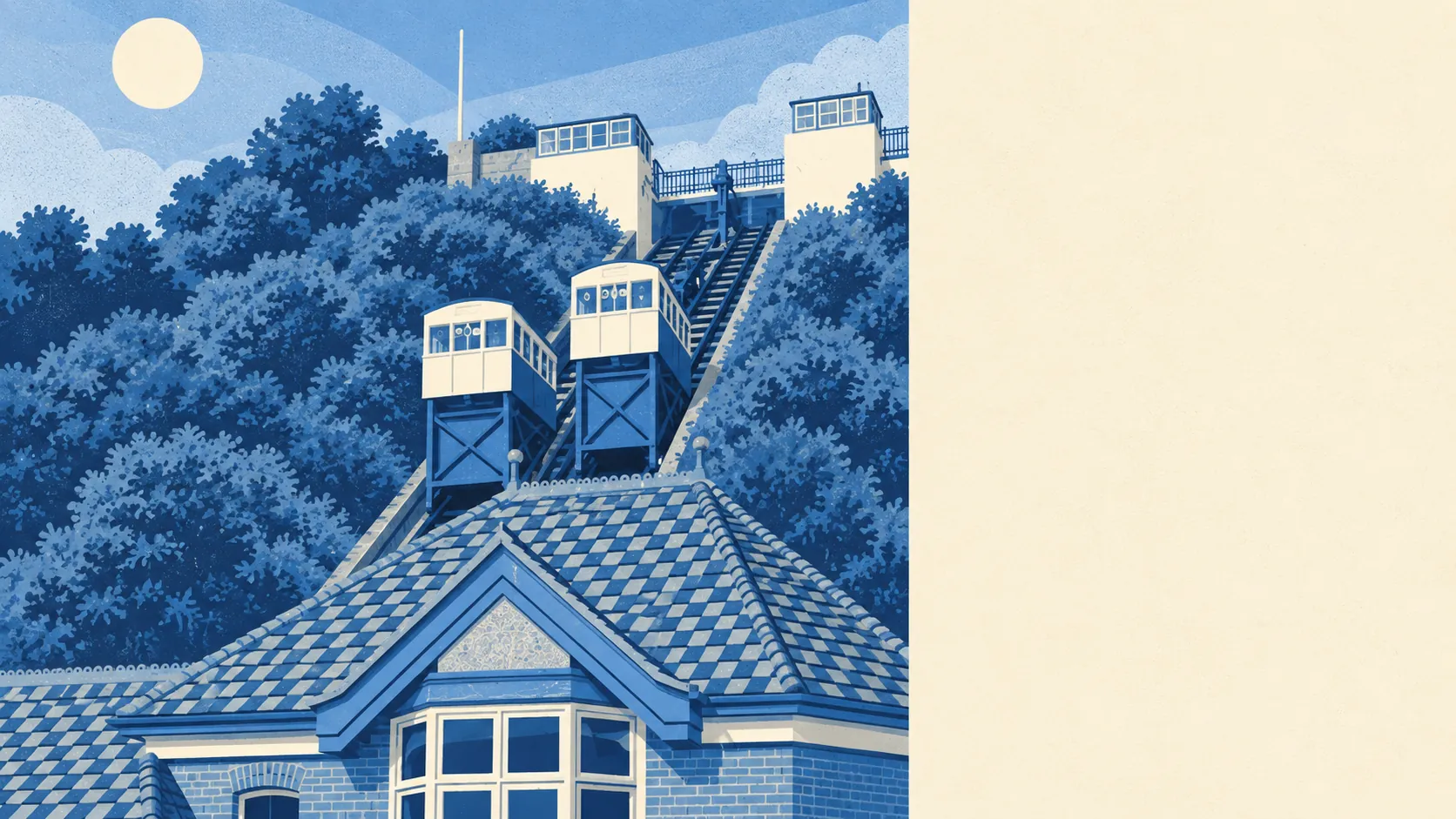
Heritage restrictions depend on where you buy. There are 233 listed buildings, including 2 at Grade I, 7 at Grade II* and 224 at Grade II. The Victorian water-powered Leas Lift is on the list. Five conservation areas cover Folkestone itself, Frogholt, Newington, Sandgate High Street and Sandgate's Esplanade. Inside those, new windows, dormers and front doors need the council's approval first. If you buy a sea-facing Esplanade house planning plastic windows, expect the conversation with planning to be short.
About 54% of households own their home and the median age is 41. Median gross household income was about £52,700 in the financial year to March 2023, as modelled by the Office for National Statistics. That's a working town, not a retirement resort, and it's younger than you'd guess if you only saw the seafront. The page also covers the edges of town. Cheriton is where the Channel Tunnel comes up. Sandgate has its castle and seafront. Newington and Capel-le-Ferne are more rural, on the downs and the cliffs, and each is quieter than central Folkestone.
Folkestone suits buyers who want a seaside town with a working economy, a station to London and green space nearly on the doorstep, and who are happy with an old building. Remote workers do well here. So do couples who don't mind flat living for the location, and families who can stretch to a semi near the Leas or up in Sandgate.
It suits you less if you need a driveway in the middle of town, a new-build energy rating on a period budget, or a town centre that's quiet after dark. If a high-street crime rate would keep you awake, buy away from the high street.
Folkestone is a good place to live, somewhat better than average, and most of that comes from how close the sea and the downs are. The weak spot is flood risk. It is rarely the river or the sea. It's usually rainwater with nowhere to drain. Check the exact address, look at the flood maps and get an insurance quote, and the town looks good value. Buy on the view alone and you'll find out about the drains the hard way.