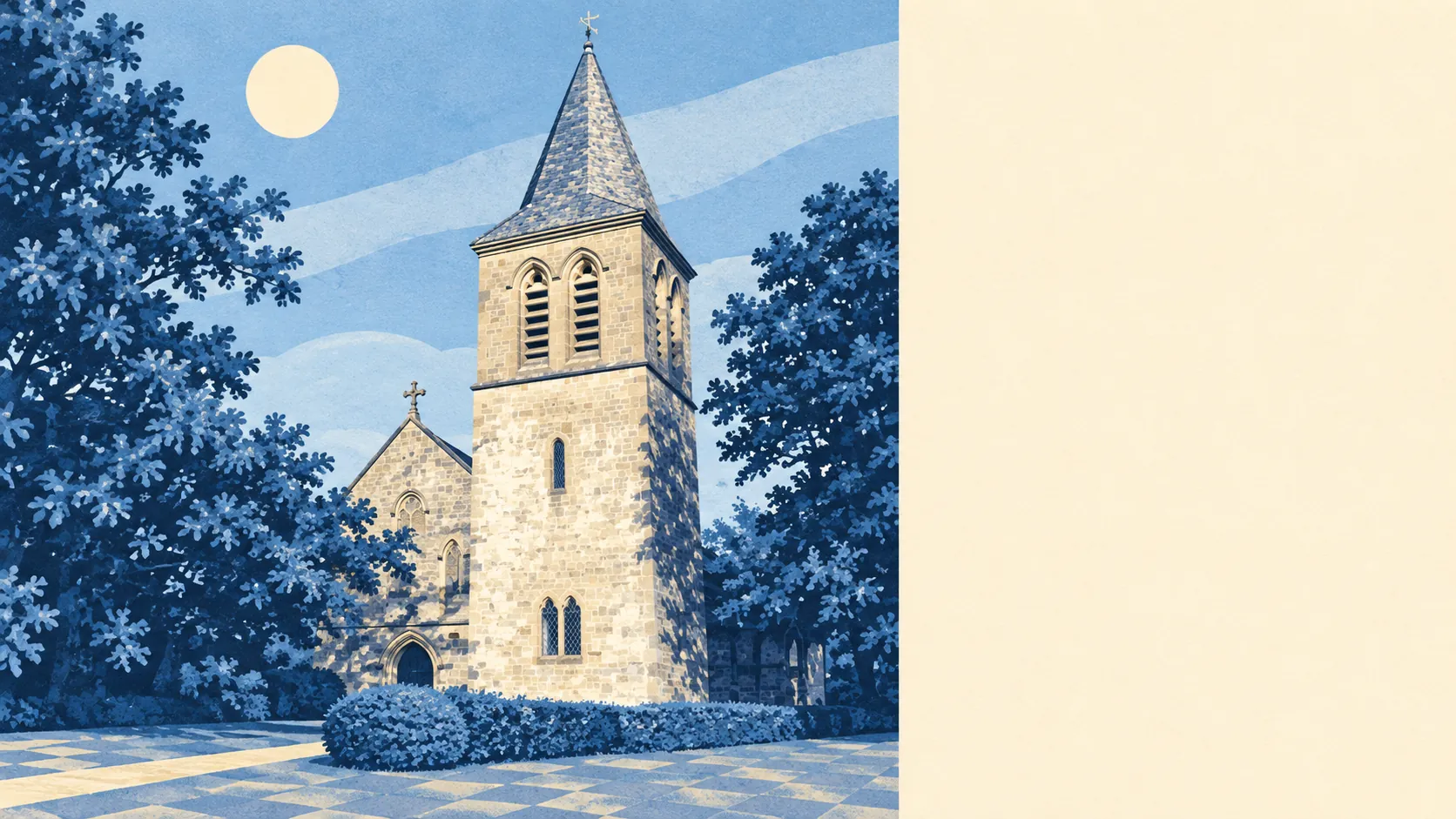
Fernhurst is surrounded by hills on every side and has more green space than it can use. The average home has seven green spaces within a kilometre. Water is a short walk away. The highest hill in Sussex is next door. The village itself is the least interesting thing in the view.
The average home is about 180 metres from public green space, with about 7 green spaces within a kilometre. In a city, that would count as a selling point. In Fernhurst, people are more likely to complain that the footpath is muddy.
Water is close too. The average home is about 400 metres from the nearest water, with about 13 water features within a kilometre. Most of these are the streams that feed the River Lod, known locally as ghyls, which run down off the hills. They are pleasant to walk beside and have no boats on them.
The National Cycle Network is further away, about 6 kilometres from the average home, and 0% of the area is close to a route. Cyclists here ride on hills rather than on marked routes, and the hills win most days. The brief records 0% ancient woodland in the area.
The wider rated-premises data counts 167 shops, 10 pubs and 11 restaurants. Ten pubs is a decent number for a village that runs on driving and working from home. Of the 12 food outlets with a hygiene rating, about 92% have the top score.
Fine-particle air pollution across the Chichester council area was about 6 micrograms per cubic metre in 2024. That figure is for the whole council area and is not measured in the village.
The character comes from the land. Blackdown rises to the north-east, and Telegraph Hill, Marley Heights, Bexley Hill and Fridays Hill surround the valley. Kingsley Green and Bell Vale sit within the parish. Blackdown Park and Shulbrede Priory are nearby, and North Park Furnace, an old iron works and gun foundry, is now a scheduled monument. This valley once made guns. It now makes walkers, and they complain more about the mud than the gun founders ever did about the noise.
Private gardens are large. There are about 343,000 square metres of garden for every 1,000 residents. That puts the green space on your own side of the fence as well as beyond it, and the lawnmower is what most people here cut their commute down to.
The business rates list for the area holds 31 premises. Thirteen of them are shops, making that the largest category, and 3 are offices. The rest are spread across one-off categories with a single premises each. These are premises on the valuation list, not a guarantee of what is trading today, and the rated-premises count above covers a wider area. The village centre is small, and for anything larger than a pint of milk you will be driving somewhere else.
Of the 12 rated food premises, about 92% hold the top hygiene score and 0% sit at the bottom. There are not many places to eat, but the ones that exist keep clean kitchens.
The parish sits inside the South Downs National Park, yet no area of outstanding natural beauty, site of special scientific interest or ancient woodland overlaps the built-up village. That is not a gap. The wildlife designations cover the hills, and the village is where people who walk the hills come home to.
The surroundings are one of Fernhurst's real strengths. The hills, water and green space are all close to the house, even if the village centre has little to offer.