The area around Ewell is greener than a town this built-up has any right to be. The average front door is a couple of minutes from a park. Nonsuch Park is on the doorstep. Five pubs are split between two roads. Ewell gets the parkland, and the protected countryside belongs to other parts of Surrey.
Green space is everywhere. The nearest park is about 140 metres away on average, and there are 21 green spaces within a kilometre of the typical home. The big one is Nonsuch Park, Henry VIII's former hunting ground and now a public park.
Water is close as well. The nearest pond, stream or lake is about 410 metres from the average home, with 39 bodies of water within a kilometre. Many are small, like the stream-side gardens and pond at Bourne Hall, where a fountain runs at one end.
The National Cycle Network is further off, about 4.1 kilometres from the average home, and none of Ewell's postcodes sits close to it. There is no ancient woodland in the area. Anyone who cycles for leisure will be setting off by road.
Across Ewell and its surrounding area, the valuation list counts 644 shops, 27 pubs and 50 restaurants. The High Street itself is modest: a Sainsbury's Local, a Co-op, a post office, and two pubs, the Green Man and the Ewell Tap. The Eight Bells, the Wheatsheaf and the Spring are on Kingston Road to the north. The pubs here have outlasted most of the other businesses.
Fine-particle air pollution across the Epsom and Ewell council area averaged about 8 micrograms per cubic metre in 2024. That is a figure for the whole borough, and the main roads will run higher than the back streets.
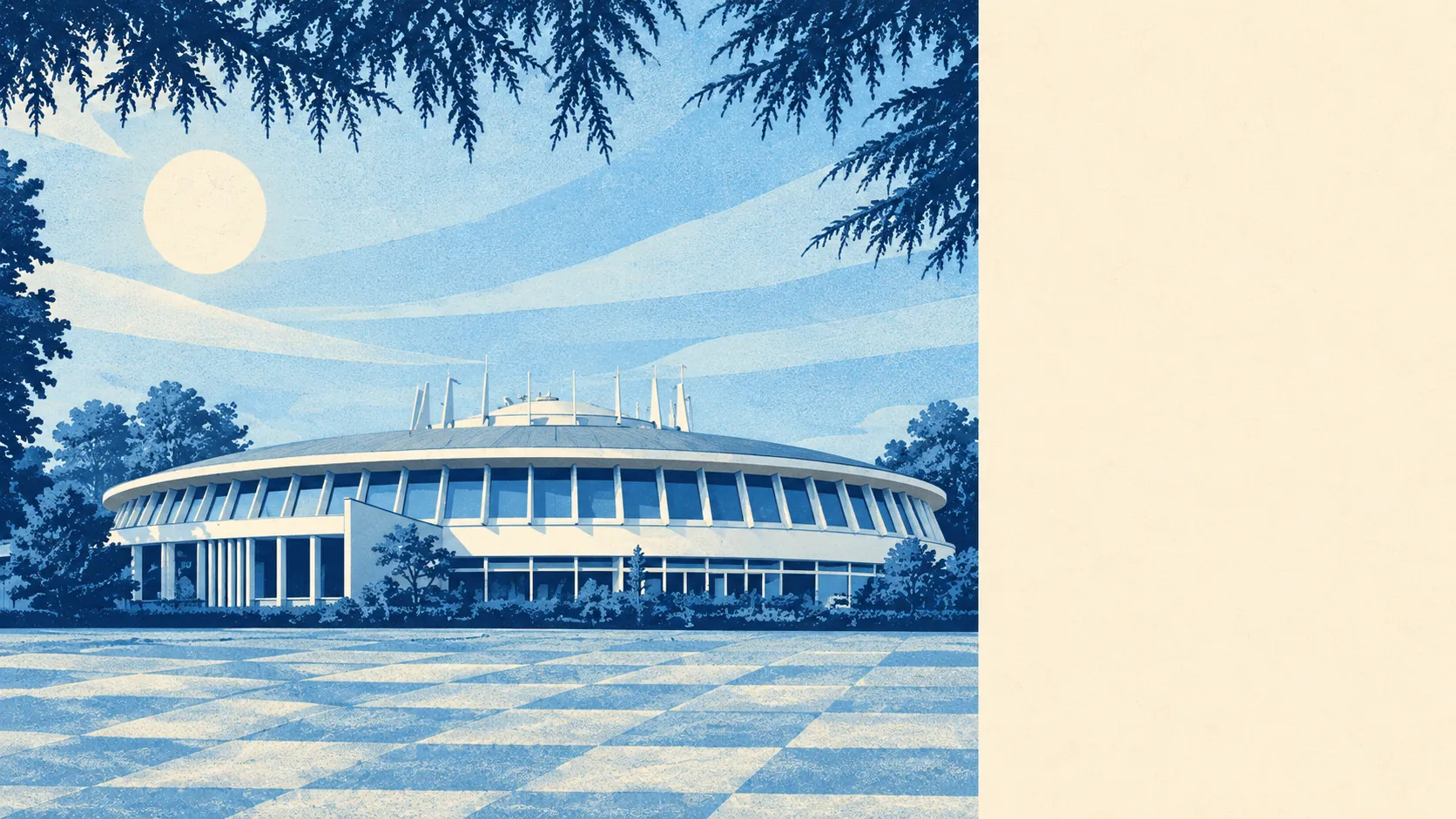
Bourne Hall sets the tone. It is a domed circular building from the late 1960s with a library, a theatre below ground, a gym, a café and a local museum under one roof, so a night out and returning a library book can happen in the same building. St Mary the Virgin, Ewell's parish church, stands near the centre on the old London Road, and the medieval tower of the church before it stands on its own in parkland. Cuddington lies to the east towards Banstead, and Stoneleigh and West Ewell round off the edges.
Private gardens add plenty. Across Ewell's neighbourhoods there are about 109,000 square metres of garden for every 1,000 residents. Interwar semis came with back gardens long enough to need a shed at the far end, and most of them still have both.
Within Ewell itself, the rating list holds 434 business premises, and shops are by far the largest group at 176, followed by 36 offices. These are premises on the valuation list, not a count of businesses trading today. The mix is suburban: shops, a few offices, and very little industry.
Of the 117 food businesses with a hygiene rating, about 70% hold the top score of five, and about 1% are rated poorly. Ewell is not a dining destination, but eating out here is unlikely to make you ill.
No area of outstanding natural beauty, site of special scientific interest or ancient woodland overlaps Ewell. The green here is parks and gardens, all of it public or private amenity, and none of it is formally protected countryside. That has one practical advantage: nobody here is fighting a landscape designation over a new fence.
The surroundings are one of Ewell's real strengths. Parks, ponds and long back gardens are within a few minutes of almost every house, even though there is no protected countryside.