Yes, if you can afford to be left alone in it. Nearly nine in ten households own their home. More than half the houses stand on their own plot. Most working residents commute from the kitchen to the spare room. East Horsley is a good place to live for people who have already finished arriving.
The housing still follows rules written a century ago. In the early 1900s the 3rd Earl of Lovelace sold off his former fields with restrictive covenants attached, and the council-tax valuation list shows the result: about 53% of homes are detached, 18% are bungalows, 15% are semis, 9% are flats and 4% are terraced. Terraces here are something residents drive past on the way to somewhere else. Only about 16% of the stock predates 1930, and the most common build era on energy performance certificates is post-war, so the Earl drew the lines and later builders coloured them in. Those certificates split down the middle: about half the certificated homes rate A to C, 36% sit in band D and 14% in E or worse. About 81% of homes heat with mains gas, and electric-only heating is rare at about 3%. The running cost that catches people out is the size of the house.
Buying in is where the conversation gets short. In the Land Registry's twelve months to May 2026, 74 homes sold at a median of about £923,000. Detached houses, 52 of those sales, went for a median of about £1,099,000. Semis came in around £665,000 across 11 sales, flats around £270,000 across 8, and terraced houses around £380,000 from 3 sales, which is less a market price than a rumour with a receipt. The flat is the entry ticket; the detached house is the reason anyone queued. Council tax band G is the most common band, and only about 2% of homes sit in bands A or B. The valuation office had an opinion of these houses long before any estate agent did.
There's no rent figure for the village itself. The typical private rent across the Guildford area is about £1,720 a month as of April 2026, a mean across the whole borough rather than East Horsley's own. With about 9% of households renting privately, letting here is less a market than an occasional vacancy.
Surrey Police data puts the crime rate at about 34 per 1,000 residents over the twelve months from June 2025 to May 2026. That is roughly 61% below the Guildford borough average of about 87 per 1,000. The totals are small enough that a few incidents shift the category mix by several points, so no single crime type should be read as the village's character. Buyers are paying for that low rate whether or not they ever look it up.
Horsley and Effingham Junction stations both sit on the line to London Waterloo, and at the 2021 census about 3% of working residents took the train to work. About 33% drove and 58% worked from home. Two stations and hardly anyone commuting on them says a lot about who the spare bedrooms went to. Buses are a different story: 49 stops, averaging about 9 weekday departures each, and only 21% with any weekend service. The Department for Transport's 2019 modelling puts the nearest town centre about 15 minutes away by car and 32 by public transport. The home office is well served, with gigabit broadband available to about 95% of premises and all mobile operators reaching about 99% of the area.
Flooding needs a straight answer. About 20% of postcodes carry high risk on at least one flood indicator, surface water included, and about 14% carry medium risk. In the Environment Agency's river-and-sea flood zones, about 6% of the area falls in zone 3 and 3% in zone 2. Anyone buying should check the specific address rather than the village average. Green space is easy: the nearest is about 260 metres away on average, with around 10 within a kilometre and water within about 380 metres. The village brushes the edge of the Surrey Hills. Nobody here has to walk far to find a tree, which is fortunate, because most of them paid for several.
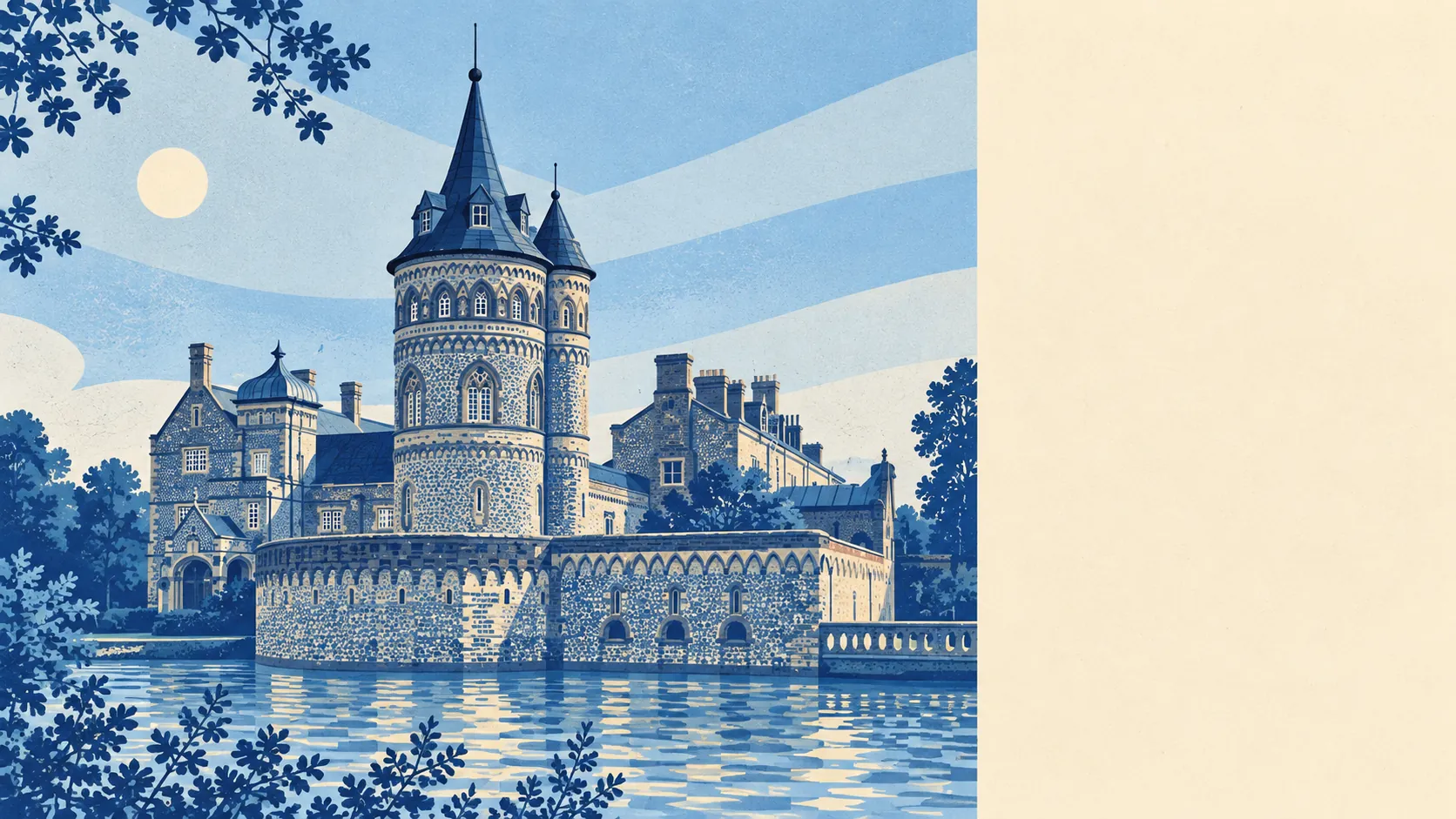
The history is built into the planning rules. William Currie, a distiller and banker, bought the estate in 1784 and rebuilt most of the village's houses, which makes him the first person to work out that East Horsley property was a sound investment. His Horsley Towers was designed by Sir Charles Barry, later the architect of the Houses of Parliament, and was afterwards home to the aviation pioneer Sir Thomas Sopwith. The wider area holds 76 listed buildings, including 2 at Grade I, 2 at Grade II* and 72 at Grade II. Three conservation areas cover East Horsley, West Horsley and Effingham, and one entry sits on the Heritage at Risk register. For owners inside those boundaries, extensions, windows and front elevations come with extra scrutiny. Expect the council to have opinions about your joinery.
Residents look like people who got what they came for. About 86% of households own their home, the median age is about 50, and median household income was about £89,000 before tax in the financial year to March 2023, an Office for National Statistics estimate averaged across the area. That's the kind of income that makes a band G bill feel like a subscription rather than a crisis.
East Horsley suits settled buyers who want a detached house, a garden and low crime, and who work from home or drive. Families aiming at Surrey's schools will find a county where Ofsted rates 147 of 159 graded settings good or outstanding, with Howard of Effingham School the named local secondary. Anyone who wants quiet, space and neighbours who stay put will be at home.
It's the wrong place for first-time buyers, renters on a budget and anyone who plans to live without a car. About 65% of households run two or more cars, and at weekends most bus stops go unserved. If you don't drive yet, East Horsley will make you learn. If you want to walk to something open after dark, look elsewhere.
East Horsley is a good place to live, it knows that, and it has priced itself to match. Its real strength is the community: settled, well-off, healthy and staying put. The weak spot is the cost of entry, with detached houses selling for over a million, band G council tax and almost nowhere to rent while you save. It's worth it for anyone who can clear that hurdle, and the village has never pretended to build a ramp.