Dursley still sells a whole house under a Cotswold hillside for around £280,000, and for most buyers that price is the case for moving here. Semis change hands for under £300,000. Seven in ten households own their home. The catch is getting anywhere else, and in Dursley that means getting in the car.
The Land Registry recorded 90 sales in Dursley in the year to May 2026, at a median of about £280,000. The type of home moves the price more than the street does. Flats went for around £150,000, terraces for about £239,000, semis for about £293,000 and detached houses for about £395,000. The council tax list tells a similar story, with Band B the most common band and Bands A and B together covering about 46% of homes. A detached house with change from £400,000, on the edge of the Cotswolds, is the line that gets buyers driving down from Gloucester on a Saturday.
Renting costs about £1,040 a month, the typical private rent across the whole Stroud district in April 2026, up about 7% on a year earlier. That figure is averaged over a district running from Stroud's valleys down to the Severn vale, so it's only a rough guide to what a two-bed above a shop on Dursley's high street will go for. Landlords set their prices off the district-wide number all the same.
The housing is mostly practical, with very little period stock. Of the 4,100 homes on the council tax list, semis are the largest group at about 30%, detached houses and terraces make up about 22% each, flats about 18% and bungalows 9%. Only about a fifth were built before 1930, and the energy certificates put the post-war decades as the biggest single era of building. About half the certificated homes are rated C or better, about 35% are D and about 13% are E or worse. About 75% of homes heat with mains gas, and about 11% rely on electric heating alone, which makes for a noticeably different winter bill in an older house. In short, it's a town of semis and closes, with a Grade I church in the middle.
Crime runs at about 45 recorded offences per 1,000 residents in the year to May 2026, about 3% below the Stroud district average. Gloucestershire Constabulary covers the town, and anti-social behaviour makes up a larger slice of the local total than it does nationally. The totals are small, though, and a few incidents can swing that slice by several points. A gap of 3% is the kind of margin one lively summer erases, so Dursley is about as safe as the district around it.
Flood exposure is modest. About 7% of postcodes are rated high risk on at least one flood indicator (surface water included). In the Environment Agency's river-and-sea flood zones, about 2% of postcodes are in Zone 2 and about 1% in Zone 3. The agency holds a single recorded flood for the town, in July 1968, when a main river overflowed its channel. That was the same year the branch railway closed, so 1968 was a poor year for leaving Dursley by any route.
Transport is the weak side, and the numbers make it plain. About 53% of working residents drive to work, about 32% work from home, and fewer than one in a hundred take the train, even with Cam & Dursley station on the main line just outside town. The 44 bus stops average about 13 departures each on a weekday and fewer than one an hour at peak. The Department for Transport's 2019 modelling puts the nearest hospital about 37 minutes away by car and about 75 by public transport, and buses have only thinned since that model was built. Broadband is better: about 71% of premises can get gigabit speeds and 99% superfast. The most popular way to beat the commute here is to skip it.
About 69% of households own their home, and the median resident is 43. The Office for National Statistics models gross household income at about £54,000 for the financial year to March 2023, averaged across the two neighbourhood areas that cover the town. That's comfortable money in a town where a semi costs under £300,000, and it explains why the closes fill with family cars and not "for sale" boards. The page also covers Uley, a village in a wooded valley up the Cotswold escarpment on the road to Stroud, where the money and the house sizes both tend to climb with the hill.
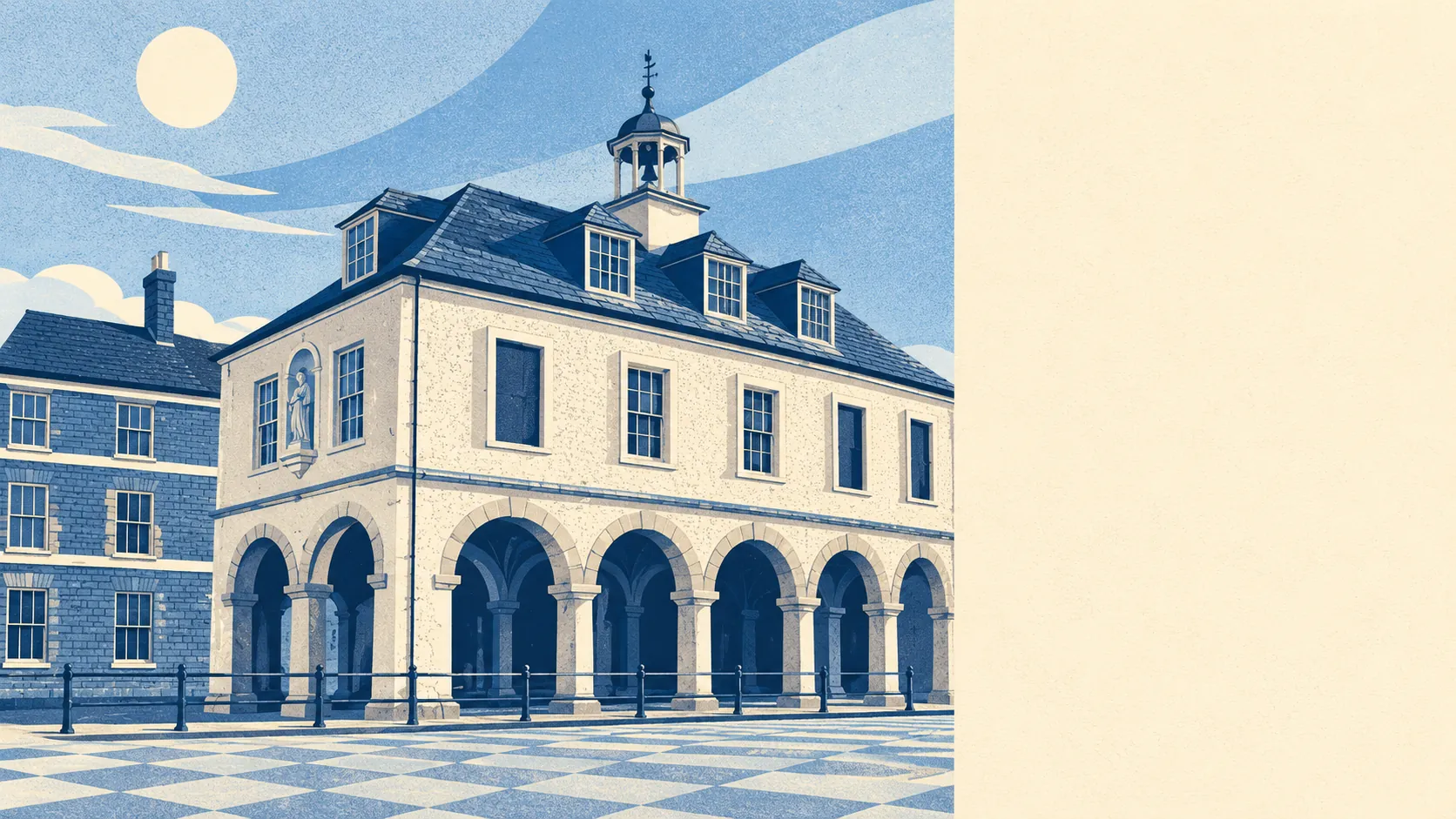
Heritage is in the middle of town but doesn't reach every street. There are 126 listed buildings: two Grade I, five Grade II* and 119 Grade II. The Dursley and Woodmancote conservation areas cover the old centre. The parish church of St James the Great dates from the 13th century, and the 1738 Town Hall still carries its statue of Queen Anne. Inside those boundaries a new window means a planning conversation, while the post-war semis further out answer mostly to the ordinary rules. Queen Anne has watched three centuries of shopfront applications from that plinth and has yet to approve one.
Green space is close. The average front door is about 130 metres from the nearest green space and about 300 metres from water, and Stinchcombe Hill rises straight out of the town. A sliver of the Cotswolds Area of Outstanding Natural Beauty reaches into the edge of the area, and the hills around Uley carry Uley Bury, an Iron Age hill fort, and Hetty Pegler's Tump, a neolithic long barrow you can still crawl inside. It remains the only property round here with no onward chain.
Dursley's past is busier than its present. John Tippetts, Surveyor of the Navy, was born and raised here. The Lister engine company, founded in 1867, built engines that ended up around the world, and its successor stayed until 2014. Mikael Pedersen invented the Pedersen bicycle in the town, and today about 1% of working residents cycle to work. Dursley gave the idea away and kept the car.
Dursley is right for a family that wants a semi with a garden and a hill to walk up for under £300,000, and for anyone who works from home most of the week. Daily rail commuters, people without a car and anyone who needs a hospital close by should look elsewhere, because every one of those journeys starts with a drive.
What the town gets right is the money. A family can still buy a proper house here, with a garden and a hillside behind it, at a price that leaves room in the budget. What it gets wrong is everything that needs a timetable. Overall it's a solidly above-average place to live, and buyers with a car will get the better end of that bargain.