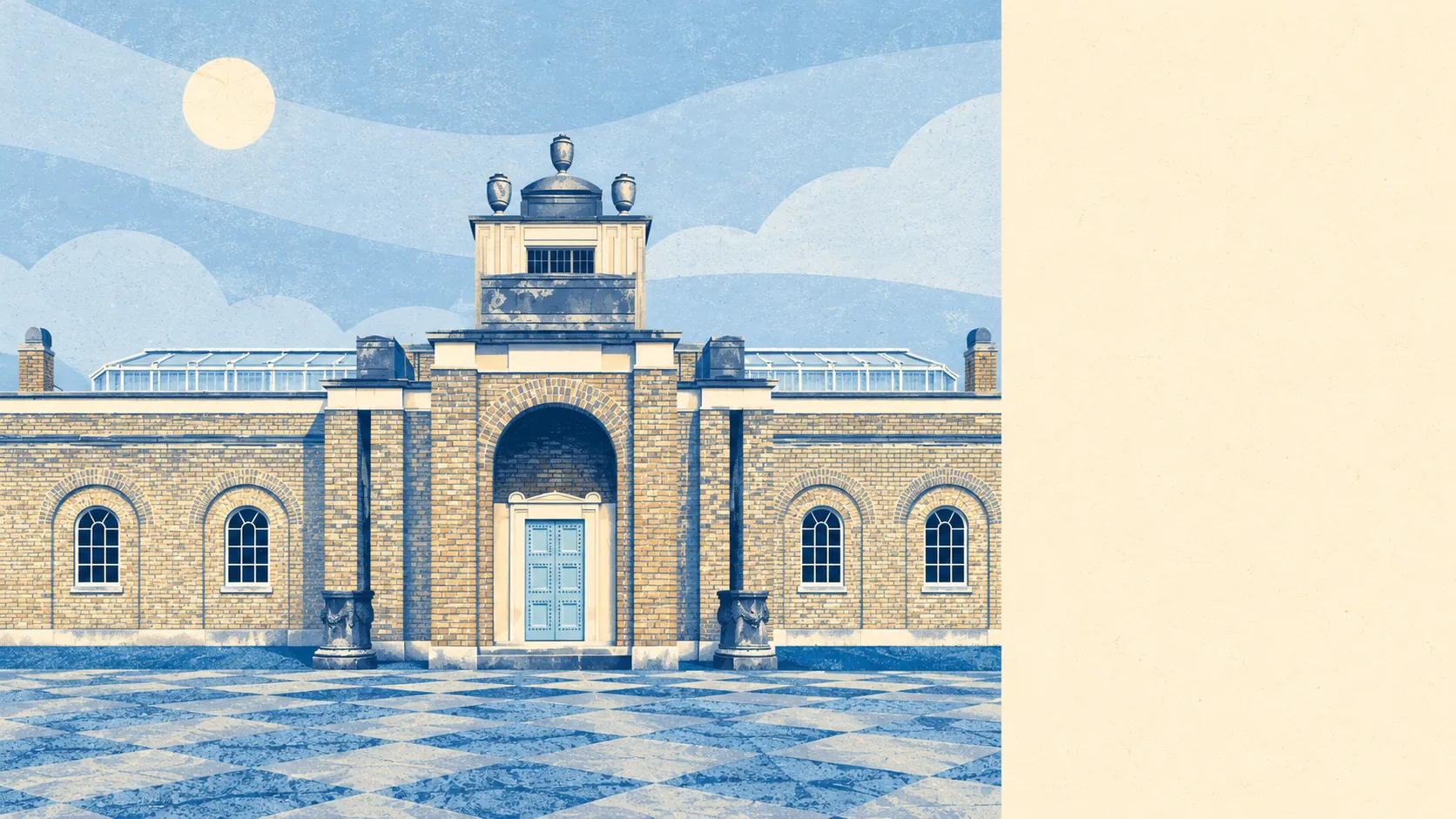
Dulwich asks about £750,000 for a typical home, and that price is the one real argument against a place that gets most other things right. Crime runs at about half the Southwark rate. A park is a couple of minutes from most front doors. Everything good here is real, and all of it is paid for on completion day.
In the Land Registry's twelve months to May 2026 there were 123 sales at a median of about £750,000, and the type of home changes that figure a lot. Flats sold for around £445,000 across 56 sales. Terraced houses went for about £990,000, semi-detached houses for a median of £1,627,500, and the five detached houses that sold came in at a median of £2,150,000. The council-tax list points the same way. The most common band is C, and only 22% of homes are in the bottom two bands, A and B. With detached houses this rare, the semi is what counts as the big house round here.
Renting doesn't make it cheap either. The Office for National Statistics puts the typical private rent across the whole of Southwark at about £2,400 a month as of April 2026. That figure covers the borough, so Dulwich's own streets aren't measured separately, and a family house near the parks will cost more than a one-bed flat closer to Peckham.
Flats are about 54% of the homes on the council-tax list, semis 12% and detached houses 5%, and terraces make up most of the rest. About 53% of everything was built before 1930, and the energy certificates reflect that. Of the homes that have one, 39% reach band C or better, 44% are band D and 17% are E or worse. About 79% of homes heat with mains gas and 7% with electricity alone. The Edwardian bay window was built for light, and it has been losing heat ever since.
The Metropolitan Police recorded crime in Dulwich at about 84 per 1,000 residents in the year to May 2026, roughly 47% below the Southwark average. Most of what does happen is theft of property. Vehicle crime is about 14% of the local total against 5% nationally, and burglary about 7% against 4%. Thieves have spotted what's parked on the drives, just as buyers have.
Heritage protection covers almost everything. There are 194 listed buildings in and around Dulwich: one at grade I, 15 at grade II* and the rest at grade II. They include the main building of Dulwich College and the Dulwich Picture Gallery with its mausoleum. Thirteen conservation areas overlap the area, among them Dulwich Village, Dulwich Wood and Herne Hill. In practice, new windows, extensions and even front walls all need consent, and the answer can be no. Meanwhile the Grove Tavern, which was once Dr Glennie's academy where Lord Byron went to school, has been left boarded up for years by its owners, the Dulwich Estate. A sash window takes paperwork. Neglect, it turns out, takes a lot less.
At the 2021 census, 56% of working residents worked from home, and only 7% took the train and 7% the bus. That's despite West Dulwich, North Dulwich, East Dulwich, Herne Hill and Sydenham Hill stations all being close. There are 122 bus stops, the average stop gets about 21 buses in the peak hour, and every one of them runs at weekends. The Department for Transport's 2019 model puts the nearest town centre about 13 minutes away by public transport. Bus timetables have changed since then, so that figure has aged more than the walking times have. Gigabit broadband reaches about 86% of premises and superfast about 99%. Five stations nearby, and most of the commuting happens on the kitchen table.
Dulwich is not in the Environment Agency's river-and-sea flood zones at all. Surface water is a different story. About 16% of postcodes are rated high on at least one flood indicator that includes surface water, 17% medium and 46% low. Dulwich sits in a valley with no river to blame, and the rain still has to go somewhere.
About 53% of households own their home, the typical resident is 39, and the Office for National Statistics models the average gross household income at about £85,000 for the financial year to March 2023, before tax. That's a good income almost anywhere in the country. In West Dulwich it covers a flat.
The green space is the clearest case for paying the price. On average, homes are about 110 metres from the nearest green space, and there are 47 within a kilometre. Water is about 650 metres away on average. Dulwich Park, Dulwich Wood, Belair and the edge of Brockwell Park are all close. Cox's Walk, the oak avenue cut soon after 1732 to connect the Green Man tavern's medicinal wells with Sydenham's, still runs up from Lordship Lane. People once paid for the well water because it was a purgative. The parks are free and a good deal more pleasant.
The people born here are an odd mix. Enid Blyton was born here in 1897, the code breaker Mavis Batey in 1921, and the actors Tim Roth and Sally Hawkins later on. Phyllis Pearsall, who put together the first London A-Z, was born in East Dulwich and went on to live in Dulwich Village. She had walked the whole of London and chose to live here, which is about as good a recommendation as the place has.
Dulwich is right for a household that already has the money, works from home most of the week and wants a park nearer than the corner shop. Look elsewhere if you need a house on one income, or if you plan to rebuild a period home your way without a planning officer having a say.
The price decides whether Dulwich is right for you. Flat buyers can get in at a level that is high but possible for London. Buying a house means a seven-figure budget, and the low crime and green space come with the same price tag as the bricks. Anyone who can pay it gets one of the better places to live in this corner of London. Anyone who can't will be walking in its parks from somewhere cheaper up the road.