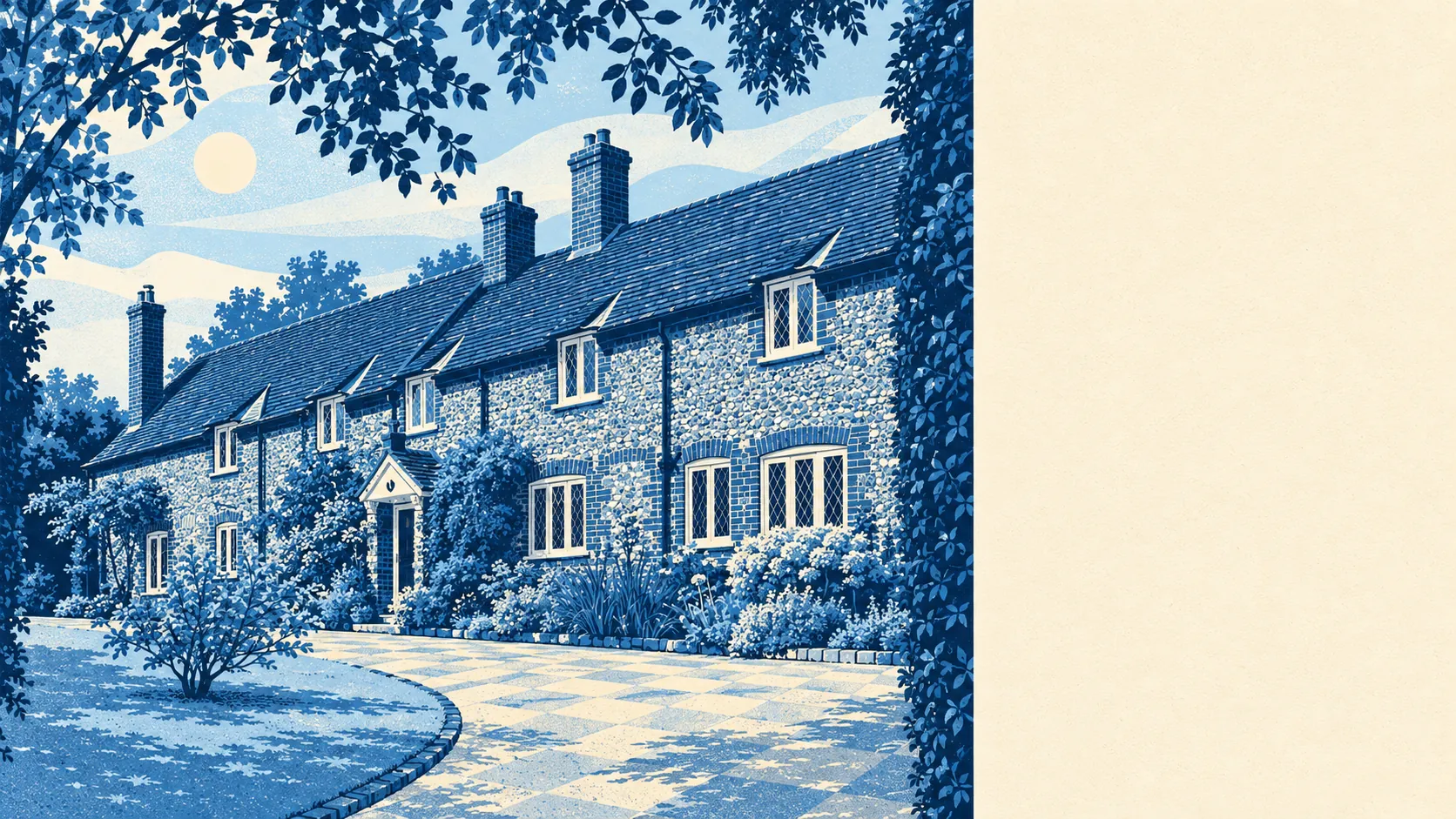
Downley has the Chilterns on its doorstep and a common at the top of the hill, and the people who live around it have no intention of letting go of either cheaply. More than eight in ten households own their home. A typical house sells for close to half a million. A detached one goes well past that. The neighbours are the draw, and the neighbours set the price.
The 2021 Census found 83% of households owning their home, with a median age of 44. The Office for National Statistics models gross household income at about £64,500 for the financial year to March 2023, averaged across the wider neighbourhood it calculates for, not Downley alone. Those are the figures of people who arrived, did the sums and stayed. The habit goes back a long way. Blacksmiths Cottage, at the top end of the common, dates from the twelfth or thirteenth century, so staying put in Downley has a few hundred years' head start on the current residents.
The Land Registry recorded 23 sales in the twelve months to April 2026, at a median of £475,000. Semi-detached houses made up 10 of them at about £470,000, and 8 detached houses went for a median of about £637,500. Flats managed 3 sales at around £275,000. Band D is the most common council-tax band, and only 2% of homes are in bands A or B. Three flat sales in a year is the entire budget end of the Downley market.
Renting is a minority pursuit, with about 11% of households renting privately. Across Buckinghamshire, the Office for National Statistics puts typical private rent at about £1,470 a month as of April 2026. That figure is an average for the whole county and says little about a four-bedroom house near the common, of which Downley has plenty.
The council-tax valuation list, which covers every home, shows semi-detached houses at 37% of the stock, detached at 31%, terraces at 23%, flats at 6% and bungalows at 4%. Only 13% was built before 1930, and the energy certificates point to the post-war decades as the biggest single building era. On those certificates, 44% of homes rate A to C, 42% rate D and 14% rate E or worse. About 85% of homes are on mains gas. The stock is family houses from the second half of the twentieth century, and the bills are what you would get from a family house of that age.
Flooding is a minor issue. On the Environment Agency's river-and-sea flood zones, none of Downley falls in zone 2 or 3, which is one of the perks of building high in the Chiltern Hills. The broader postcode indicators, which include surface water, put about 4% of postcodes at high risk on at least one measure. Rivers are not the trouble here. Water running downhill after heavy rain is the part that occasionally needs thinking about.
There are 18 listed buildings, all Grade II, and one conservation area, Downley Common. Owners of listed buildings need listed building consent for most changes, and the conservation area brings tighter control over alterations that change how a house looks from the street. Most post-war semis on the closes will never trouble a conservation officer. The rules bite around the common, home to the oldest house and the oldest pub, and that is where the extension plans tend to stall.
Gigabit broadband reaches about 95% of premises. At the 2021 Census, 43% of working residents worked from home, 45% drove and about 1% took the train. Downley has 10 bus stops, and the ones with timetable data average about 44 weekday departures each, with roughly 3 an hour at peak. The Department for Transport's 2019 modelling puts the town centre about 12 minutes away by car and 22 by public transport, and bus timetables have aged faster since 2019 than the roads have. The stations within reach are High Wycombe and Saunderton. With the home office and the car splitting the commuting between them, the fibre is doing more for Downley's working life than either station.
Thames Valley Police recorded a crime rate of about 56 per 1,000 residents in the year to May 2026, roughly 14% below the Buckinghamshire average of about 65. That is a decent result for a place joined to a large town. West Wycombe estate still runs a large, regular shoot from Cookshall Farm, mostly on Saturdays in hunting season, so the loudest bangs in Downley are the licensed ones.
The outdoors starts close by. Green space is about 230 metres from the average home, with water about 320 metres away, and about 12% of the area falls inside the Chilterns Area of Outstanding Natural Beauty. Families after a walk before school will find most front doors are a few minutes from somewhere muddy.
Downley is right for buyers with a family-house budget who want a settled, owner-run community and the Chilterns within walking distance, and who will work from home or drive. First-time buyers and renters will struggle, because the market barely has a bottom rung, and anyone relying on the train each day will find the station is somewhere they drive to.
Downley is better than most at holding on to its people and the countryside around them, and the cost of joining reflects that. Pay it if you want neighbours who are staying. Look elsewhere if the money only stretches to the three flats.