Dorchester is a county town that never worked out whether it wanted to be one. Two railway stations, neither of which anyone uses to get to work. A Roman amphitheatre with a car park nearby. Half the housing stock predates the Second World War and a chunk of the rest was built to look as though it did. This is a place with more scheduled monuments than ambition, and that is not the insult it sounds like.
The stock breaks down in a way that surprises people who have only driven through the middle. On the council-tax valuation list, which covers every dwelling rather than only those with a recent energy certificate, terraces are the single biggest category at around 32%, flats sit at roughly 34%, semis at about 16% and detached at around 13%, with bungalows making up the remaining 4%. Around 21% of it went up before 1930, which is lower than the Georgian frontages on High West Street would have you believe, and about 11% arrived between 2000 and 2008. On energy performance, roughly 67% of certificated homes sit in bands A to C, about 25% land in band D and around 8% fall into band E or worse. Mains gas heats around 77% of homes, but roughly 11% run on electricity alone, and an electric-only Victorian terrace is a running-cost conversation you want before the viewing rather than after the first January bill.
Prices are the reason people from further east keep turning up. The Land Registry's last twelve months, to late May 2026, records 312 sales at a median of £300,000. That headline flattens a wide spread: flats came in at a median of about £182,000 across 105 sales, terraces at £300,000 across another 105, semis at £345,000 and detached houses at £500,000 across 51 apiece. The council-tax picture leans modest, with band C the most common and around 33% of dwellings sitting in bands A or B. Band D in this area runs to roughly £2,765 a year.
Renting is a different market and the published figure is a broad one. Typical private rent across the Dorset area sits at about £1,040 a month as of April 2026, an average across the whole local authority rather than a Dorchester number, and it has moved up by around 4% over the year. By size, the same series puts one-beds near £720, two-beds near £950, three-beds around £1,170 and four-beds or larger at about £1,660.
Safety is where the county town does badly, and there is no polite way around it. The published rate for the area over the twelve months to May 2026 is roughly 77 recorded crimes per thousand people, against about 55 across Dorset as a whole, which puts it around 40% above the local-authority average. Anti-social behaviour makes up around 26% of the mix against about 16% nationally, and shoplifting around 13% against about 8%. That is the signature of a town centre doing retail and night-time work for a large rural catchment, not of residential streets under siege, but the number is the number and it is the weakest thing on this page. Dorset Police charge in around 14% of cases against about 12% nationally, which is at least a force that follows through.
Schools do the opposite. Ofsted has graded 86 settings across Dorset, of which 68 are good or better and two are outstanding, with 17 requiring improvement and one inadequate. Key stage two maths across the three schools in these districts averages about 103, and key stage four attainment eight across the two secondaries sits at roughly 48. Named provision includes The Thomas Hardye School, which takes most of the area's secondary intake, alongside Dorset Studio School, and first and primary schools including Damers First School, Manor Park Church of England First School, The Prince of Wales School and Saint Mary's Catholic First School. Two independent schools in the town have closed in recent years, so anyone working from an old list should check before building a plan around it.
Connectivity is the part that reads well on paper and thinly in practice. Dorchester South Rail Station and Dorchester West Rail Station both sit in the town, and about 1% of working residents use a train to get to work. Buses do more, with 105 stops in the area and around 173 scheduled weekday services per stop, though only about 45% of stops see any weekend service at all. Roughly 43% drive to work, around 22% walk and about 26% work from home, which is the real commuting story. Broadband is genuinely good: gigabit-capable connections reach around 89% of premises, superfast reaches every premise measured, and no premises fall below the universal service obligation. All four mobile operators cover about 97% of the area.
On flooding, the Environment Agency's river-and-sea zones are modest, with around 1% of the area in zone two and roughly 1% in zone three, rising to about 2% under climate allowances. The broader postcode indicator, which includes surface water and other sources, is less comfortable: around 10% of postcodes carry a high rating on at least one flood indicator and about 26% carry a low one. Green space is the standout. The average postcode sits roughly 120 metres from public green space with around 25 sites within a kilometre, water is about 680 metres away, and around 15% of the area falls inside the Dorset National Landscape.
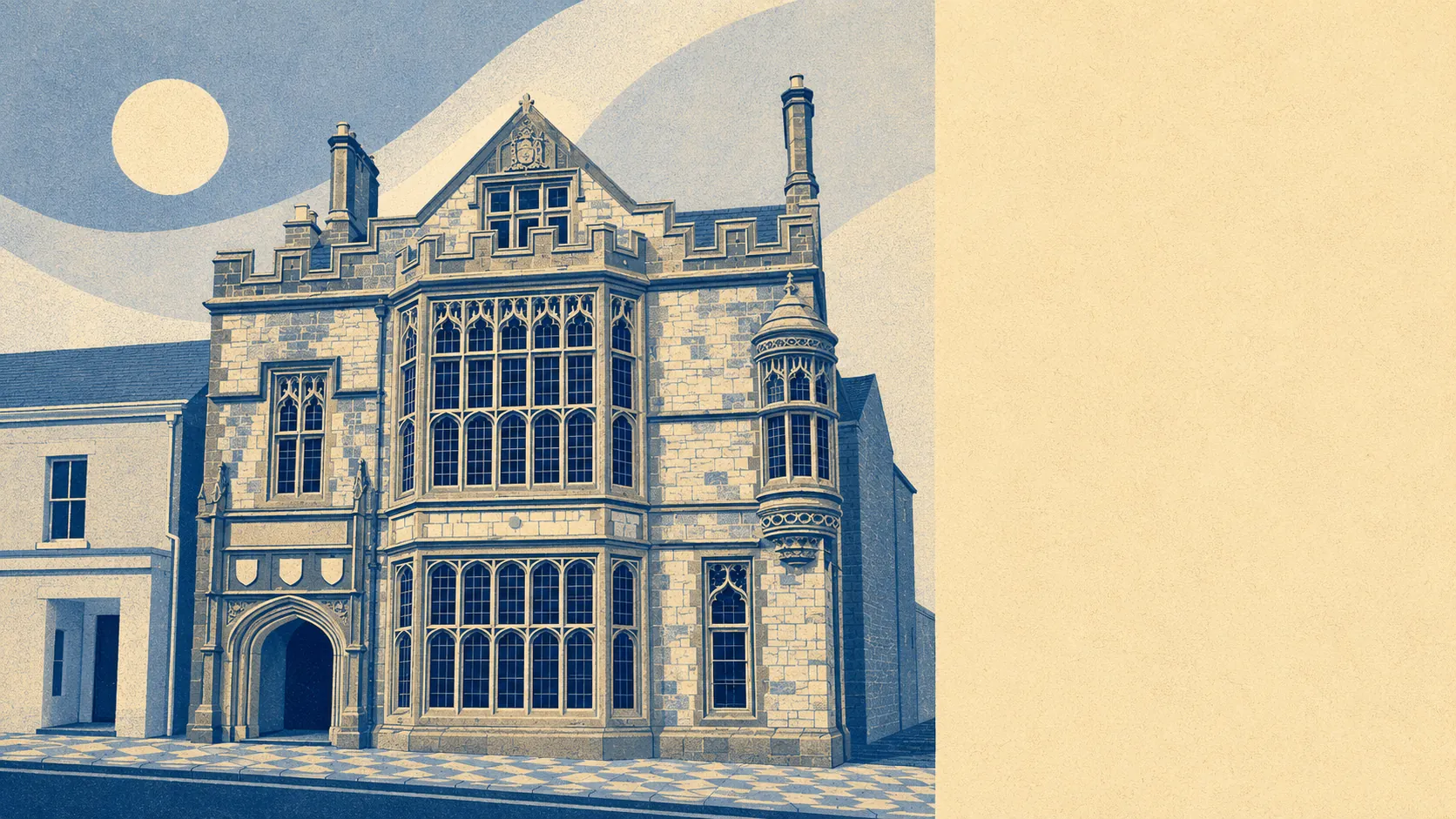
Heritage is a genuine constraint rather than a decorative one. There are 294 listed buildings in the area, five of them grade one and 16 grade two star, plus the Dorchester conservation area and 12 scheduled monuments. If your plan involves replacement windows, a rear extension or anything visible from a public highway in the older streets, the consent process is real and slow.
The character is settled rather than transient. Around 63% of households own their homes, the typical resident is 49, and gross household income across the area runs to about £56,000 a year. That is a town of people who arrived and stayed, and it shows in the shop mix and the opening hours.
This page also covers the surrounding villages, which is where a good deal of the appeal sits. Poundbury on the western edge is the Duchy's architectural argument made in Portland stone. Cerne Abbas, Maiden Newton, Puddletown, Winterborne St Martin, Buckland Newton, Evershot and Pulham sit in the chalk country north and west, with Broadmayne, Crossways and Winfrith Newburgh to the east, and Puncknowle and West Bexington running down to the coast.
It suits people who want a working town rather than a pretty one, who will use the countryside properly, and who can live with a high street that shuts early. It suits families, given the school picture and the walking distances.
It does not suit anyone who needs a train to a job, anyone buying on the assumption that a county town means a city's evening economy, or anyone whose renovation plans depend on planning consent arriving quickly.
Thomas Hardy trained as an architect here, fictionalised the place as Casterbridge, and died at Max Gate on its edge, which is a fairly complete endorsement of somewhere he could have left at any point. Julian Fellowes and the surgeon Frederick Treves also came from here, and Henry Moule ran the Fordington parish while inventing things. The Bloody Assizes happened in the Antelope Hotel, the Tolpuddle Martyrs were tried in the Shire Hall, and the town has been quietly getting on with itself ever since.
Dorchester is a fair place to live and an unusually good place to live near. Its real strength is the surrounding landscape and how close the green space sits to almost every front door. The weak spot is the crime rate, which sits well above the Dorset average and concentrates in the town centre rather than the streets people actually buy on. Buy for the chalk hills and the schools, budget for the heritage consent, and accept that the county town closes when the county does.