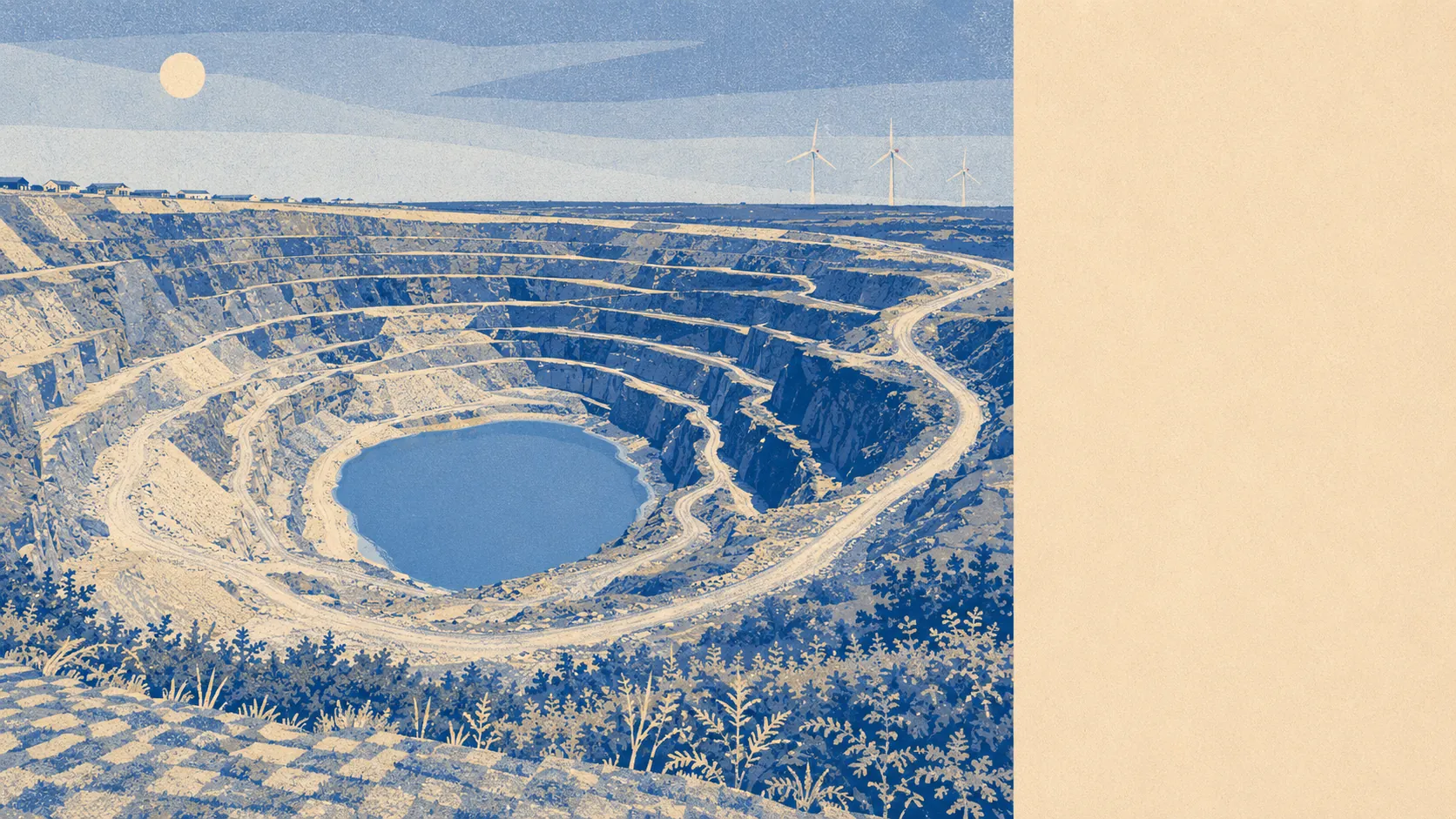
Yes, if you want Cornwall to be a job rather than a view. Two thirds of homes here are owned outright or on a mortgage. The typical resident is closer to fifty than forty. The nearest big supermarket is a seven minute drive and the nearest hospital is over an hour. This is a village that has always worked for a living, and it prices, feels and behaves accordingly.
The housing stock is unusually low-rise for somewhere with a serious industrial past. On the council tax valuation list, which covers every dwelling rather than only those with an energy certificate, bungalows are the single largest type at about 28%, ahead of detached at roughly 22%, terraced at about 20% and semi-detached at around 18%. Flats barely register at about 7%. Around 36% of the stock predates 1930, which in a slate village means what you would expect: solid, thick-walled, and built by people who were not thinking about your heating bill. The energy certificates bear that out, with about 42% of certificated homes sitting at band E or worse and only around 28% reaching band C or better. The heating position is the fact worth knowing before the viewing rather than after it. Only about 4% of homes are on mains gas, and roughly 29% run on electricity alone. That is a running-cost reality that a listing photograph will not tell you.
On price, the Land Registry's last twelve months to April 2026 put the typical sale at around £241,000 across 18 transactions. The type split is wide for a village this size: detached homes came in around £330,000, semi-detached around £256,000, and terraced around £188,000. Council tax runs low, with band A the most common band and roughly 49% of dwellings sitting in bands A or B. For anyone arriving from a city, that combination of a sub-£250,000 typical price and a band A council tax bill is the whole financial argument in one line.
Renting is a different conversation and a broader one. The typical private rent across the Cornwall area is about £1,000 a month as of April 2026, which is an area-wide figure rather than the village's own. Delabole is a small rental market inside a very large local authority, so treat that as the regional weather rather than the local forecast.
Safety is the dimension that most surprises people who assume rural means unpoliced. The published crime rate is around 40 recorded crimes per thousand residents over the twelve months to May 2026, against about 74 per thousand across Cornwall. That is a genuinely low figure rather than a technically low one. Worth knowing that Devon and Cornwall Police charge in around 8% of cases against about 12% nationally, and record no suspect identified in roughly 26%. The village is quiet. The force behind it is stretched.
Connectivity is where the honesty gets uncomfortable. Nobody in Delabole commutes by train, because there is no station to commute from, the North Cornwall Railway having taken its passenger services away in 1966 and never given them back. About 65% drive to work and roughly 16% work from home, which between them account for most of the working population. There are nine bus stops in the area, all of which have weekend service, averaging about 12 scheduled weekday departures each and roughly one or two in the peak hour. The Department for Transport's 2019 modelling puts the nearest town centre at 28 minutes by car and about 39 by public transport, a secondary school at 15 minutes by car, and a hospital at 73 minutes by car. Broadband, curiously, is the thing that works flawlessly: gigabit-capable service reaches around 99% of premises and superfast reaches essentially everywhere, with only about 0.1% below the universal service obligation. You can hold a video call with Zurich and still be an hour and a bit from an accident and emergency department.
Environmentally, the picture divides neatly. On the river-and-sea flood zones, Delabole registers nothing at all: zero percent of the area sits in flood zone 2 or 3, and no historic flooding is recorded. On the broader postcode indicators, which include surface water and other sources, around 11% of postcodes carry a high indicator on at least one measure and about 13% a medium one. That is a place with no river problem and a normal rural drainage problem. Green space is genuinely close, averaging about 283 metres to the nearest patch with roughly five within a kilometre, and water is about 717 metres away. The radon position deserves a mention: this is high-radon Cornwall, with around 66% of the area in band 3 or above and a maximum band of High, which means a test and, if needed, a sump. Routine here, alarming elsewhere.
Heritage constraints are close to nonexistent, and that matters more than it sounds. There are four listed buildings in the area, all grade two, and no conservation areas or scheduled monuments within the immediate boundary. St Teath and Treligga carry conservation designations nearby, and the older churches, including the Church of Saint Julitta and the Church of Saint Tetha, are the listed stock. For a homeowner, the practical translation is that you can put in the windows, the extension and the solar panels without a heritage officer explaining why your proposed glazing offends the eighteenth century.
The character follows from all of it. Around 67% own their homes, the median age is about 48, and typical gross household income sits at roughly £41,000 a year for the financial year to March 2023. That is a settled, older, working-owner village rather than a commuter dormitory or a second-home strip. Around 34% of households are one person, and about 17% are a single pensioner, which tells you something about how long people stay. This page also covers St Teath, Trebarwith Strand, Trewarmett and Westdowns, which spread the same picture across a stretch of coast and moor.
It suits people who want space, ownership and quiet at a price that would buy a garage in the south east, and who are genuinely comfortable driving for most things. It suits retirees, remote workers with good broadband and low patience for neighbours, and anyone who wants to alter a house without a committee.
It does not suit anyone who needs a train, a hospital close by, or a social life that arrives without planning. Delabole Primary School is the local option, and Ofsted has graded 95 of Cornwall's 120 graded settings good or better with three outstanding, which is a reassuring county picture rather than a doorstep one. If you need choice of secondary within walking distance, this is the wrong village.
The place has form for producing people who leave and do something. Moses Kellow was born here and went on to run the Parc Slate Quarry in Wales, taking the trade with him. Philip Gross, born in 1952, went the other direction entirely and became a poet, novelist and playwright. A village that gave the country its first commercial wind farm and the Cornwall Air Ambulance has never been short of ambition, just short of an audience.
Delabole is a good place to live, and its real strength is the freedom it gives you over your own house: almost no heritage constraint, low council tax, and a price that leaves budget for the work. The weak spot is the community around it, which is thinner on services, amenity and everyday access than the postcard version of Cornwall implies. Buy here for the roof over your head and the room around it. Do not buy here expecting the village to entertain you.