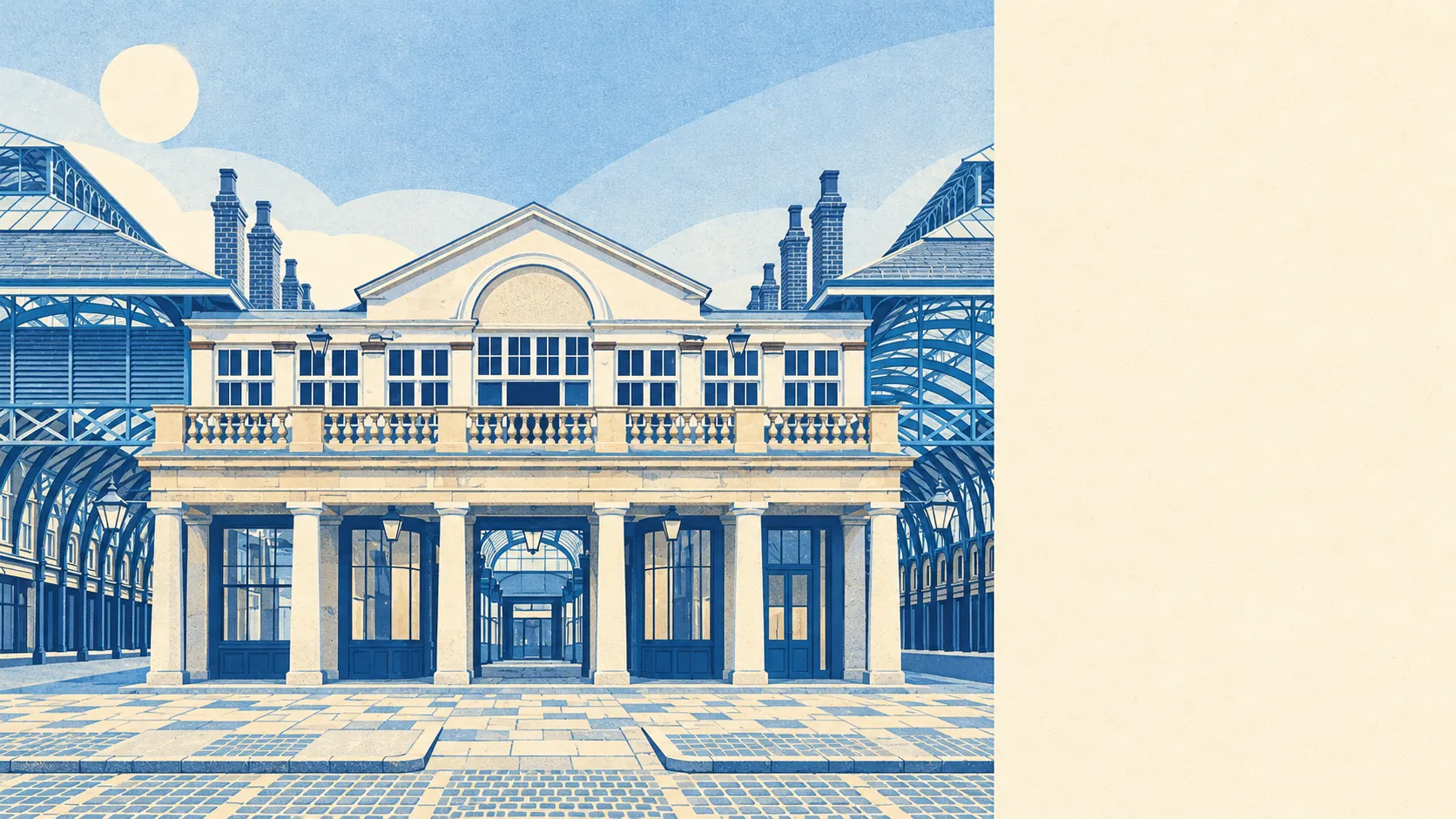
The area around Covent Garden is busy, stone-built and greener than its reputation. A small park or square is a couple of minutes from almost every front door, and the river is a short walk south. Shops, theatres and restaurants fill the streets between them. What residents lack is a garden of their own.
Green space is on average about 120 metres from a Covent Garden home, and about 30 green spaces lie within a kilometre. Most are squares, churchyards and gardens, the kind of green you can cross in a few minutes, though Lincoln's Inn Fields to the east and Victoria Embankment Gardens by the river are both proper places to sit for an hour.
Water is close too. The nearest is about 440 metres away on average, and about 54 stretches of water lie within a kilometre, from the Thames itself to ponds and fountains. The river is what defines the southern edge of the area, from Charing Cross along the Strand to Aldwych.
The National Cycle Network is about a kilometre away on average, and only about 1% of postcodes are close to it. There is no ancient woodland anywhere in the area. Getting into real countryside means getting out of London.
The premises the Food Standards Agency and the rating list record include 782 shops, 68 pubs and 308 restaurants. North of Long Acre, Neal's Yard and Seven Dials are the independent quarter. To the south are the Piazza, the market hall and the Jubilee Hall Market. Pubs are less numerous than restaurants, and the opera house is the busiest building in the district.
Westminster's fine-particle air pollution averaged 9.7 micrograms per cubic metre in 2024, measured across the whole borough. Main roads will be worse than that and the back courts better.
The Royal Opera House, the London Transport Museum and the Theatre Royal, Drury Lane all sit within a few minutes of each other, and street performers work the square below. St Giles, at the northern end, feels more like the busy edge of the West End. The defining feature is how much happens within a few hundred metres. The defining cost is that it happens outside your window.
Private gardens barely exist here. Across the area's ten neighbourhood statistical areas there are about 5,045 square metres of private garden for every 1,000 residents. Covent Garden began as a walled garden owned by the monks of Westminster Abbey, and that figure is about what's left of it.
The Valuation Office's rating list has 4,315 business premises in the area. Offices are the largest group by far, with 2,329, followed by 742 shops and 292 restaurants and cafes. These are premises on the valuation list, which doesn't mean each one is trading today. On a weekday, residents are well outnumbered by the people working at desks around them.
Of the 974 food premises rated for hygiene, about 69% have the top score and about 8% are rated low. With that many places to eat, you can check the rating on the door before you sit down.
No area of outstanding natural beauty, site of special scientific interest or ancient woodland overlaps Covent Garden. Its protection comes from listing and conservation areas, all of it applied to buildings.
Covent Garden's surroundings are one of its real strengths: green squares and the river within a few minutes' walk, and a cultural quarter outside the door, at the price of having no garden of your own.