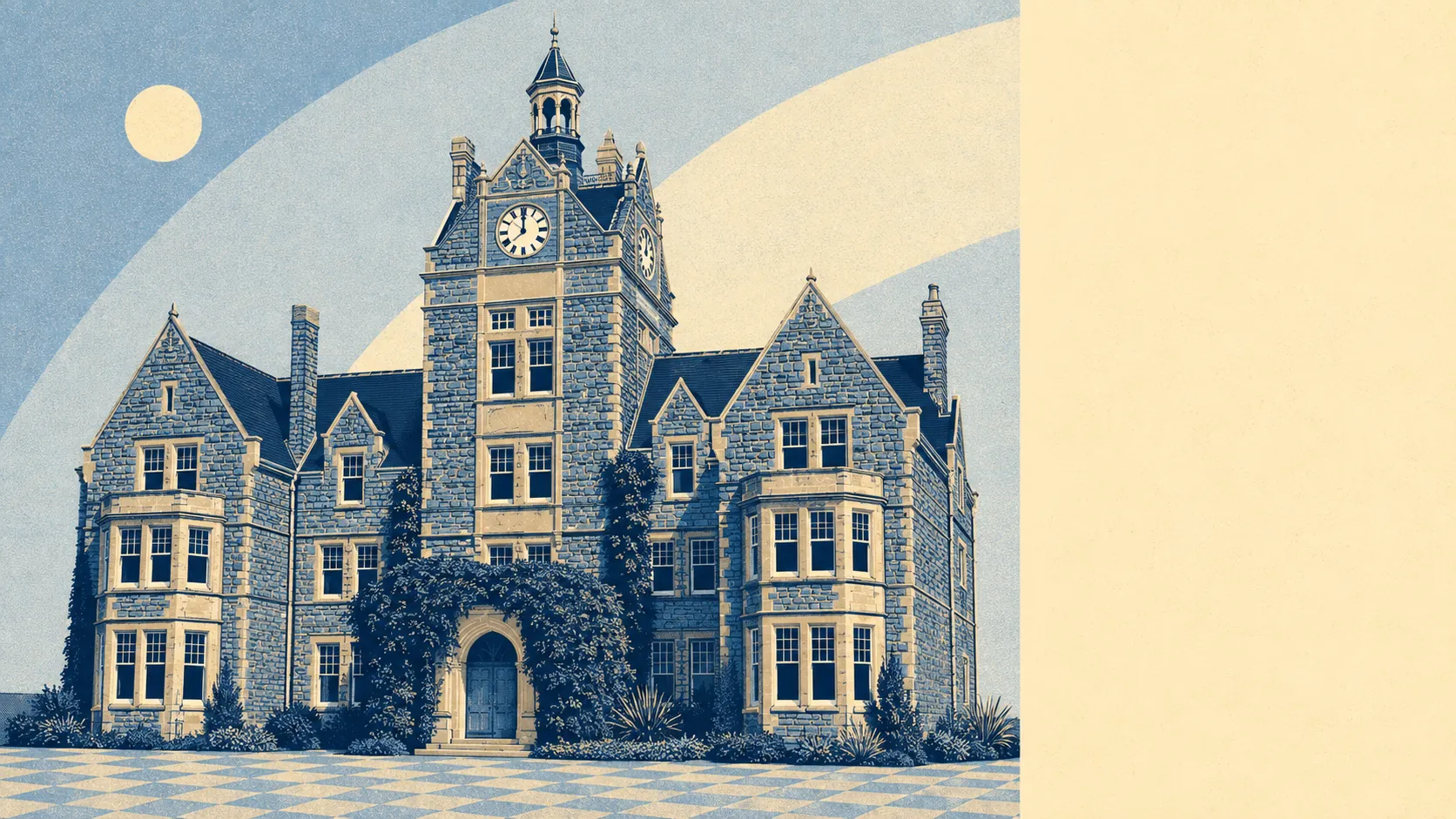
Green, and not in the brochure sense. Open countryside starts roughly where the last close ends, with water and footpaths within a few minutes of a front door. The village itself has almost nothing in the way of a high street. What it has instead is space, quiet, and gardens big enough to justify a shed you do not need. This is a place that trades shops for fields and does rather well out of the swap.
Green space is the headline. The Ordnance Survey's greenspace mapping puts an average of about nine green spaces within a kilometre of a home here, with the nearest around 89 metres away. That is not a park you drive to. That is a green edge you can see from the kitchen window, which is a different proposition entirely and the main reason people who move here from a town stop complaining about the shops.
Water is nearly as close. Blue space averages about 245 metres from a home, with roughly 26 water features within a kilometre. In a landscape of Quantock streams and field ditches, that is what you would expect, and it is a large part of why the walking around here works.
For getting further out, the National Cycle Network sits at an average of about 2,450 metres away, so nothing here counts as being on the network, and no postcodes fall into the close band. There is no ancient woodland inside the area at all. The riding and walking is field-and-lane countryside rather than protected forest, which suits some people completely and bores others within a fortnight.
On amenities, the reality is thin and worth stating plainly. The valuation list carries seven rateable premises across the area in total, with two in the largest single category and single premises across the rest. Six food premises hold a hygiene rating, and about 83% of those sit at the top score of five, with none at the bottom of the scale. That is a good record across a small number of places, and it is also a reminder that eating out here means a short drive rather than a choice of doorstep options. The wider ownership picture across the postal district takes in 65 shops, 27 pubs, four restaurants, 89 offices and 90 holiday lets, which is the shape of the surrounding countryside rather than of this village.
Air quality is unremarkable in the good way. Fine particle levels for the Somerset council area averaged about 5.5 micrograms per cubic metre in 2024, a rural figure rather than a roadside one.
The surrounding places tell you what kind of area this is. Bishops Lydeard sits just to the north, Norton Fitzwarren a couple of miles the other way, with Hillcommon, Oake, Heathfield and Fitzroy scattered around the lanes. A landscape of small villages, a hillfort at Norton Camp, church crosses in churchyards, and conservation areas at Bishops Lydeard, Ash Priors, Halse and Hillfarrance. None of that is in this village, which is precisely the point: the history is all around it rather than in it.
Private outdoor space is where the numbers get genuinely striking. Gardens here run to about 145,000 square metres per thousand residents, which is a serious amount of private ground per household and the single best measure of what buying here actually gets you. This is a village of proper gardens, and it is the thing that most obviously separates it from anywhere with a comparable price and a shorter commute.
On designations, there is no area of outstanding natural beauty overlapping the village, no site of special scientific interest, and no ancient woodland. That is not a mark against the place. It means the countryside here is working farmland and lanes rather than protected landscape, which is more usable and less photographed.
The surroundings are the best thing about this village by some distance. Green space at the doorstep, water within a short walk, and gardens generous enough that the lack of a high street stops feeling like a complaint.