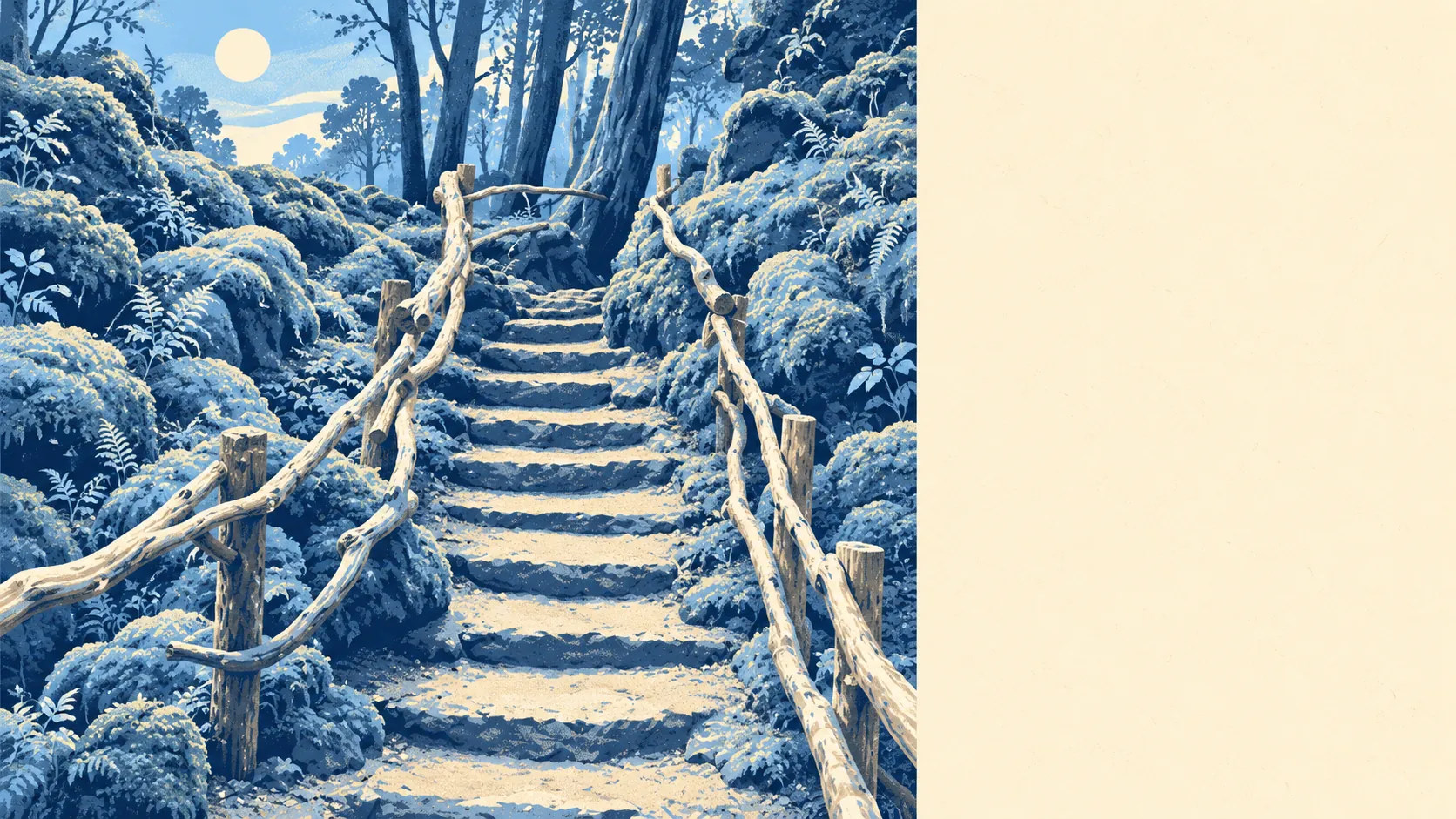
Coleford is surrounded by woods, old iron workings and very little in the way of red tape. Green space is a couple of minutes' walk from most doors. There's water within reach. The high street runs on shops and pubs more than restaurants. For a town in the middle of the Forest of Dean, the landscape around it carries surprisingly few official labels.
Green space is everywhere. The average home is about 160 metres from the nearest patch, with about 20 green spaces within a kilometre. Most residents could reach one before the kettle boiled.
Water is close too. The nearest stretch of blue space averages about 520 metres away, with about 7 within a kilometre. The Wye Valley lies just to the west.
Cycling routes take more effort. The nearest National Cycle Network route averages about 3.3 kilometres away, and no postcode is close to one. Inside the town boundary there is no ancient woodland at all, even though Coleford is the Forest of Dean's administrative centre. The Forest begins at the edge of town, and the town itself is houses.
The high street is a working one. The local premises count includes 112 shops, 15 pubs and only 4 restaurants. Fifteen pubs and four restaurants is what eating out looks like in a market town that has been pouring pints in its market place since the 1650s.
Air quality is good. Fine-particle pollution across the Forest of Dean council area averaged about 5.7 micrograms per cubic metre in 2024.
The history is close by. The ruins of Whitecliff Iron Works, on the town's south-western edge, are a scheduled monument and open to the public. In 1809 the works hired the metallurgist David Mushet to make them profitable, and he walked away after a few months. Sections of Offa's Dyke, a Roman villa at Clearwell Farm, the old scowles near Scowles Farm and the Dark Hill iron works all lie within reach, and the area includes Clearwell, Newland and Staunton among its villages. Newland's All Saints' church is known locally as the Cathedral of the Forest, which tells you what passes for a big building around here. Berry Hill, Broadwell, Mile End and Milkwall give onto the Forest from the edges of the town.
Private gardens are generous. The area has about 142,000 square metres of private garden for every 1,000 residents, measured across its three neighbourhood areas. Combined with all that public green space, outdoor room is easy to come by.
The valuation office's rating list holds 238 rateable premises in the area. Within its own categories, shop premises are the largest group at 96, followed by offices at 38. These are premises on a tax list, which says nothing about which ones are trading this week. The area also has 48 holiday lets, so a slice of Coleford earns its living from people visiting the Forest.
The food is clean. Of the 42 premises with a hygiene rating, about 88% hold the top score of five and none are rated low.
None of the area overlaps an area of outstanding natural beauty, a site of special scientific interest or ancient woodland. That is a quirk of where the boundaries were drawn, and it leaves the woods outside the town to speak for themselves, mostly through the Forest that starts where the houses stop.
The setting is the best thing about Coleford. Green space is never more than a short walk away, there are gardens, water and centuries of industrial ruins nearby, and the Forest is on the doorstep.