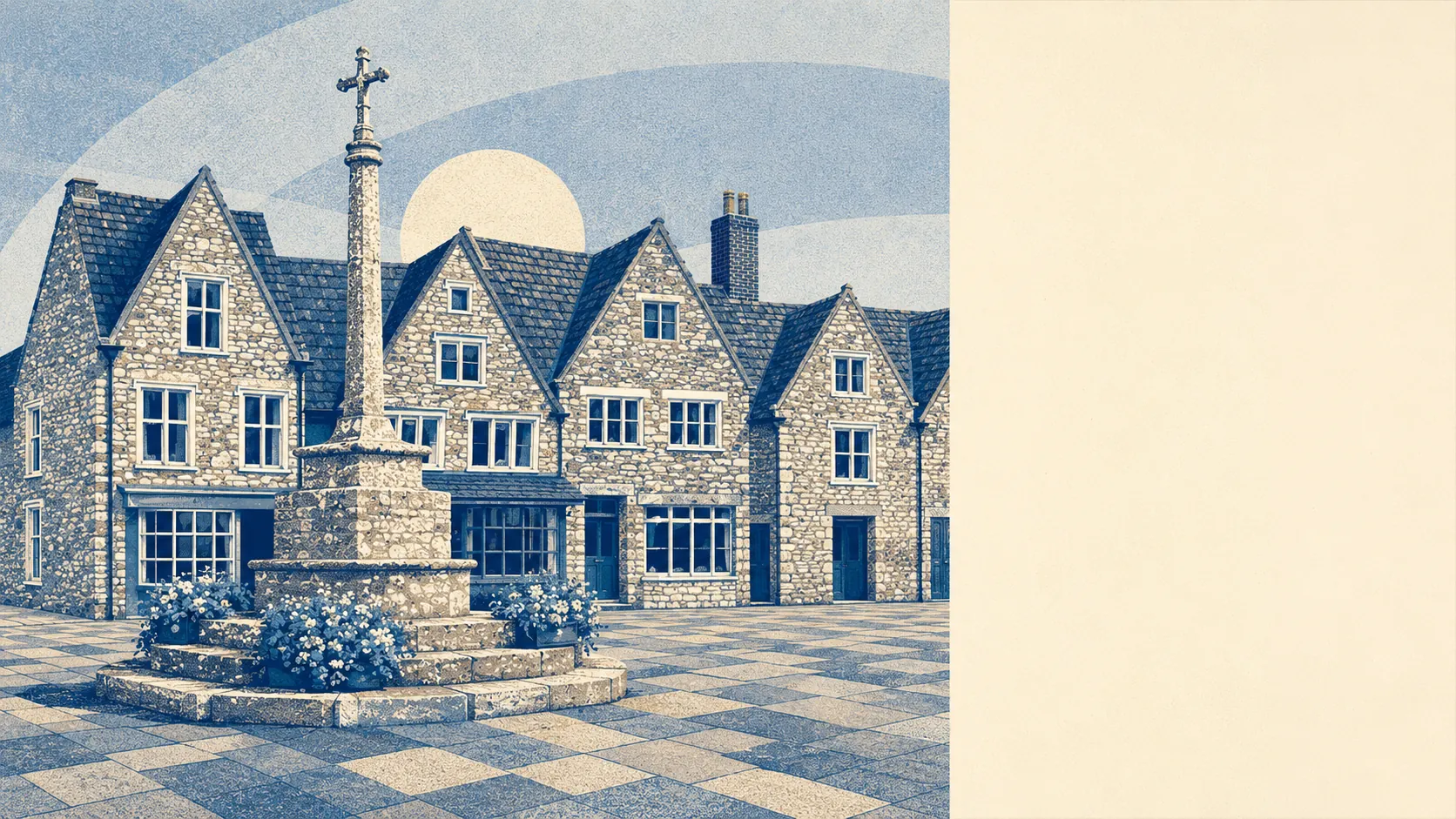
You can extend most houses in Chipping Sodbury without much drama, and you can barely change a doorknob on a few of them. The town holds around 130 listed buildings. One conservation area sits over the medieval core. Most of the housing stock, though, is ordinary post-war build with fewer than one in ten homes predating 1930. Whether your plans are simple or a saga comes down almost entirely to which of those two towns your house belongs to.
Start with the listed buildings, because they are where freedom disappears. Of the roughly 130 listings, one carries the top grade one status and about fifteen more sit at grade two star, with the remaining bulk, over a hundred of them, at grade two. If you own one of these, listing applies to the whole building inside and out, not just the pretty front. Replacing windows, moving an internal wall, changing the roof covering, even swapping a fireplace can require listed building consent, and doing the work without it is an offence rather than a paperwork slip. These homes come with a custodian's obligations attached to the deeds, and the price of owning a piece of the town's history is that you stop being the only person with an opinion on your own staircase.
The conservation area adds a second, gentler layer over the historic streets. There is one such area, covering the old market town, and inside its boundary the rules tighten even for buildings that are not individually listed. Demolition, alterations that affect the character of the area, and work to certain trees can all need consent that would be automatic elsewhere, and some of the permitted-development rights homeowners take for granted are trimmed back to protect how the street looks as a whole. It is not a lockdown, but it is a reason to check before you order the render or fell the sycamore.
For the majority of the town, none of this bites. A standard post-war house outside the conservation area and off the listing register keeps the normal permitted-development freedoms, which means a good deal of extending, loft-converting and single-storey adding can happen under the usual national rules without a full planning application at all. The local planning system is plainly used to the traffic, having handled somewhere in the region of 330 applications across the past year, so an extension on an ordinary house here is a well-trodden process rather than an exotic one. The sensible first move is simply to establish which category your address falls into, because that single fact decides whether you are filling in a lawful-development form or commissioning a heritage statement.
So, can you extend a house in Chipping Sodbury? For most homes, comfortably, under the ordinary rules that apply anywhere. For the listed and the conservation-area minority, only carefully, with consent, and with someone else holding a veto. Middling freedom overall: wide open for the many, tightly held for the few.