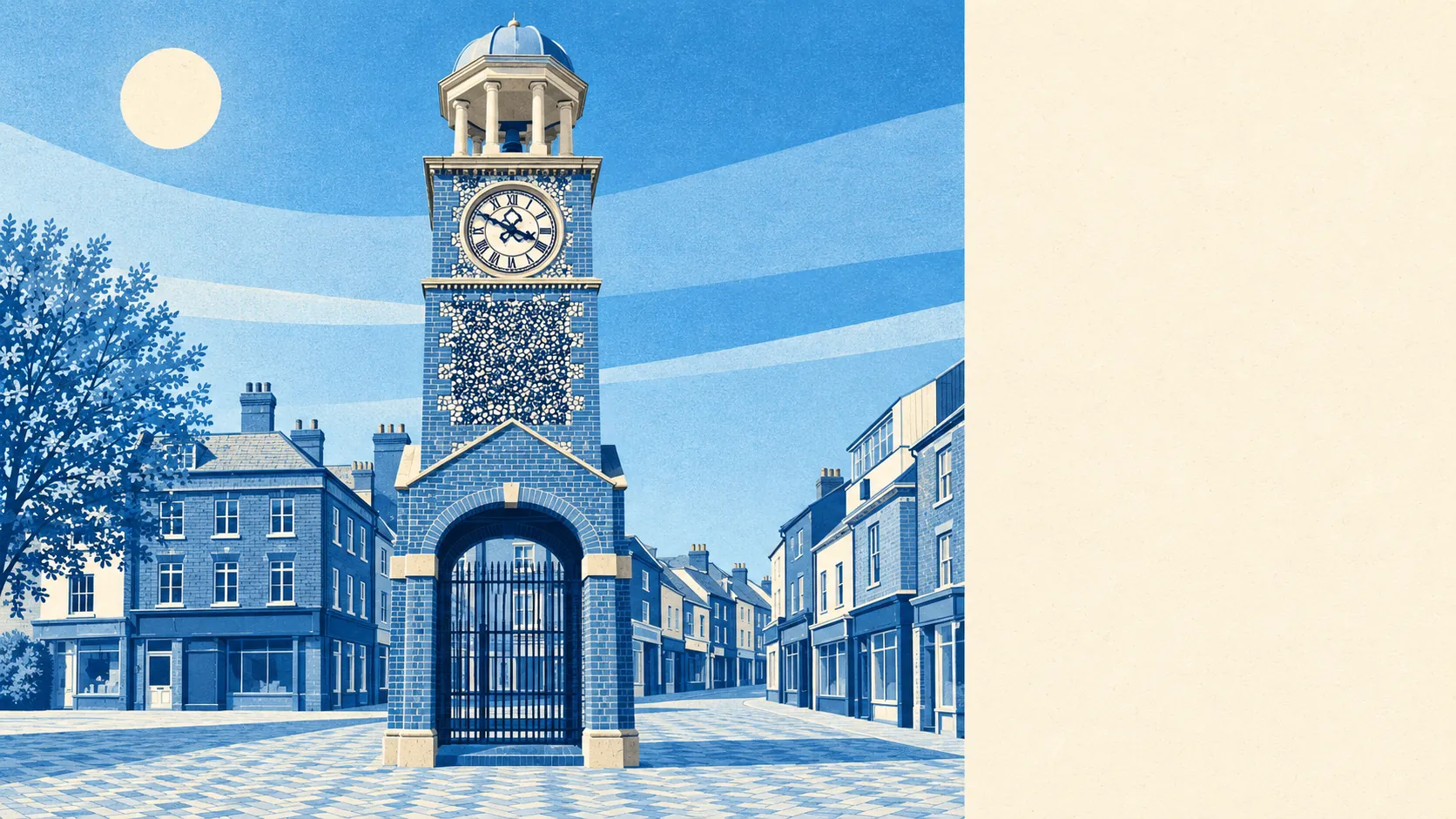
Chesham is a hard-working valley town with the Chilterns at the top of most of its streets and a slow ride to almost everywhere else. Most households own their homes, most front doors are a few minutes from a park or a field, and the market still turns up on Wednesdays and Saturdays. The brush trade outlasted the boots, the lace, the silk mill and the brewery, and the town has the same stubborn streak. It is right for people who work from home most of the week, walk at weekends and have made their peace with the commute.
Thames Valley Police recorded crime at a rate of 69 per 1,000 residents in the year to May 2026, about 6% above the Buckinghamshire average. Violence and sexual offences made up 38% of it, against 35% nationally, and vehicle crime 7% against 5%. Coming in a bit above average in Buckinghamshire is a problem most English towns would quite like to have.
Getting out is the trade-off. The town's Underground branch is a single track down to Chalfont & Latimer, where the Metropolitan line and Chiltern Railways carry on to London, and the nearest National Rail stations are at Amersham and Berkhamsted. At the 2021 Census only about 1% of working residents went to work by train, 38% worked from home, and far more drove than took the tube. The 127 bus stops average 23 departures a weekday, roughly one an hour at peak, and nine in ten stops have a weekend service. The Department for Transport's 2019 modelling puts the nearest hospital about an hour away by public transport and 25 minutes by car. Gigabit broadband reaches about 83% of the town and superfast 99%. A town that grew up around a tube line now sends about as many people to work on trains as you could fit in one carriage.
The River Chess is a chalk stream that rises from springs above the town, runs in culverts under the streets and comes back into daylight at Waterside. About 5% of Chesham is in the Environment Agency's highest river-and-sea flood zone and 2% in the next one down, rising to 9% once the agency allows for climate change. Count every flood indicator including surface water and about 18% of postcodes are rated high on at least one. A river you can't see from the High Street is still a river.
About 65% of households own their home, the median age is 41 and household income averaged about £67,000 gross. That last figure is the Office for National Statistics' model for the financial year to March 2023. Social renting is more common here than in the rest of south Buckinghamshire. By county standards that makes Chesham the mixed one. Most of England would call it comfortable.
Historic England lists 147 buildings here: one at Grade I, five at Grade II* and the rest at Grade II. Most of the old town around Church Street and Germain Street falls inside the Chesham conservation area. If you own one of those houses, new windows, extensions and changes to the front need the council's agreement first. In 2009 the conservation area went onto English Heritage's at-risk register, and the district council said its answers to a questionnaire had been misread. Anyone who has argued with a planning department will know that excuse.
The Land Registry's typical sale price for the year to May 2026 was about £422,000. Flats went for around £250,000, terraced houses £400,000, semis £485,000 and detached houses about £786,000. Band C is the most common council tax band, and 13% of homes are in bands A or B.
Buckinghamshire Council's area had a typical private rent of about £1,470 a month in April 2026. That is an index average for the whole county rather than for Chesham's own streets.
The council-tax valuation list puts terraced houses at 27% of the stock, flats and semis at 21% each, detached houses at 17% and bungalows at 13%. Only 24% was built before 1930, so most of the town arrived after its railway did, in waves from the Victorian terraces off Berkhamsted Road to the post-war estates at Chessmount and Hilltop. Mains gas heats about 78% of homes. About half the certificated homes are rated C or better for energy, and 12% are E or worse.
Buckinghamshire still runs the eleven-plus, so children sit the exam to decide between grammar school and the rest. The town has two secondary schools, Chesham Grammar School and Chiltern Hills Academy, with an average Attainment 8 score of about 58. Across the seven primary schools, Key Stage 2 maths averaged about 105. In 1532 the town burned Thomas Harding at the stake as a heretic, and it later named Thomas Harding Junior School after him. In the Chilterns that is about as close as anyone gets to an apology.
The average front door is about 160 metres from green space, with 16 green spaces within a kilometre and water about 660 metres off. Lowndes Park has a bowl barrow known locally as the Rolling Pin. The villages this page also covers are further up the hills: Bellingdon along its ridge, Chartridge, Ashley Green, Ley Hill, Lye Green, Hawridge, St Leonards and The Lee. Each one is a short drive from the shops and a long way from the bypass. Not many towns can say their park has a burial mound with a nickname.
Nye Bevan, the father of the National Health Service, moved to Asheridge Farm near Chesham and died there in 1960. Val Biro wrote his Gumdrop books while he lived in the town, from 1955 to 1969. Earlier still, in 1630, Aquila Chase left for America. One of his descendants, Salmon P. Chase, ended up with a bank named after him that he had nothing to do with.
Chesham is a good choice for anyone who wants the countryside first and a commute second. The hills, the parks and the river path are a few minutes' walk from most doors. If you're buying down on the valley floor, the flood map comes first, because the river runs under the town. Families prepared for the eleven-plus, walkers and people who work from home will find Chesham hard to beat for the money. Anyone who needs a fast train every morning will be happier near Amersham's main-line station.