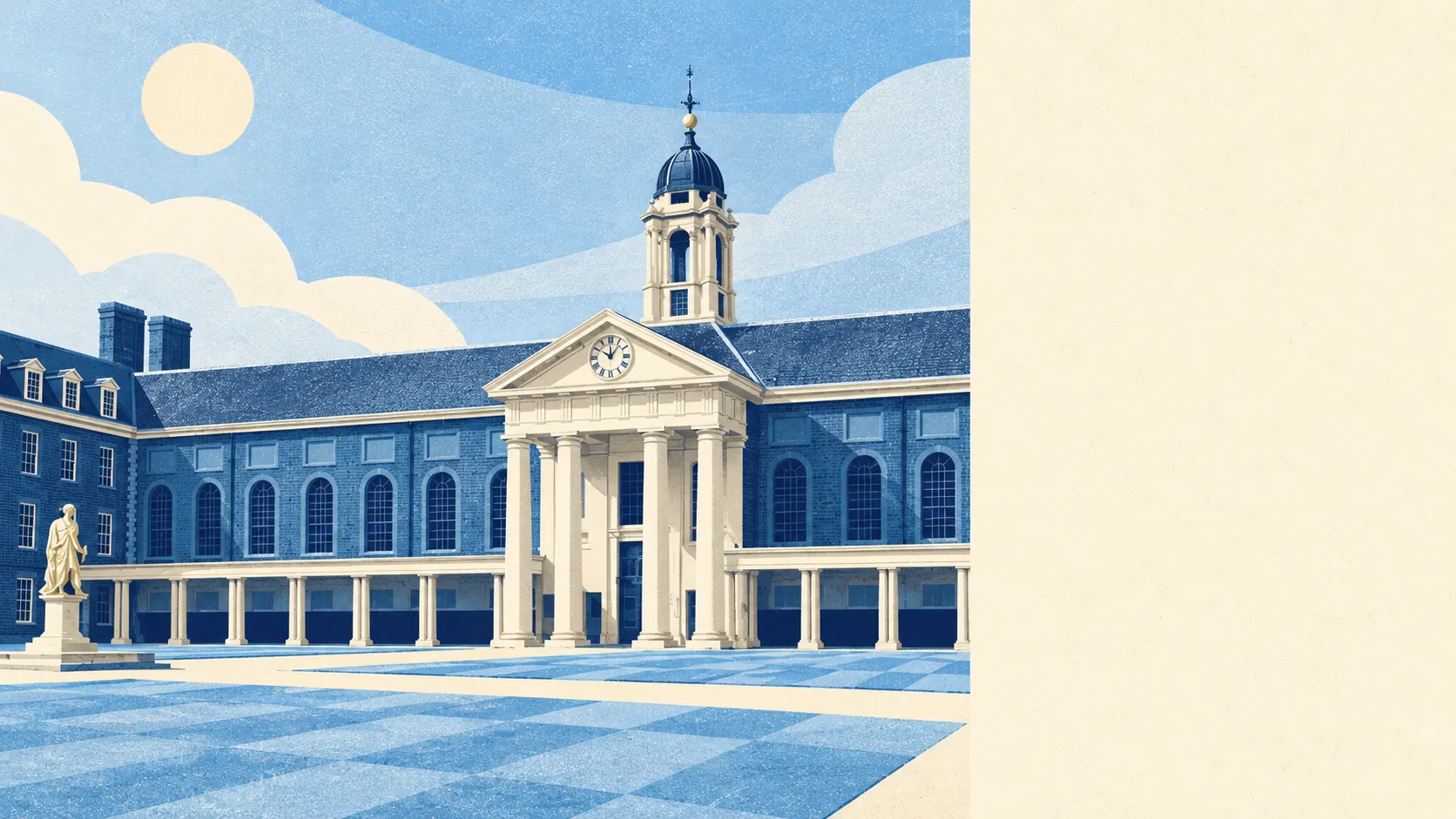
Chelsea is surrounded by more green space and river than almost anyone expects of a district this crowded. A park or garden is a minute or two from most front doors. The Thames runs along the whole southern edge. Shops and restaurants fill the streets between them. It is a city district that took its gardens seriously and kept them.
The average front door in Chelsea is about 94 metres from green space, and about 52 green spaces lie within a kilometre of the average home. Those include the Chelsea Physic Garden, Roper's Garden, the Chelsea Embankment Gardens and the grounds of the Royal Hospital, which host the flower show every year. Chelsea Cricket Club once played on the local common, until the 19th century built over it, and the green space survived in squares, riverbanks and hospital lawns.
Water is close as well. The nearest blue space averages about 470 metres from home, and about 50 stretches of water lie within a kilometre, from the Thames itself to the ponds and lake across Battersea Bridge in Battersea Park.
The National Cycle Network is about 800 metres from the average home, and about 33% of homes are close to it.
For a district of its size, Chelsea is thick with shops: the rated-premises count finds 640 shops, 94 restaurants and 19 pubs. The King's Road still has a name for fashion, though it now stocks much of what every other high street sells, and Sloane Street on the eastern edge is the expensive end. The King's Road went from the street the rest of Britain copied to one that sells what the rest of Britain already owns.
Across Kensington and Chelsea, fine-particle air pollution averaged about 9.4 micrograms per cubic metre in 2024, a single figure for the whole borough.
The character is old, built-up London with the river close by. Albert Bridge and Battersea Bridge cross to the south bank, Cadogan Place and Hans Place sit near the eastern edge, and Brompton Cemetery lies just beyond the western side. The parish was bounded by water on three sides, and two of those rivers now run underground.
Private gardens are scarcer than the parks. Across Chelsea there are about 14,000 square metres of private garden for every 1,000 residents, in a district where most homes are flats. Chelsea's garden squares do some of the work that a back garden does elsewhere, and whether a flat comes with a key to one is a question worth asking the seller, because it changes how much outdoor space the home has.
The valuation list holds 1,623 rateable premises in the area, with offices, 497 of them, a large part alongside the shops and restaurants. These are premises on the rating list, which counts buildings and units whether or not anything is trading in them today.
Eating out is a safe bet on hygiene. Of the 266 food premises with a hygiene rating, about 88% hold the top score of five, and only about 1% sit at the low end.
No protected-landscape designation touches Chelsea: no area of outstanding natural beauty, no site of special scientific interest and no ancient woodland. This is inner London, and its green space is the made kind, laid out as squares, embankments and historic gardens for people to use.
The surroundings are one of Chelsea's real strengths, with a garden or park almost at the door, the river a short walk away and a shopping street in between.