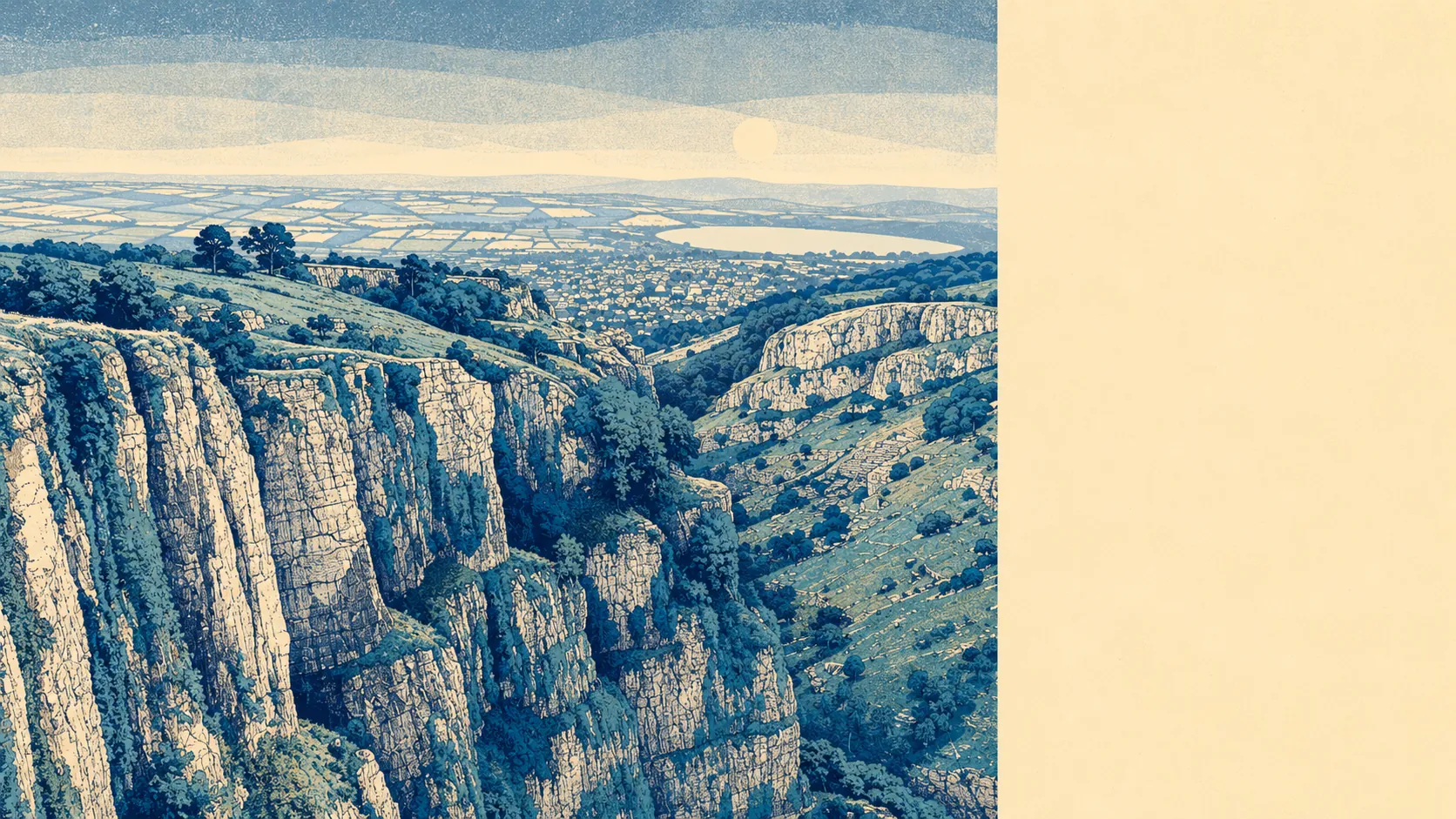
Cheddar is where you move to get the Mendips without saying out loud that you've stopped chasing anything. About three-quarters of the homes are owned outright or on a mortgage. The median resident is forty-nine. Half of them drive to work, and nearly a third don't leave the house to work at all. That isn't a commuter village. It's a settled one, with a world-famous gorge bolted onto the edge.
The chocolate-box thing is half a lie. Two-thirds of the housing stock is houses and fewer than one in five are flats, which fits the picture, but the age of the buildings does not. The single biggest slice went up between the early 1980s and the early 2000s, and only about one in seven homes predates 1930. For a village that trades on a Saxon royal palace and Victorian strawberry trains, a lot of Cheddar is cul-de-sac. On energy, about half the stock rates C or better, a third sits at band D, and roughly one in seven is band E or worse, which is the old-cottage tax nobody mentions until the first winter bill.
A typical Cheddar sale over the last year landed at about £360,000, across roughly a hundred transactions. The spread is the usual Somerset ladder: detached houses around £455,000, semis about £316,000, terraces near £219,000, and the few flats that changed hands closer to £150,000. Council tax sits at band D for the typical home, with about a quarter of dwellings down in bands A and B, so the bills are middling rather than punishing.
Renting is thinner on the ground here, and the number to work from is regional rather than local: typical private rent across the Somerset area runs at about £990 a month. In a village where three-quarters own, the rental market is what's left over, not what's built for.
Crime is low, and that's the published figure, not a hunch. Somerset's police record about seventy-one crimes per thousand people across Cheddar's area over the last year, which comes in close to a quarter below the wider Somerset rate. The most dangerous thing in the village's recent history keeps being the traffic near the fifteenth-century market cross, which has been flattened by vehicles twice this century. Rural Somerset does its worst damage by accident.
The railway left in 1963 and came back as a cycle path. The Strawberry Line that once carried Cheddar's fruit to Birmingham and London is now the Strawberry Line Trail, lovely on a bike and no use at all on a wet Monday. Barely anyone commutes by train, because there's no station to commute from. Half drive, the bus does the rest, and nearly a third work from home. Broadband is the quiet win: gigabit reaches about eight in ten properties and superfast covers nearly everything, so the work-from-home crowd aren't roughing it.
Water is the catch. Cheddar and its gorge have flooded before, and the risk map keeps the memory: about one in six postcodes carries a high surface-water flood risk and close to a quarter sit at medium risk. Buy at the low end of the village and read the flood report properly before you sign. The compensation is the ground itself. Green space sits about 175 metres from the average front door, with roughly fifteen open spaces within a kilometre, and a slice of the parish falls inside the Mendip Hills Area of Outstanding Natural Beauty. The gorge is the largest in the country, and it's on the doorstep, not a day trip.
Heritage sits lighter here than the history suggests. The village holds about thirty-five listed buildings, one of them Grade one, and a single conservation area covering the old core, with eight scheduled monuments scattered across the surrounding hills. For most homeowners on the newer estates that means nothing at all. If you buy one of the older places in the conservation area or a listed cottage, expect the usual conversation with the planners about windows, and expect to lose the argument about plastic ones.
The character that follows from all this is steady and a bit greying. Around three-quarters own their homes, the median age is forty-nine, and the typical household pulls in about £58,000 a year. This is a place of paid-off mortgages and well-kept gardens, not a churn of tenancies and turnover.
This page also covers Draycott, the neighbouring village along the foot of the Mendips, which shares Cheddar's schools, its flood quirks and its general trajectory.
It suits people who want the countryside as a daily fact rather than a weekend outing: walkers, gardeners, remote workers with good broadband, families who'll use the first school and the Kings of Wessex Academy up the road, and anyone happy to own a house they'll grow old in rather than flip in five years.
It doesn't suit people who need a train, want a rental-heavy street with young churn, or expect to buy the cheap end of the village without a flood report telling them why it's cheap. If a station and a nightlife are non-negotiable, Wells and Bristol are the drive, and you'll be doing the driving.
Cheddar rates above average overall, and the split is easy to read. The surroundings are as good as this platform scores, the Mendips and the gorge and the green space carrying the whole thing. The flood risk is the drag, the one dimension where the village scores badly. Get those two facts straight and the rest is negotiation. Buy for the hills, check the water, and don't pretend the 1980s estate is a medieval village.