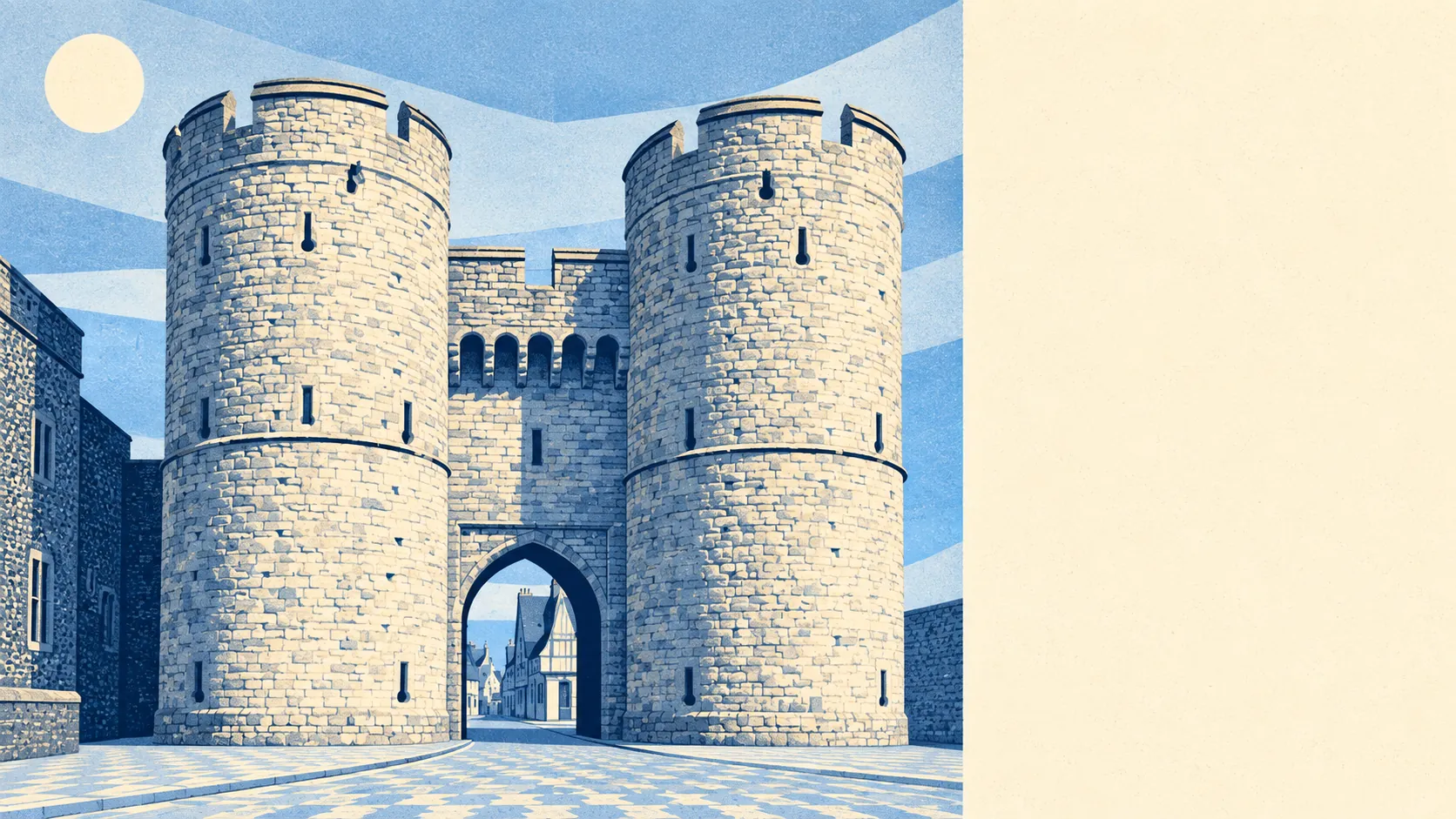
Canterbury is a good place to live, as long as you don't mind sharing it with the universities. About half the homes are rented. The typical resident is under thirty. A third of households get by without a car. What the tourists see is a cathedral city. What residents live in is a university town with its own cathedral.
The housing is more ordinary than the skyline suggests. On the council-tax valuation list, flats are the largest single group at about 31% of homes, with terraces at 27%, semis at 21%, detached houses at 12% and bungalows at 7%. Only about 21% of homes were built before 1930, which surprises people who assume every front door in Canterbury has a timber frame behind it. Most of the city is post-war, built outward from the walls once the bombing and the ring road had cleared space. The energy certificates are middling: about 59% of certificated homes sit in bands A to C, a third in band D and 8% in band E or worse. About 73% of homes are on mains gas, and around 14% are heated by electricity alone. If that electric-only flat is in a converted older building, ask for the bills before you ask about the view of Bell Harry.
The Land Registry's figures for the year to May 2026 put the typical sale price at about £290,000, across 423 sales. The spread by type is wide. Flats went for around £202,500, terraces for about £287,500, semis for about £320,000 and detached houses for roughly £512,500. Band C is the most common council-tax band, and about 35% of homes sit in bands A or B. Nobody is buying Canterbury as a bargain. Nobody is paying Surrey money either.
Renting is where the students leave their mark. The typical private rent across the Canterbury area was about £1,270 a month as of April 2026. That is a figure for the whole council area, which takes in Whitstable and Herne Bay, not a rent for any one street inside the city walls. Landlords near the campuses know exactly who their tenants are going to be, and price for a steady supply of them.
Safety is where the city falls down. Police figures for the year to May 2026 put the crime rate at about 161 per 1,000 residents, roughly 43% above the average for the Canterbury council area as a whole. Some of that is the geography of a busy centre. Shoplifting makes up about 15% of recorded crime here, against about 8% nationally, which is what happens when a compact shopping centre sits inside a medieval wall with a coach park nearby. Kent Police charged in about 16% of cases over the same period, against about 12% nationally. A buyer on a quiet residential close and a renter above the Buttermarket are living in two different sets of numbers, and the average flattens both.
Schools are a genuine strength. Across Kent, Ofsted has graded 221 of 245 settings good or outstanding, with 38 outstanding. The 19 primary schools in the city's postcode districts post an average maths score of about 104 at the end of primary, and the seven secondaries average an Attainment 8 score of about 50. Kent keeps its grammar schools, so Simon Langton Girls' Grammar School, Simon Langton Grammar School for Boys and Barton Court Grammar School sit alongside non-selective schools such as The Canterbury Academy and The Archbishop's School. The King's School Canterbury claims to be the oldest secondary school in the country. Parents who don't grasp the selection test in time discover the admissions rules are fair and unmoved by their feelings.
Getting around is decent, with a catch. Canterbury West and Canterbury East are run by Southeastern, but the two lines were built by rival companies and never properly meet, so which half of the city you live in decides which train is yours. Only about 3% of workers commute by rail anyway. Around 20% walk to work and about 31% work from home. The bus network is thick: 266 stops, averaging about 144 weekday departures each and around nine buses in the peak hour. Superfast broadband reaches about 95% of premises, gigabit about 68%.
The surroundings are the best thing about the place. The average home sits about 138 metres from public green space, with around 32 green spaces within a kilometre, from Dane John Gardens inside the walls to the countryside that starts almost as soon as the suburbs stop. This page also covers the villages around the city: Harbledown, Rough Common and Tyler Hill on the northern and western edge, Blean towards the woods, Fordwich and Broad Oak along the Stour to the north-east, and Bridge, Bekesbourne, Patrixbourne, Littlebourne, Nackington, Lower Hardres, Chartham and Chilham to the south and east. Flood risk needs a proper look. About 17% of postcodes are rated high risk on at least one flood indicator, surface water included. In the river-and-sea flood zones, about 5% of postcodes are in Zone 3 and about 4% in Zone 2. The Stour doesn't care how old your house is.
Heritage is the price of the postcard. There are 987 listed buildings, 39 of them Grade I, plus 28 conservation areas and 23 scheduled monuments, one of which is the city wall itself. For a buyer, that means planning consent for things other towns do on a bank holiday weekend: windows, doors, rooflines. The council has had centuries of practice at saying no. In 1519 the city put up a public cage for talkative women beside the pillory at the Bullstake, which is now the Buttermarket, so the paperwork is a softening of the regime.
The population is young because the universities make it young. About 44% of households own their home, the median age is 28, and the average gross household income was about £57,700 in the financial year to March 2023. Residents aged 15 to 24 make up about a third of the population. Every age-based figure for Canterbury comes with a campus attached.
Canterbury suits a buyer who wants a walkable city with good schools, a lot of green space and countryside at the end of the road, and who can live with term-time crowds and a centre that gets busy after dark. Families who know the grammar-school system, and people working from home who want a city without London prices, do well here.
It suits you less if you want quiet streets all year round, a clean crime record on your own doorstep, or freedom to change your windows without a letter from the council. Buyers who fall for a listed cottage in the conservation area and then go looking for a double-glazing firm are about to learn a lot about secondary glazing.
The names attached to the place span a lot of centuries. Orlando Gibbons died here and has a marble bust in the cathedral. Joseph Conrad is buried in Canterbury Cemetery, and his grave is itself a Grade II listed building, which in this city is the least surprising honour available. The list of notable names also runs from William Harvey and Aphra Behn to David Gower and Orlando Bloom.
Canterbury is a good city with one clear weak spot. Its real strength is the surrounding area and its green space, with the villages and the Stour valley a short walk or a bus ride from the walls. The weak spot is safety, with a crime rate well above the rest of the district. Buy on the right street, and the cathedral stays the thing tourists photograph and residents stop noticing.