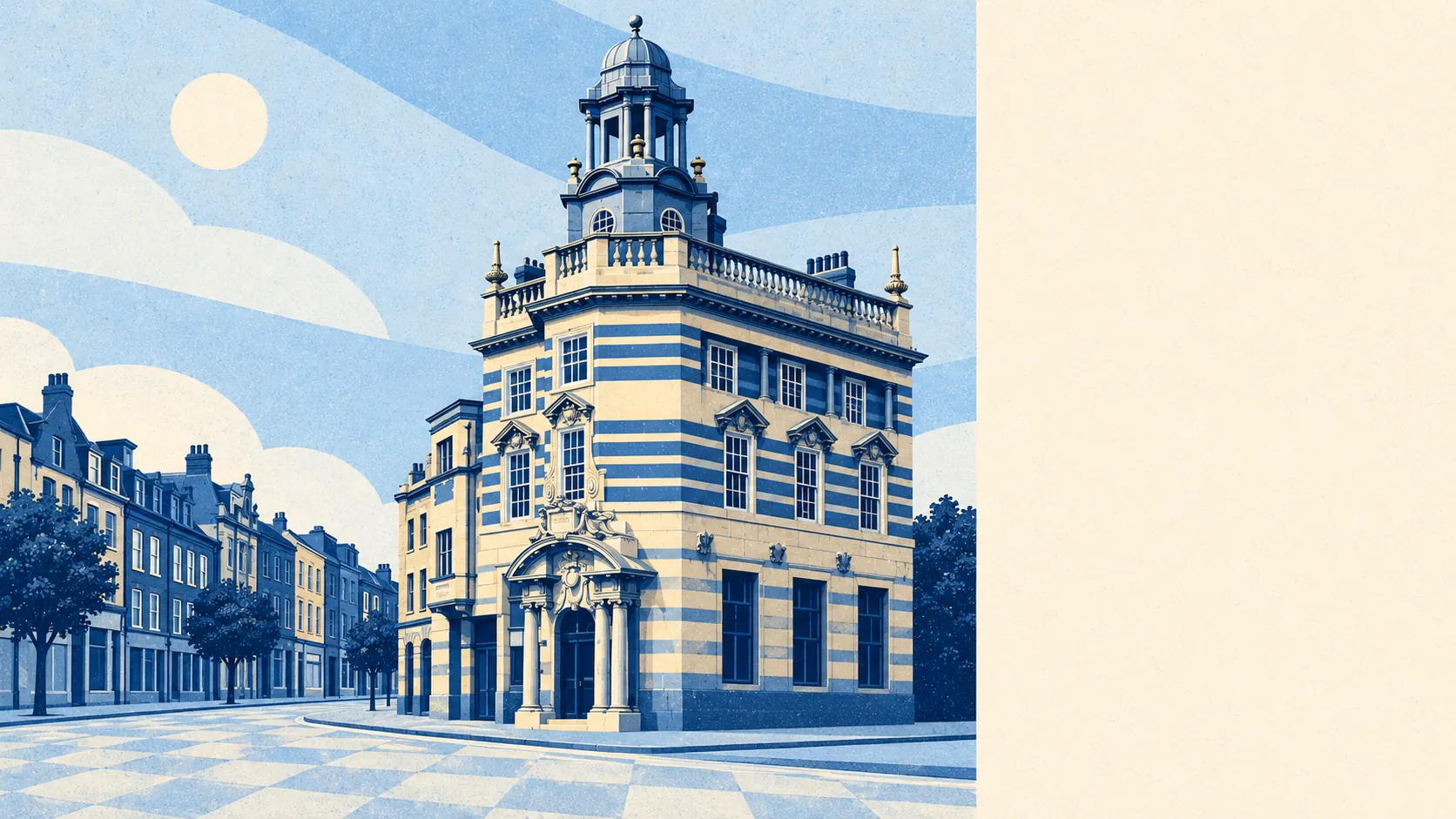
Camberwell is a perfectly liveable, middle-of-the-road choice with one real catch, and the catch is paperwork. With 394 listed buildings and 31 conservation areas in and around it, the house you buy is close to the house you keep. Dormers, extensions and replacement windows here start life as applications and only later become building work.
Most of those 394 are Grade II, with five at Grade II* and two at Grade I, and the conservation areas include Camberwell Grove, Camberwell Green, Addington Square and Camberwell New Road. The count covers a box drawn around the area, so a few Brixton conservation areas make the list too. For a buyer, that means the period terrace and the Georgian square both come with someone else's opinion on the front elevation. Until the mid-19th century Londoners came out here for the rural calm and the mineral springs. The railways ended the calm in the 1860s, the springs went too, and the planning rules are what lasted.
Flood is the other figure that makes people sit up. On the Environment Agency's river-and-sea flood zones, about 31% of Camberwell is in Zone 3 and another 5% in Zone 2. That sounds dramatic for somewhere with no beach. Yet the same agency's property-level count of risk from rivers and the sea puts no homes at high, medium or low risk, and 662 at very low. The zones ignore defences, and the property count allows for them. Surface water is a separate story: about 16% of postcodes are flagged high on at least one flood indicator, surface water included. Two honest maps that disagree, and both end up in the same search report.
The people are young and mostly renting. Only about 28% of households own their home, the median age is 34, and the Office for National Statistics models average gross household income at about £73,000 for the financial year to March 2023. That is a decent income for an area where most people pay a landlord or a housing association. Landlords read that line with more pleasure than tenants do.
Getting about is mostly a bus question. Denmark Hill station has London Overground, Southeastern and Thameslink trains, and Loughborough Junction is on the Thameslink line, but only about 4% of working residents took the train to work at the 2021 census, against 20% on the bus and 42% working from home. Camberwell has 158 bus stops, averaging around 650 weekday departures each and about 34 buses an hour at peak. About six in ten households have no car, and with that many buses going past, going without one looks like common sense. Gigabit broadband reaches about 86% of premises.
Schools are where the area does well. Ofsted has graded 46 of the 47 settings counted for the area as good or better, and 15 of those are outstanding. Across nine primaries the average maths score at the end of primary school is about 106, and the two secondaries post an average Attainment 8 score of 52. Primaries on the doorstep include Oliver Goldsmith and John Ruskin, with Sacred Heart Catholic School and Ark All Saints Academy at secondary. Wilson's School was founded here by royal charter in 1615 and moved to Croydon in 1975, which is one way to settle a catchment argument.
The Metropolitan Police recorded a crime rate of about 131 per 1,000 residents in the year to May 2026, roughly 17% below the Southwark average. The mix is telling. Theft from the person makes up about 8% of recorded crime, against 2% across England and Wales. The risk here is mostly to whatever is in your hand.
Prices follow the stock. The Land Registry's typical sale over the year to late May 2026 was about £481,000, across 308 sales. Flats went for around £430,000 (241 sales) and terraced houses for about £915,000 (47 sales). Semis reached about £1,396,000 on 15 sales, and five detached houses sold at around £1,950,000, which makes the detached market closer to gossip than to a market. Band B is the most common council-tax band, and about 40% of homes are in Band A or B. For renters, Southwark's typical private rent was about £2,400 a month in April 2026, a borough-wide figure, so streets in Camberwell will come in above or below it.
Camberwell's housing is flats, overwhelmingly. The council-tax valuation list puts about 80% of dwellings as flats, 15% as terraced houses, 2% as semis and under 1% as detached, and about 31% were built before 1930. About 57% of homes heat with mains gas and 13% with electricity alone. A converted Victorian flat on electric heaters is a different winter from the same flat on gas, and the particulars rarely lead with which one you are viewing.
The best thing about living here is how close the green is. The average home is about 93 metres from public green space, and Ruskin Park and Myatt's Fields are among the parks within reach. Water is further, at around 830 metres on average. Camberwell Green itself was once a proper village green with an annual fair, and is now a small patch of common land. That is how most fairs end.
The history has a habit of leaving. Karl Marx's family first settled in Camberwell when they reached London in 1849. R. White's Lemonade started here and Dualit toasters were made here, and neither company is based here now. The main local manufacturers these days are Camberwell College of Arts and the planning department.
Camberwell works for a renter or a first-time flat buyer who wants a park round the corner, a bus every couple of minutes and decent primary schools, and who will never need to knock through a wall. Anyone planning to buy a terrace and add a loft, a rear extension and new windows should look somewhere with fewer listed neighbours, or budget for patience along with the builder.
So the green space is the reason to come, and the conservation rules are the reason some people leave. You get a park inside a two-minute walk and a council with a view on your sash windows. On balance it is a solid, average place to live, and a good one if you like your home the way it already is.