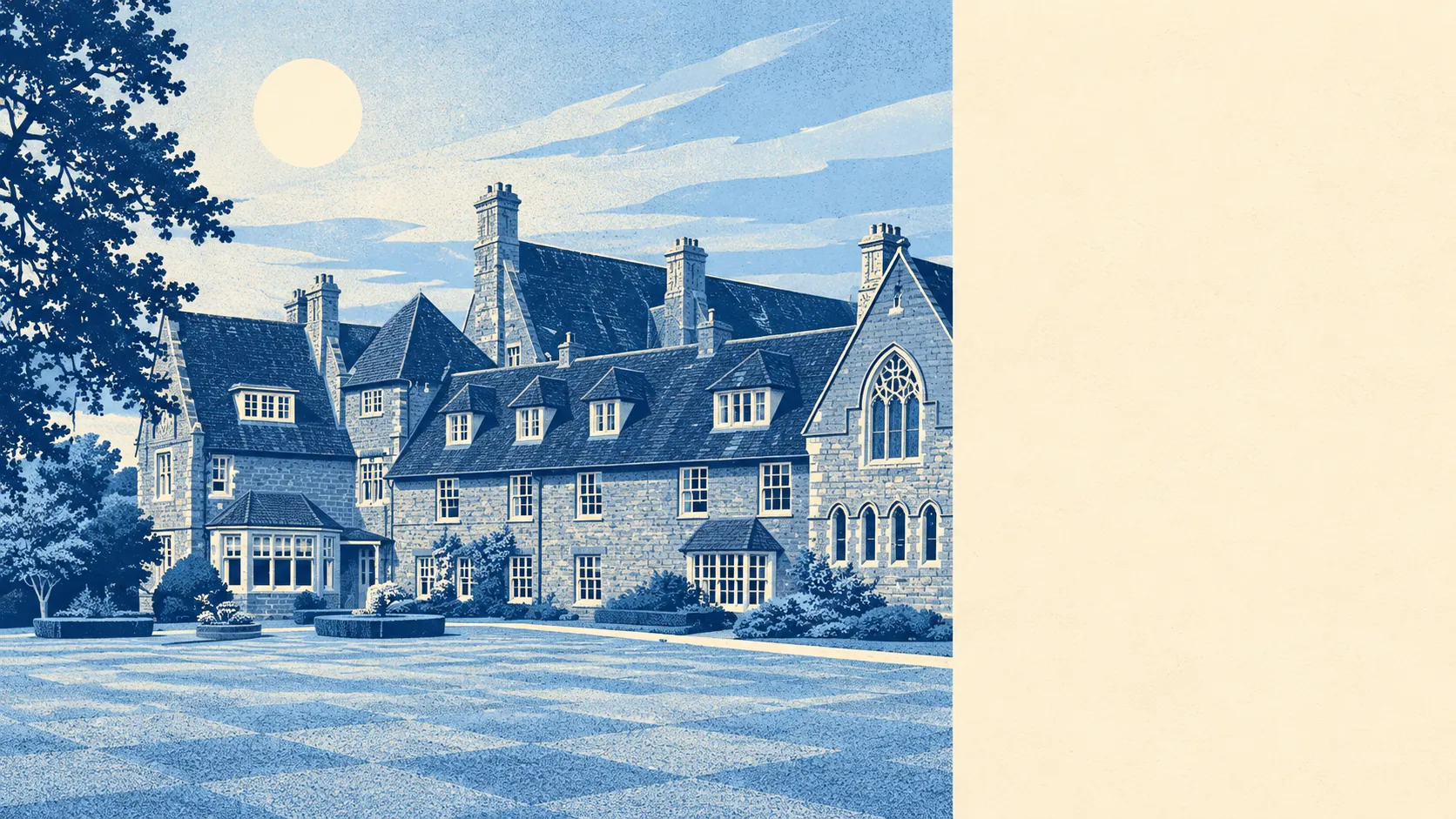
Bloxham gets more right than wrong, as long as the household owns a car and nobody in it plans to knock through an old wall. Life here means driving into Banbury for the big things and walking to a field for everything else, under Hobb Hill and inside a conservation area that has views on your guttering. Families, home-workers and anyone who wants countryside without being stranded in it will do well. Anyone hoping to build a week around a bus timetable, or to gut a period cottage, should look somewhere else.
Thames Valley Police recorded crime across the Bloxham area at about 42 incidents per 1,000 residents in the year to May 2026, roughly 45% below the Cherwell average. For a family moving out of a town, that gap makes up most of the case for the move, and the village doesn't have to be remote to earn it.
The catch is the paperwork. The Bloxham area holds 355 listed buildings, six of them Grade I and six Grade II*, and five conservation areas: Bloxham's own, plus Adderbury, Bodicote, Milton and the Oxford Canal. Every listed window and roof slope needs consent before a builder touches it, and conservation-area rules reach the unlisted houses as well. In the Middle Ages the village was split between two manors, Beauchamp and St Amand's. Both manor houses have gone. The St Amand's dovecote is still standing next to Dovecote House, so the pigeons did better out of the conservation effort than the lords did.
About three-quarters of households in Bloxham and the surrounding villages own their home, and the typical resident is 46. The Office for National Statistics models gross household income at around £69,000 for the financial year to March 2023. People buy here and stay, and the house sales are mostly owners trading up or trading down within a few miles.
Flooding is a modest issue, though it isn't zero. On the Environment Agency's river-and-sea flood zones, about 1% of the Bloxham area falls in Zone 2 and none in Zone 3. A wider measure, the share of postcodes on at least one flood indicator including surface water, puts about 8% at high risk, 7% at medium and 20% at low. The Environment Agency has five flood events on record, the latest in July 2007, when a main river overtopped with no raised defences to hold it.
At the 2021 Census about 48% of working residents drove to work and 40% worked from home, while train and bus each carried around 1%. Banbury Rail Station and Kings Sutton Rail Station are the nearest railheads, a drive away. The area has 69 bus stops, and a typical stop sees about 34 departures on a weekday, enough for a trip into town and not enough to give up a car. Gigabit broadband reaches about 91% of premises, so the fibre handles more of the commuting than the railway does.
The Land Registry's last twelve months, to May 2026, show a typical sale price of about £430,000 across 108 sales. Detached houses went for around £517,500, semis for about £367,500 and terraces for roughly £319,000. Only three flats sold, at about £200,000, so anyone hoping for a cheap way in is really looking at a terrace. Band D is the most common council-tax band, and only about 17% of homes are in bands A or B.
Renting is priced off a wider area. Across Cherwell the typical private rent is about £1,290 a month as of April 2026, a council-wide mean that takes in Banbury's flats as well as village houses with gardens, and a family house here will usually cost more.
The council-tax valuation list puts detached houses at 36% of homes, semis at 28%, terraces at 21%, bungalows at 9% and flats at 6%. About 19% were built before 1930. Of the homes with an energy certificate, about 60% are rated A to C and about 10% E or worse, and around 81% are on mains gas. The pre-1930 cottages are the ones everyone photographs, and the listing rules make them the hardest to upgrade.
Outside the front door the area does best. The nearest green space is about 160 metres away on average and water about 400 metres, and the surrounding villages give the place its edges. Milton sits on the road towards Adderbury, Milcombe and Wigginton are out to the west, Hempton is on the old turnpike, and Barford St John, Barford St Michael and South Newington line the River Swere. A dog walk here ends at a river, a hill or a church spire, and usually all three.
Bloxham is one of the better choices around Banbury for a family that drives, works partly from home and wants lower crime with fields close by. The countryside on the doorstep is the best of it, and the tight limits on changing an old house are the worst. Buy a house you like the way it is and the village pays you back. Anyone who needs a train to work, or who wants to turn a listed cottage into an open-plan kitchen, will spend more time arguing with Cherwell than enjoying the view.