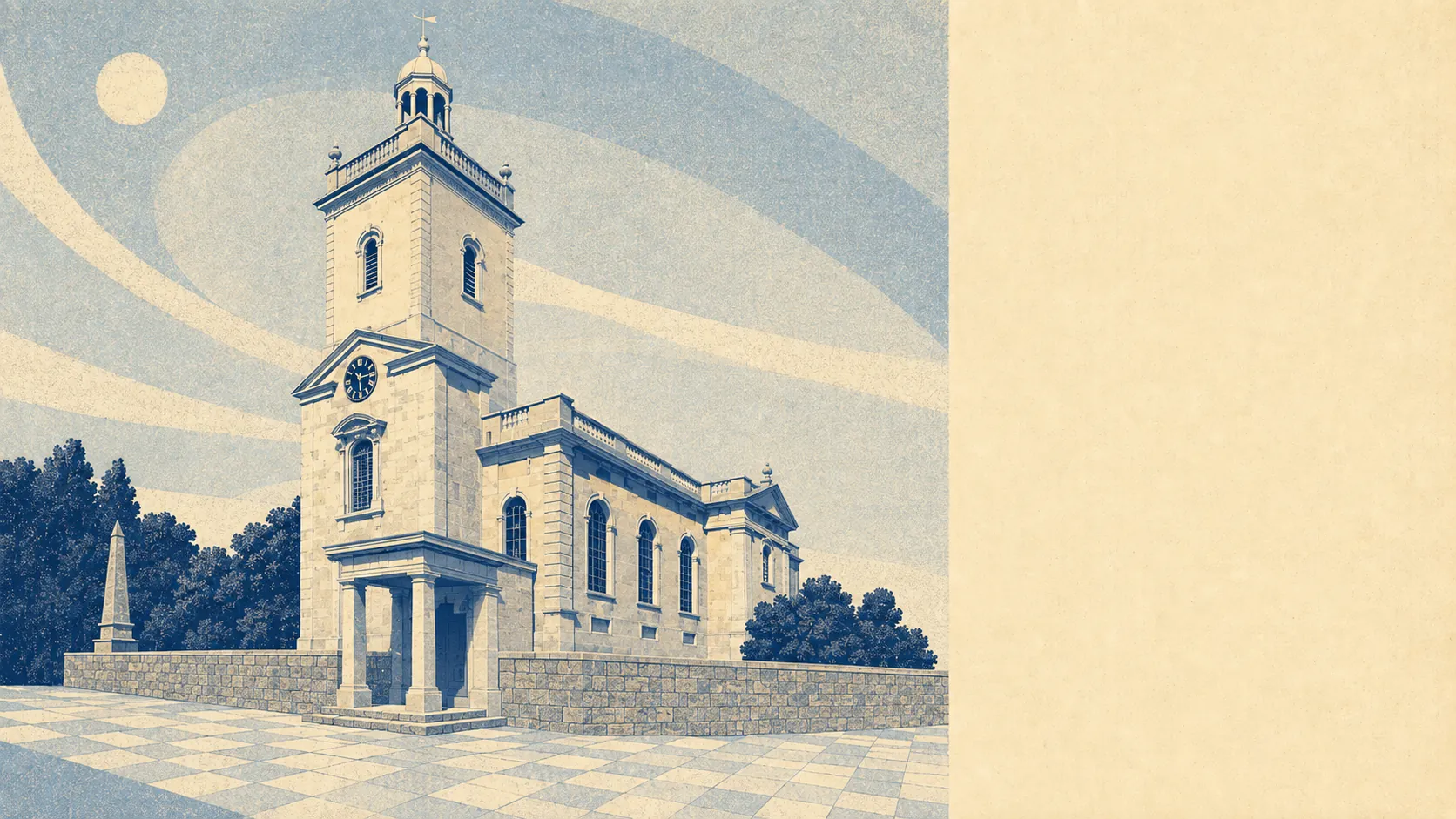
Yes, if you want a Georgian town centre and can live thirteen miles from anything that stays open past nine. Around six in ten own their homes. Green space starts about a hundred and fifty metres from the average front door. Crime sits below the Dorset average and the broadband is better than the roads. It is not a compromise town, it is a specific offer, and the people who take it usually mean it.
The housing stock is a market town's stock, which means variety rather than a single dominant type. The council tax valuation list, which covers every dwelling rather than only those with an energy certificate, puts terraced housing at around 30% of homes, with detached at roughly 21% and semi-detached at about 20%. Flats account for around 17% and bungalows around 10%. Around 20% of dwellings were built before 1930, which is the Georgian and Victorian layer people picture when they think of the place, sitting alongside a great deal of post-war and later building on the edges. About 76% of homes run on mains gas. Around 9% are heated by electricity alone, which in an older property is the difference between a comfortable winter and a bill that arrives like a summons, so it is worth asking before the second viewing rather than after completion. On energy efficiency, roughly 65% of certificated homes sit in bands A to C, about 27% in band D, and around 8% in band E or worse.
On price, the Land Registry's last twelve months to May 2026 put the typical sale at £284,000 across 147 transactions. The spread by type is wide and worth knowing before you set a budget. Flats came in at a median of £137,000, terraced houses at £249,500, semi-detached at £316,750 and detached at £408,750. Council tax lands mostly in the middle: band C is the most common band, and around 37% of dwellings sit in bands A or B, which is a gentler picture than the Georgian frontages suggest.
For renting, the typical private rent across the Dorset area is about £1,040 a month as of April 2026. That is a local authority figure covering the whole of Dorset rather than Blandford's own market, so treat it as the shape of the county rather than a quote for a specific street.
Safety is one of the quieter arguments in the town's favour. The published rate for the twelve months to May 2026 is 49 recorded crimes per thousand people, against 55 across Dorset as a whole, putting Blandford roughly 10% below the local authority average. Dorset Police charged in around 14% of cases over the same period, above the England and Wales figure of about 12%. Anti-social behaviour makes up a larger share of the local mix than it does nationally, at around 23% against roughly 16%, which is the recognisable signature of a small town with a compact centre and not much else to do on a Friday.
Connectivity is where the town's geography starts charging rent. There is no railway station, and the Somerset and Dorset Joint Railway line that once served the town closed to passengers in 1966, which is why around 0.1% of residents commute by train and roughly 55% drive. About 13% walk to work and around 25% work from home. There are 72 bus stops in the area, with about 25 scheduled weekday departures at the average stop and weekend service at 90% of the stops that carry timetable data. Journey times modelled by the Department for Transport in 2019 put the town centre around ten minutes by car and roughly 24 by public transport, and the nearest hospital about 37 minutes by car. Broadband is the compensation: gigabit-capable service reaches around 92% of premises, superfast covers all of them, and no premises sit below the universal service obligation. Mobile signal from at least one operator reaches everywhere, and all operators cover around 97%.
The setting is the strongest thing here and it is not close. Green space sits an average of roughly 150 metres from a postcode, with around 19 green spaces within a kilometre, and water is about 500 metres away on average. Roughly 7% of the area falls inside the Dorset National Landscape and the Cranborne Chase and West Wiltshire Downs, both nationally designated. Flooding is the price of a river town. About 8% of postcodes carry a high rating on at least one flood indicator, including surface water, and around 12% carry a medium rating on the same basis. On the Environment Agency's river-and-sea flood zones, which measure something narrower, around 7% of the area sits in zone 3 and about 1% in zone 2. Ten flood events are on the recorded register, the most recent in December 1979 when channel capacity was exceeded. Ground conditions are mostly benign, with soluble rock the one hazard class worth reading the survey for.
Heritage is where the town gives with one hand and takes with the other. There are 219 listed buildings, including eight at grade one and nine at grade two star, and two conservation areas covering Blandford Forum and Blandford St Mary and Bryanston. The rebuilt centre survived almost intact, which is precisely why the planning system now guards it. If you buy inside the protected fabric, expect the window, door and extension conversation to be a negotiation rather than a decision, and expect a Georgian sash to cost what a Georgian sash costs. One entry sits on the Heritage at Risk register.
The people who live here own their homes at around 63%, the typical resident is 44, and the modelled median household income is roughly £57,000 gross before tax for the financial year to March 2023. Around a third of households are one person, and roughly 17% are a couple with children. This page also covers the villages that orbit the town, including Charlton Marshall, Child Okeford, Iwerne Courtney, Iwerne Minster, Milborne St Andrew, Milton Abbas, Shillingstone, Spetisbury, Tarrant Monkton and Winterborne Zelston, which is where the space and the silence get cheaper and the bus gets thinner.
It suits people who want a walkable centre with a real market on Thursdays and Saturdays, a garden, and a landscape that has already been legally protected from whatever anyone might have wanted to do to it. It suits remote workers, given the broadband, and families using The Blandford School and the primary schools around it. Ofsted has graded 68 of 86 settings across Dorset good or better, with two outstanding.
It does not suit anyone who needs a train. It does not suit anyone whose plan involves a large rear extension inside a conservation area, and it does not suit anyone who wants a hospital nearer than half an hour. If your week depends on being somewhere else by half past eight, the A350 becomes your personality.
The town has form for producing men who then left. Frederick Abberline, the detective who led the Whitechapel murders investigation, came from here. So did three eighteenth-century bishops, including William Wake, who made it to Archbishop of Canterbury. The town burned almost entirely in 1731 and was rebuilt in brick and tile by John and William Bastard, with a thousand pounds from George II toward the cost. The wider country paid for the town centre people now pay a premium to live in.
Blandford Forum is a good place to live, and above average on the balance of what matters. Its real strength is what surrounds it: green space at the end of the street, protected chalk country in three directions, and a river that makes the whole thing look intentional. The weak spot is the freedom to change your own house, because two conservation areas and 219 listed buildings mean the town's best feature is also its most restrictive one. Buy the version of it you actually want, because you will not be allowed to renovate your way to a different one.