Badly, unless you count the car, and here you have to count the car. Nobody in the village commutes by train. Almost nobody uses a bus to get to work. Six in ten drive, and half of households run two vehicles or more. The connection in Bishops Lydeard is a driveway, and everything else is scenery.
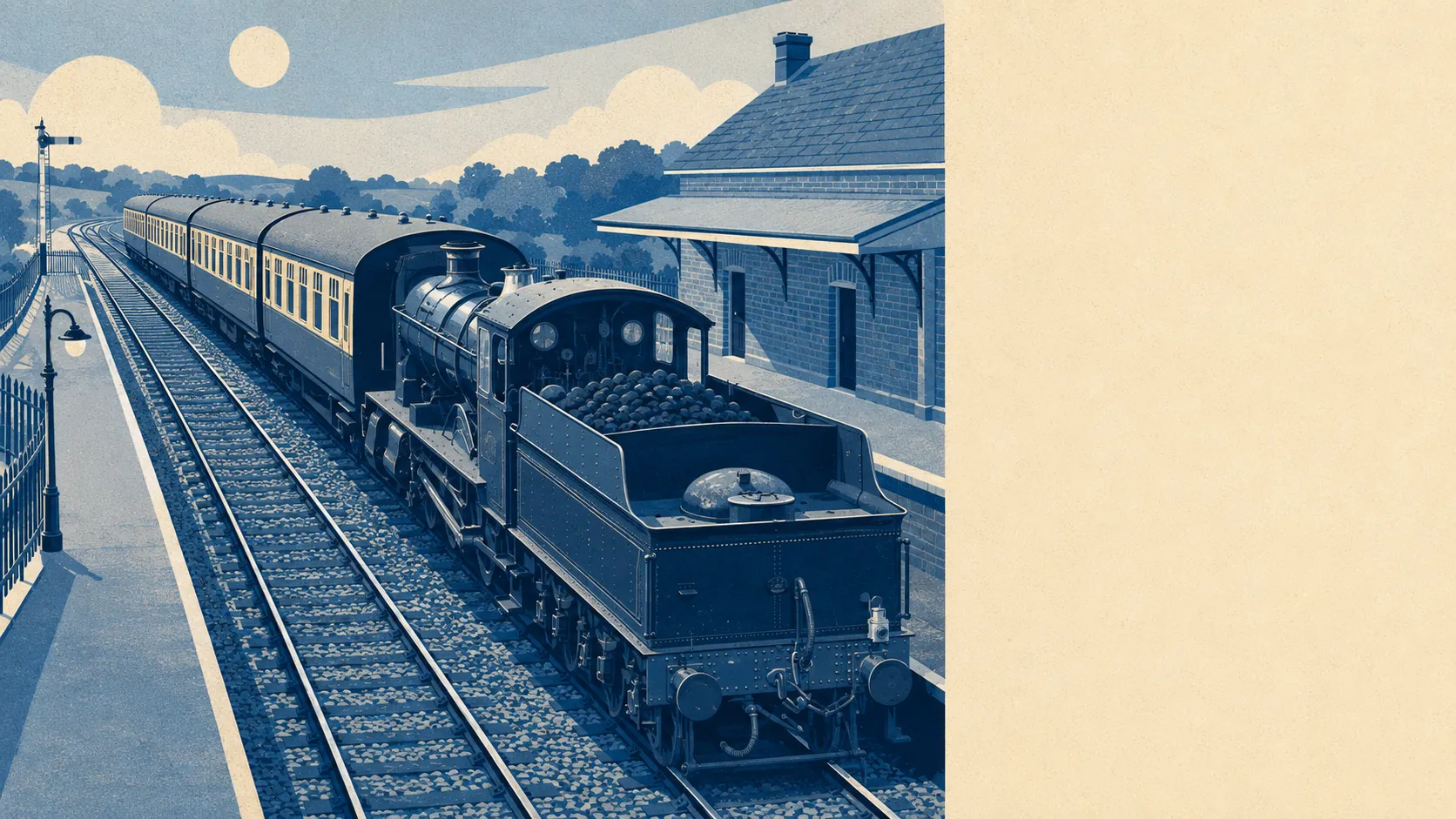
Bishop's Lydeard Rail Station sits on the heritage West Somerset Railway, and at the 2021 census not a single resident recorded a train journey to work. Having your own station and no rail commuters at all is a rare double. Buses are more real: 19 stops sit within the village and its surroundings, though only about 1% of working residents use one to get to a job.
The commute mix explains the rest. Around 59% drive, about 28% work from home, roughly 5% walk and about 1% cycle. Half of households keep two or more cars and about 12% have none at all. The single most popular way to get to work here is to not go, which is the quiet compromise a lot of villages like this have made without announcing it.
For the nearest town centre, Department for Transport modelling gives about 21 minutes by car against about 34 by public transport. That gap is small enough to look reasonable on paper and large enough to decide the matter in practice, particularly on the return leg after six in the evening.
Broadband is better than the roads. Superfast reaches about 99% of premises and nothing falls below the universal service minimum. Full-gigabit reaches about 34%, and ultrafast stops at the same 34%, so for two-thirds of the village the upgrade path ends at the same rung of the ladder. In a place where more than a quarter of people work from home, that ceiling is a household planning matter rather than a technical footnote.
Mobile coverage is comfortable. Around 100% of the area gets fourth or fifth generation signal from at least one operator and about 97% gets it from all of them, so the network you already pay for will almost certainly work.
What this adds up to is a village where the commute is a private arrangement between you and your vehicle. If both adults in a household work away, the second car is not a luxury purchase, it is the thing that makes the address function.
The same Department for Transport modelling puts the town centre at about 37 minutes by bicycle and roughly 106 minutes on foot. Those are modelled figures for the area rather than a route from any particular front door, but a walk of nearly two hours is not a transport option, it is a weekend.
For everyday destinations the picture improves close to home and worsens with distance. A doctor's surgery is about 7 minutes by car, 11 on foot and 10 by public transport. A food store is about 12 minutes walking and 7 by car. A hospital runs to roughly 23 minutes by car and about 46 by public transport, and the nearest employment centre is modelled at around 21 minutes by public transport against about 72 by car, which reads oddly enough to be treated as modelling rather than experience. The destination distances are stable, but every public transport figure here dates from 2019 and rural services have been withdrawn since, so give those the wider margin.
Current timetable data is kinder than the commute shares suggest. Of the 19 stops, 13 carry published service information, averaging about 71 scheduled departures each on a weekday and around 3 in the peak hour, with about 69% of those stops keeping some kind of weekend service. That is a genuine service rather than a token one, and it still loses to a car on almost every journey people actually make.
One thing the marketing never mentions: on the official noise mapping, 100% of postcodes here sit at or near the 65-decibel threshold, the level at which road noise is treated as significant, with a loudest band reaching 75 decibels. Rural quiet is a claim the noise map declines to support. How that lands in any particular house depends on which way it faces and what stands between it and the road, which is a question for a viewing rather than a dataset.
Connectivity is the weakest thing about this village by a distance. The broadband is decent, the buses are better than nothing, and the honest summary is that you will drive, and drive again.