Berkhamsted works beautifully for the people already in it, and charges everyone else a small fortune to join them. Seven in ten own their home. Half the adults have a degree. A typical sale runs to about two-thirds of a million pounds. The neighbours are lovely, and the entry fee is a house in the Chilterns.
The town's comfort shows in the basics. About 73% of households own their home, and the typical resident is 44. The Office for National Statistics models gross household income at about £77,500 for the financial year to March 2023, averaged across the four middle-layer areas that make up the town. The high street was fully let to independent traders by 2014, with the café culture that comes with that, and the town has an active Transition Town group. Berkhamsted is the rare place where the people with the most expensive kitchens are also the ones organising the compost.
That comfort has a price, and the Land Registry recorded it 250 times in the year to May 2026, at a median of about £666,000. Detached houses went for about £938,000, semis for about £693,000, terraces for about £650,000 and flats for about £348,000. There were 62 flat sales, and for most first-time buyers without family money those flats are the only way in. Dacorum's council-tax list agrees with the market. The most common band is D, and only 6% of homes sit in bands A or B.
Renting doesn't get anyone off the hook. Across Dacorum, the borough run from neighbouring Hemel Hempstead, the Office for National Statistics puts typical private rent at about £1,580 a month as of April 2026. That is a mean for the whole borough, and Berkhamsted is the expensive end of it.
The council-tax valuation list covers every home in the town. It shows a mix with no single dominant type: 27% detached, 20% semis, 23% terraces, 22% flats and 7% bungalows. Only about 21% was built before 1930, though the old part is the bit on the postcards. Most homes certificated since 2008 were built after the war, and 55% of them reach energy bands A to C, with 10% at E or worse. About 83% of homes are on mains gas, and 5% rely on electric-only heating. The medieval High Street is the photo everyone takes. The post-war semi up the hill is the house most buyers will be shown.
Hertfordshire Constabulary's published figures put crime at about 57 per 1,000 residents in the year to May 2026, about 36% below the Dacorum average. The mix leans further towards anti-social behaviour and shoplifting than the national one. In practice, the crime most residents see is somebody leaving a shop without paying.
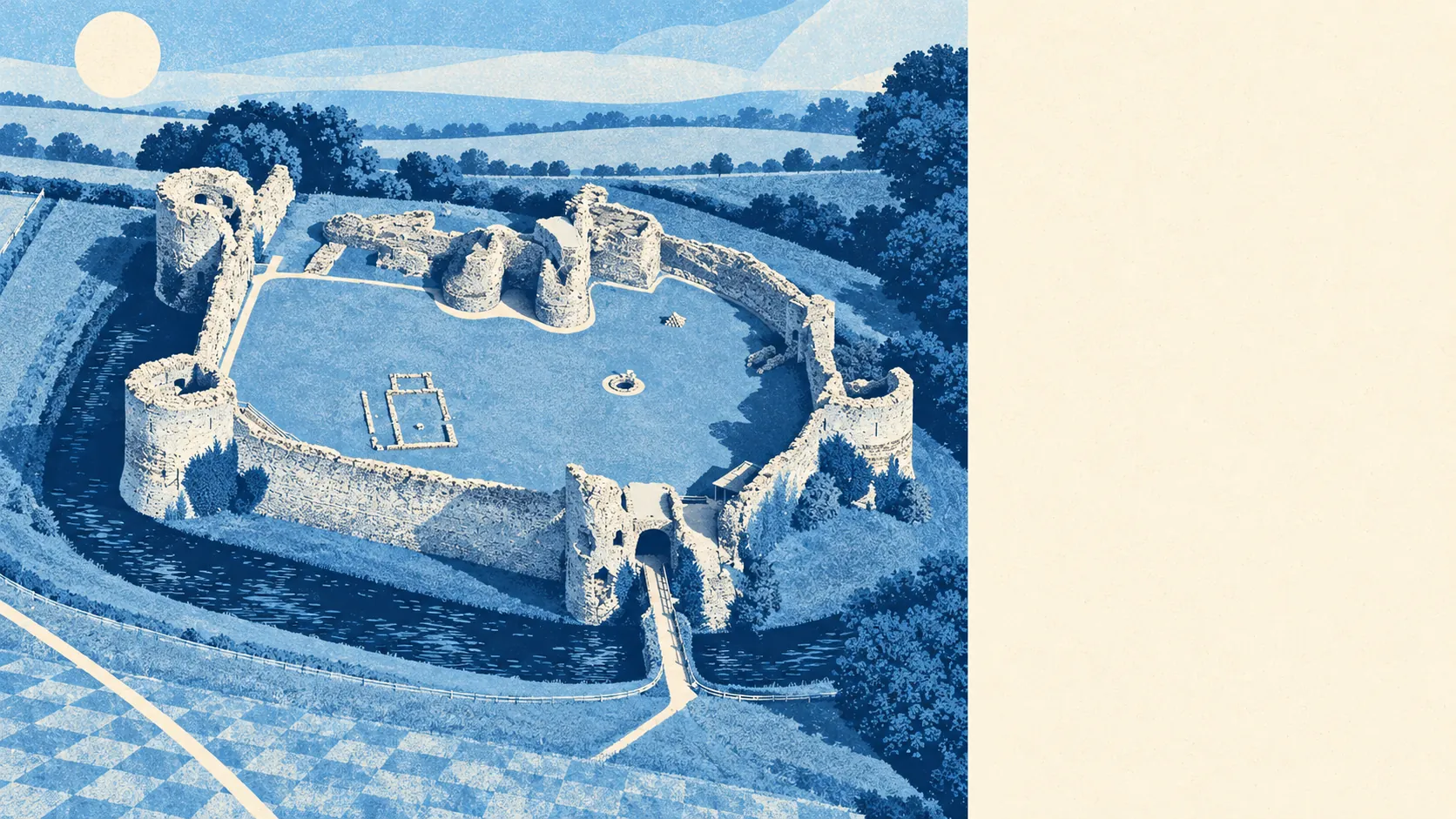
Owners pay for the heritage too. The town has 103 listed buildings, two of them Grade I and eight Grade II*, plus three conservation areas: Berkhamsted, Dudswell and Northchurch. A listed home needs consent for most changes inside and out, and conservation areas tighten the rules on windows, extensions and front gardens. 173 High Street, built between 1277 and 1297, is the oldest known jettied timber-framed building in the country and is still a shop. The castle became the first building in Britain to get statutory protection, in 1833. The conservation officer is carrying on a very old family tradition.
Berkhamsted station is on the West Coast Main Line to London Euston, with Tring and Hemel Hempstead stations close by. Census 2021 caught 55% of working residents working from home, 30% driving and 3% taking the train. That was a lockdown-era snapshot of a town whose commuters were all at home. The town has 90 bus stops, with an average of 15 weekday departures per stop. Superfast broadband reaches 99% of premises and gigabit only 62%. In a town of home offices, that decides which side of the street gets the smooth video call.
Flood risk depends on which measure is used. On the Environment Agency's river-and-sea flood zones, about 1% of postcodes fall in the highest zone and under 1% in the next. Counting postcodes on at least one flood indicator including surface water, about 16% show high risk and 10% medium. The gap is the valley. The River Bulbourne, a chalk stream long prone to localised flooding, runs along the floor with the canal, and so does the middle of town.
Schools are a big part of why families pay the prices. The eight primary schools in the district average 105 in the end-of-primary maths scaled score, and Ashlyns School, the one state secondary, averages 58 on Attainment 8. Ashlyns traces its roots to Thomas Coram's 1739 charter for deserted children and is now a listed building. Across Hertfordshire as a whole, Ofsted rates 203 of its 227 graded settings good or better. That is a county figure, and it says nothing about any one classroom in Northchurch. The fee-paying Berkhamsted School dates from 1541. Graham Greene's father was its headmaster, Greene went there, and he later set The Human Factor in the town. Being a pupil at your father's school is exactly the kind of upbringing that produces a novelist of guilt.
Outside the front door, the average home is about 160 metres from green space, with around 25 green spaces within a kilometre and water about 270 metres away. Berkhamsted and Northchurch commons are the largest in the Chilterns, and the Ashridge Estate lies beyond them, close to Potten End, Little Gaddesden and Dagnall. William Cowper was born and raised here and changed nature poetry by writing about ordinary English countryside. In Berkhamsted, that took no research.
The town is right for buyers with serious equity, children of school age and a job that mostly happens at a laptop. It is wrong for anyone hoping a long walk from the station will bring the price down, because there isn't one here.
Berkhamsted is a better-than-average place to live where the reward is the people and the setting and the punishment is the bill. Buyers who can pay it get one of the most comfortable towns in Hertfordshire. Everyone else gets to visit the castle, which is free.