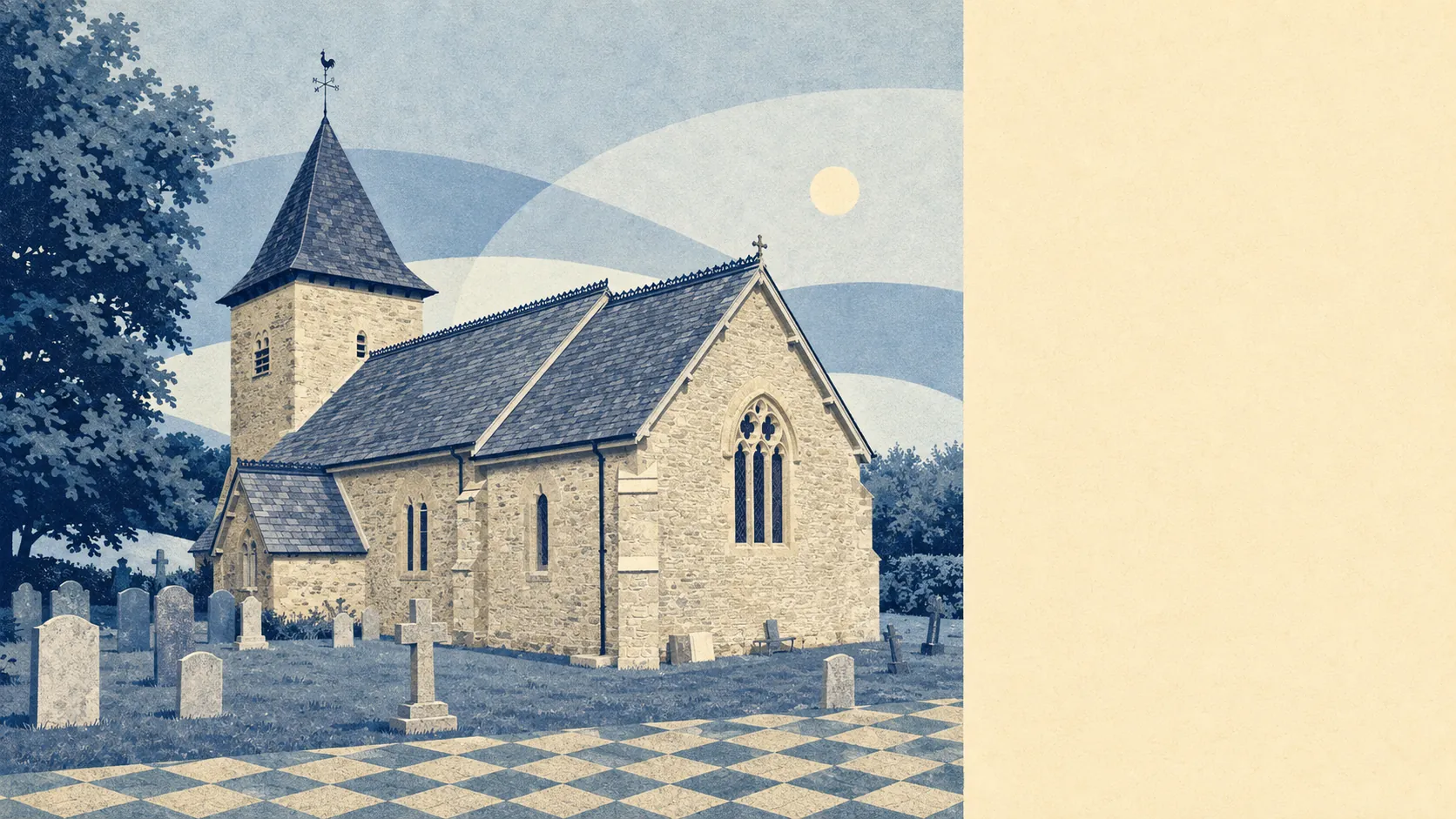
Usually yes, and the exceptions are the expensive kind. Nearly 300 listed buildings sit within this area. Five conservation areas. Thirty-five scheduled monuments scattered through the fields between them. Most houses here are unremarkable in the legal sense and can be altered like anything else, but the ones that are not come with a committee attached, and the difference between the two is not visible from the road.
There are 296 listed buildings across the area, of which three are grade one, 23 are grade two star and 270 are grade two. Listing is not a plaque, it is a legal control. Works that affect the character of a listed building need consent in their own right, and that protection follows the whole building rather than the bit visitors see, so the beam you were planning to lose and the window you were planning to replace are both in scope. Doing it first and asking afterwards is an offence rather than an embarrassment. If the house you are buying is on that list, the survey and the listing entry matter more than the floor plan.
Five conservation areas cover Eworthy, Germansweek, Sheepwash, Northlew and Bratton Clovelly. Designation brings a second layer of control on top of ordinary planning: demolition and tree work come under tighter scrutiny, and the everyday permitted development rights that let a homeowner elsewhere get on with it can be curtailed. The boundaries do not follow any logic visible from a driveway, so the only reliable check is the mapped line rather than the assumption that a house near the church is inside and a house at the end of the lane is outside.
The 35 scheduled monuments sit at the strictest tier of all, and most of them out here are prehistoric burial mounds and wayside crosses rather than anything with a roof. They rarely affect a house, but they can affect land, so anyone buying with a paddock and a plan should establish where the boundary of the designation runs before drawing anything on it.
None of this stops people altering their homes. The planning register carries 153 applications across the area between April 2024 and June 2026, 62 of them in the last twelve months. That is a steady flow of extensions, conversions and alterations going through the system rather than a place where nobody bothers. What the volume does not tell you is what happened to any of them, so treat it as evidence that the route is well used, not as a promise about your own drawings.
Seven listed buildings in the area sit on Historic England's Heritage at Risk register. That means a building in poor condition, and it cuts both ways for a buyer: repair work on a registered building can attract grant support, and it will certainly attract attention from people with strong opinions about mortar. It is a note about specific buildings rather than a warning about the neighbourhood around them.
Practically, the sequence is the boring one that saves money. Establish whether the property is listed, then whether it sits inside a conservation area boundary, then talk to the council's planning team before an architect starts charging by the hour. An unlisted house outside those boundaries will have the usual permitted development freedoms, and rural plots here generally have the space to use them. A listed cottage inside a conservation area will not, and the cost of discovering that late is measured in wasted fees.
Freedom to alter a home here sits at the tighter end of normal. There is plenty of ordinary housing where an extension is a straightforward job, but the heritage layer is dense enough that the check has to come before the enthusiasm.