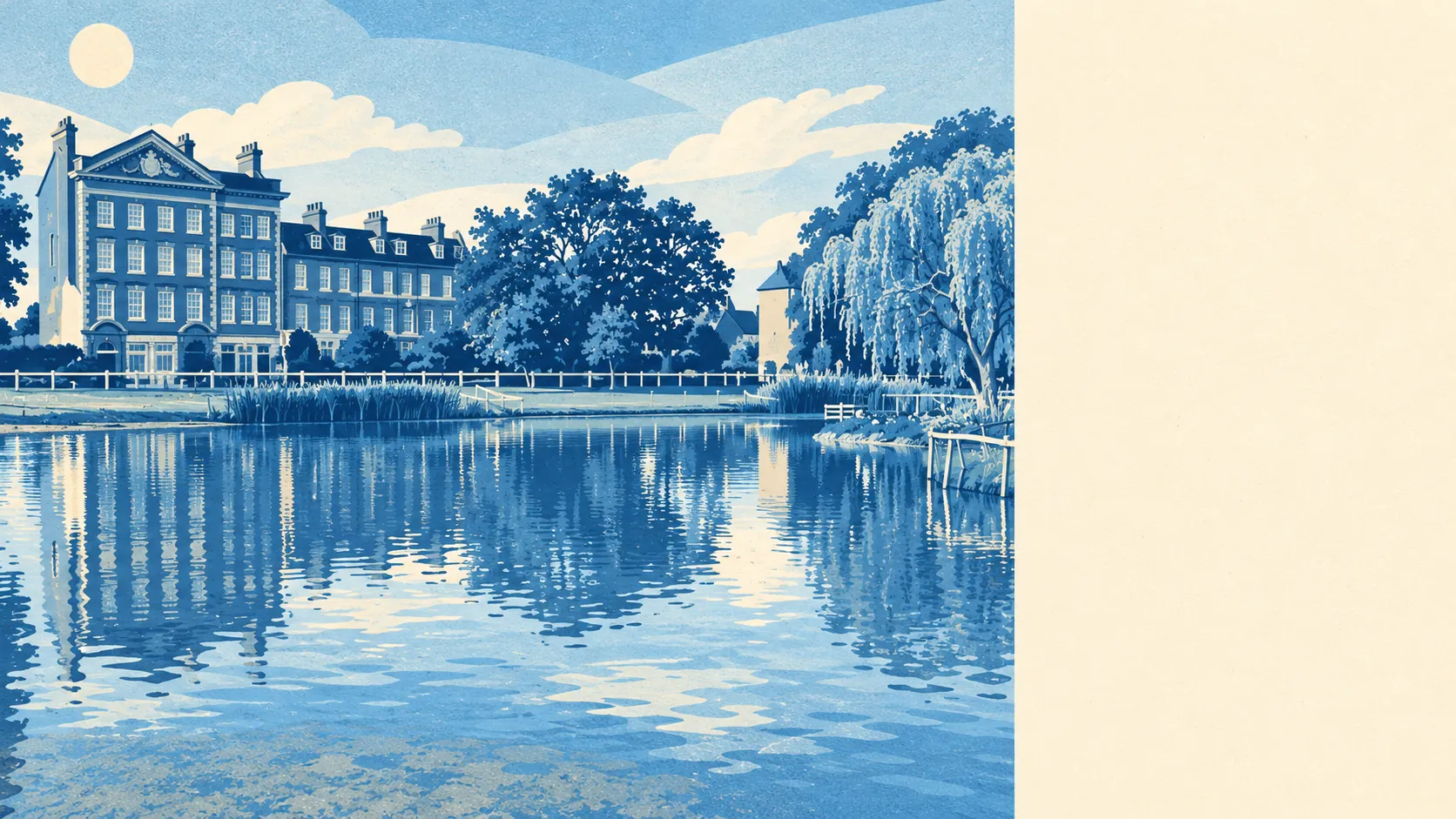
Barnes lands in the middle because the neighbours worth having are the same people who will read your planning application. About six in ten own their home and household incomes run past six figures, so the village has a community with the time and money to look after it. It also has 140 listed buildings and 22 conservation areas in and around it, all of which have views on your windows. That's the deal here. Good company, and a committee attached.
The neighbourhood is settled and well off. About 58% of households own their home, the typical resident is 43, and the Office for National Statistics models average gross household income at about £105,000 across the area for the financial year to March 2023. About 65% of adults hold a degree. Barnes has a pond, a green and a parish church dedicated by the Archbishop of Canterbury in 1215, on his way home from confirming Magna Carta. Ebenezer Cobb Morley drew up the first rules of modern football at his home here, and Barnes has been writing rules for other people ever since.
Those rules land on the housing. Historic England lists 140 buildings in and around Barnes, 18 of them at Grade I, and 22 conservation areas overlap the patch, among them Barnes Green, Barnes Common, Castelnau and the Glebe Estate. In a conservation area, changes that would be routine elsewhere need the council's consent: a new front door, a replacement window, a side extension. Listed buildings come with tighter rules still. The Georgian mansions on the Terrace went up from 1720 onwards, and Gustav Holst and Ninette de Valois both lived along that stretch. Their houses got blue plaques. The current owners get a conservation officer.
Buying in costs serious money. Over the year to late May 2026, the Land Registry recorded 152 sales at a typical price of £1,200,000. Flats went for about £660,000, terraced houses for about £1,342,500 and semis for about £2,300,000. Only eight detached houses sold, at a typical £4,485,000. The Land Registry's index for the area shows average prices about 2.5% lower than a year earlier. Band G is the most common council tax band, and only about 5% of homes are in bands A or B. The cheapest way in is a flat, and the cheapest flats still cost more than most people's houses.
Rent is no softer. Richmond upon Thames as a whole had typical private rent of about £2,310 a month in April 2026, up about 6% on a year before. That figure is the borough's average, and Barnes, with its river frontage and period terraces, is unlikely to undercut it.
The stock is older and flatter than the price tags suggest. On the council-tax valuation list, which covers every home, about 45% of homes in Barnes are flats, 34% terraced, 16% semi-detached and 4% detached, and 63% were built before 1930. Among homes with an energy certificate, about 44% are rated A to C, 42% D and 14% E or worse. About 81% of homes heat with mains gas. Victorian and Edwardian walls do what Victorian and Edwardian walls do, and the conservation rules shape what you can do about it.
Flooding is where two official measures tell very different stories. The Environment Agency's river-and-sea flood zones put about 81% of Barnes in flood zone 3, the highest band, which makes sense for a district sitting inside a bend of the Thames. The same agency's property-level risk count, which allows for flood defences, lists 5,841 properties and rates just three of them at high risk from rivers and the sea. Measured across postcodes and every flood indicator, surface water included, about 21% of postcodes show a high risk on at least one and 26% a medium one. The zone map shows the river with no defences. The property count shows it with them.
Barnes is about as safe as the rest of the borough. The published rate for the year to May 2026 was about 74 recorded crimes per 1,000 residents, level with the Richmond upon Thames average. The mix leans towards property. Vehicle crime makes up about 19% of recorded crime here, against 5% across England and Wales, and burglary about 8% against 4%. Violence is a smaller share than the national pattern. The cars parked here get more attention than the people walking past them.
Barnes and Barnes Bridge stations serve the district, though only about 5% of working residents commuted by train in the 2021 census. About 64% worked from home, in a census taken while much of the country still was. Buses are frequent: Barnes has 79 stops, each averaging about 250 departures a weekday and around 13 an hour at peak. Gigabit broadband reaches about 87% of premises and superfast about 99%, so the home office works even when the rail timetable doesn't.
Outside the front door, the typical home is about 125 metres from green space and about 200 metres from water. Barnes Common, the playing fields at Barn Elms with one of London's oldest plane trees, and the London Wetland Centre are all in reach. The loop of the Thames round Barnes is part of the Championship Course, so once a year the Oxford and Cambridge Boat Race goes past and Barnes gets to watch other people work hard on its river.
Barnes is for buyers who want a village with neighbours who turn up, plenty of green space and the river at the end of the road, and who already like the house they're buying as it stands. Anyone planning to knock through, build out or put in modern glazing should look at a less protected corner of the borough.
Barnes is an average place to live overall, pulled in two directions. The community is close and well looked after, and that same care leaves you very little freedom to change your own home. Buy the house you want to keep as it is.