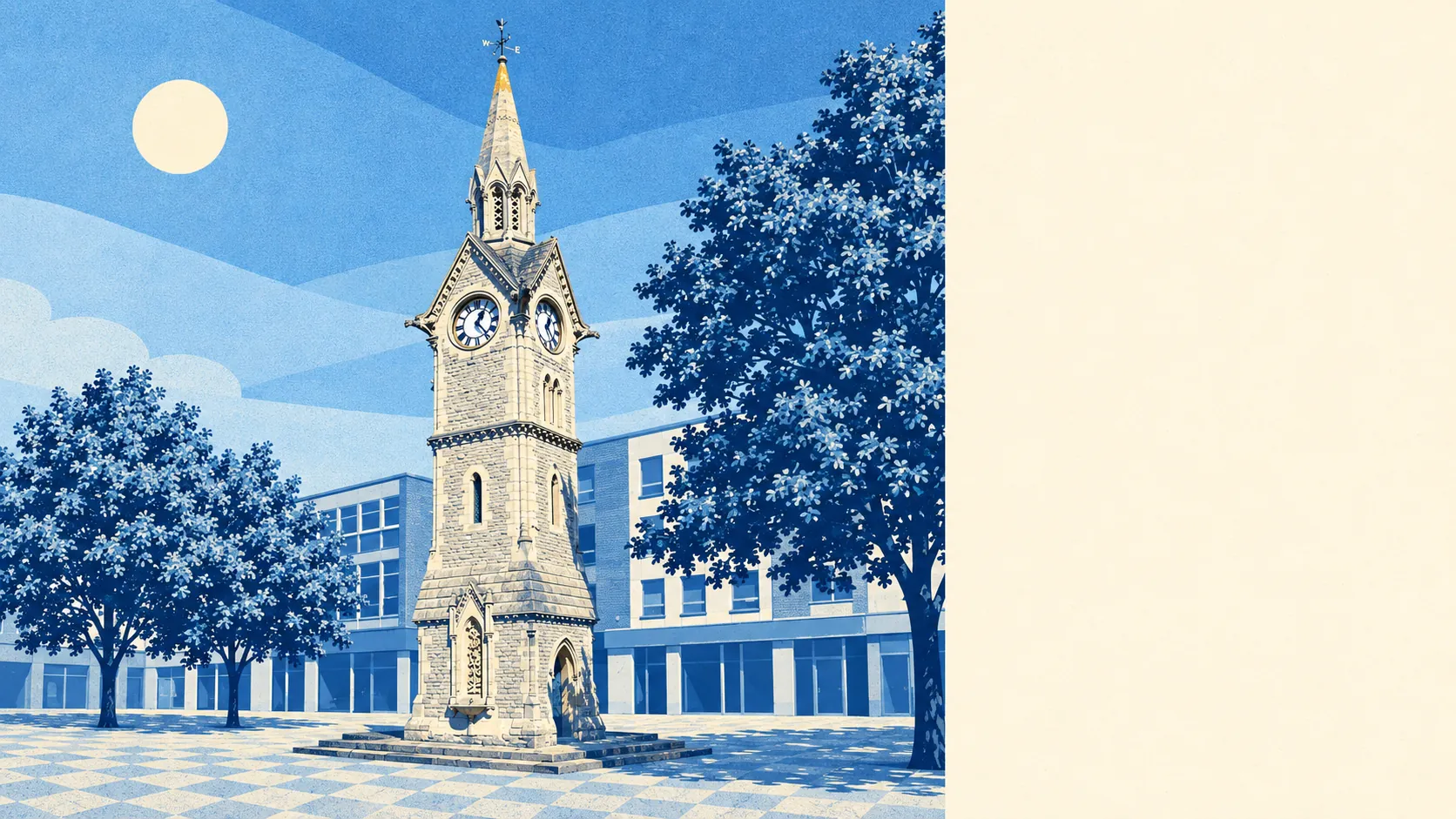
The area around Aylesbury is greener and wetter than most people expect, with a park, a canal or a brook close to nearly every front door. About two dozen green spaces within a kilometre of the average home. Water a short stroll away. Rothschild country houses on the doorstep. The town is the plain picture, and the frame around it is where the money went.
The average Aylesbury home has around 24 public green spaces within a kilometre, and the nearest is roughly 150 metres away. That is closer than most people park their car. Watermead to the north, Bedgrove's open ground to the south and the playing fields threaded through the estates mean very few households have to plan a trip to find grass.
Water is about 270 metres from the average home, with around 61 bodies of water, from ponds to the canal, inside a kilometre. The Aylesbury branch of the Grand Union Canal runs into town past Queens Park, Bear Brook cuts through the middle and the River Thame passes the north-west side. For an inland county town, Aylesbury spends a surprising amount of its time beside water.
The National Cycle Network is about 1,150 metres from the average home, and about 24% of homes are close to it. Further out the land rises towards the Chilterns to the south-east, and the villages this page also covers, Brill on its hill, Waddesdon and Quainton among them, give the flat Vale a few places to look down from.
The rated-premises list puts about 575 shops, 88 pubs and 40 restaurants in the area. That is a high street built for buying things and drinking afterwards, with less in between.
Across the Buckinghamshire council area, fine-particle air pollution averaged about 7 micrograms per cubic metre in 2024.
The character comes from what surrounds the town. The Rothschild family bought up country houses around Aylesbury, Waddesdon Manor and Halton House among them, and most of those estates now belong to the National Trust. Hartwell House is on the south-west edge, the deserted medieval villages at Quarrendon survive as earthworks, and the Romans left a settlement at Fleet Marston along Akeman Street. Aylesbury's grandest neighbours were built with banking money and are now open to anyone with a membership card.
Private gardens add up to about 68,000 square metres for every 1,000 residents across the town. For a place where most homes are post-war semis and terraces, that is a generous allowance of lawn, shed and trampoline, and it is the outdoor space people use most days, whatever the parks are like.
The valuation list records about 1,900 rateable business premises in the area, and offices and shops lead it at 433 and 425, with warehouses next at 202. These are premises on the rating list, which counts empty units alongside busy ones. The list reads like a working county town, with the council offices, the shop units and the distribution sheds all in the same count.
Of the 434 food premises with a hygiene rating, about 83% hold the top score and about 1% sit at the bottom. Eating out here is a low-risk activity, whatever else is going on in town.
The area overlaps no area of outstanding natural beauty, no site of special scientific interest and no ancient woodland. Aylesbury's green space is ordinary, well used and close to home, and nobody needs a permit to enjoy it.
The surroundings are among Aylesbury's real strengths: green space and water are close to almost every home, and the country houses of the Vale are a short drive away.